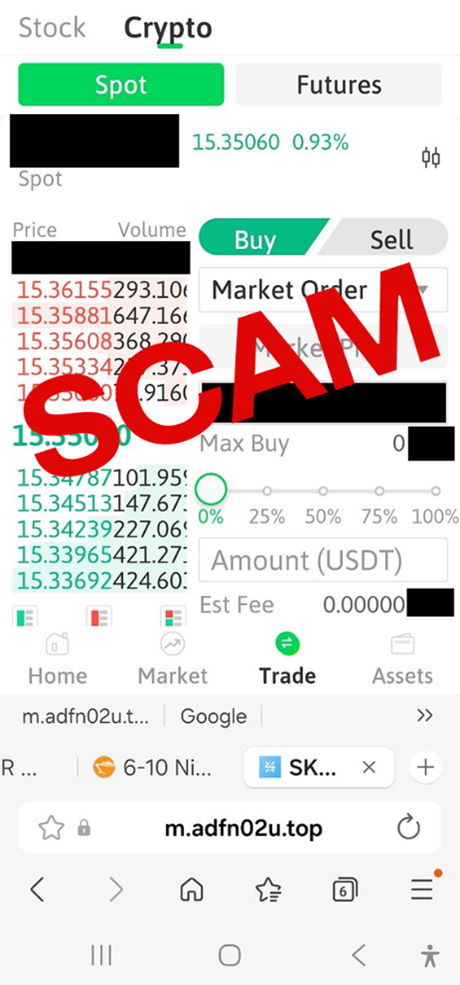
ASIC is warning consumers who have joined ‘share trading’ or ‘stock tips’ messaging app groups that scammers are using these forums to push investments on fake crypto-asset trading platforms.
These fake platforms show profits and trades, but in fact, there is no real trading, and the site contains fake data. Any money deposited into these platforms goes straight to the scammers.
The fake platforms ask for fees to release assets or proceeds. These fees go straight to the scammers and no assets are released.
ASIC has previously warned about a rise in scammers using messaging apps such as WhatsApp to conduct widespread, coordinated pump and dump schemes targeting retail investors. These schemes are illegal.
How the scam works
- Scammers initially target victims through social media advertisements and posts claiming to offer trading tips on shares.
- Victims are invited to messaging apps claiming to share recommendations from well-known figures, who the scammers impersonate.
- Scammers recommend victims invest via a fake crypto asset trading platform that the scammers have set up. The screen may show profits and trades, but in fact, there is no real trading, and the platform contains fake data.
- When the victim tries to withdraw their assets, scammers ask for withdrawal fees, claiming it is necessary to unlock their investment.
- Victims are unable to recover their assets as the money 'invested' goes straight into the scammer's bank account and not towards any real investment.
- Scammers are also using this tactic to target victims of pump and dump schemes, using money recovery scams to prey on people hoping to get their money back.
Young people being targeted
While anyone can be targeted for these scams, recent Moneysmart research found there is widespread exposure to crypto trading advertisements on social media. A survey of 1,127 Australians aged between 18 and 28 found that:
- 23% own crypto assets (e.g. cryptocurrencies, NFTs).
- Of these people, two-thirds (66%) have a short-term/speculative approach to managing their crypto investments.
- 29% said they conduct short-term trading based on social media influencers.
- Overall, 72% of Gen Z survey respondents said they have seen social media ads about crypto. 41% said they have even been contacted by someone about investing in crypto.
Registered virtual asset service businesses
Businesses providing virtual asset services, such as exchanging money for virtual assets (such as crypto), must be registered with AUSTRAC and comply with Australia’s anti-money laundering and counter-terrorism financing (AML/CTF) obligations.
AUSTRAC maintains the Virtual Asset Service Provider Register (VASPR) can be used to check whether a business is registered.
Protect yourself
STOP – Don’t give personal information or act on investment advice you have come across on social media, including in messaging app groups. Don’t feel pressured to invest. If you have any doubts, stop communicating with them.
CHECK – Ask yourself if you really know what you are investing in? Check the AUSTRAC VASPR to confirm if the entity is a registered virtual asset service provider. Do an internet search to see if there are warnings about the website or platform.
PROTECT – Act quickly if something feels wrong. If you have shared personal or financial information or transferred money, contact your bank immediately. Help others by reporting scams to Scamwatch.
Investor information
Before investing, Australians can make these simple practical checks to help reduce the risk of investment and fake crypto asset scams:
- go to ASIC’s Check before you invest page to see how you can check if the company or person is licensed or authorised to offer the investment.
- check ASIC’s investor alert list to help keep you informed about investments that could be fraudulent, a scam or unlicensed.
- Check AUSTRAC’s VASPR to confirm if the entity is a registered virtual asset service provider.
For more information about how to spot a crypto scam, visit ASIC’s Moneysmart website.
What to do if you think you’ve been scammed
If you think you may have been targeted by an investment scam or have experienced cybercrime and lost money online, contact your bank immediately.
Visit the Moneysmart What to do if you’ve been scammed page for tips on what steps to take and to protect yourself from follow up scams. The National Anti-Scam Centre has urged Australians who have had money stolen by scammers to be alert to recovery scams.
For crisis support to help with emotional distress about scams contact Lifeline on 13 11 14 or access support via the online chat. Beyond Blue also provides support for anxiety and depression 1300 22 4636 or chat online at Beyond Blue.
Help others by reporting to Scamwatch. Reports can be made anonymously.
Examples of fake investment advice
Example 1: Whatsapp scam message
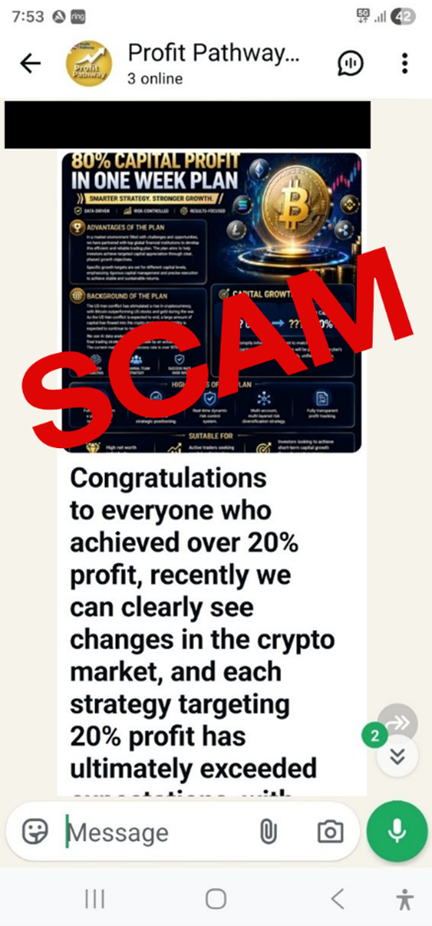
Example 2: Whatsapp scam message
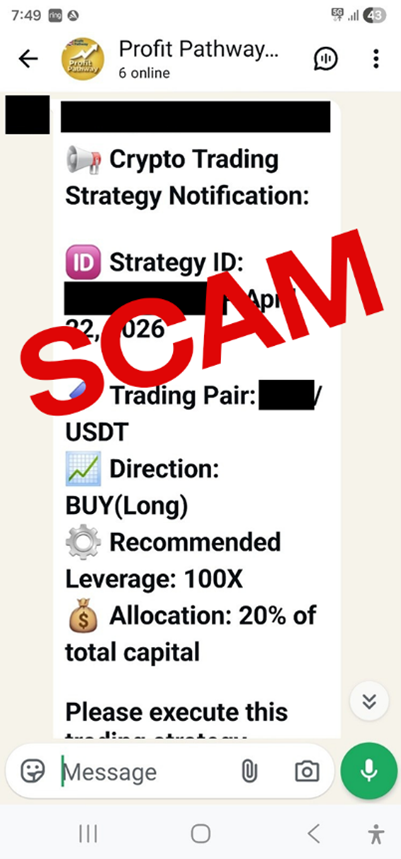
Example 3: Scam message
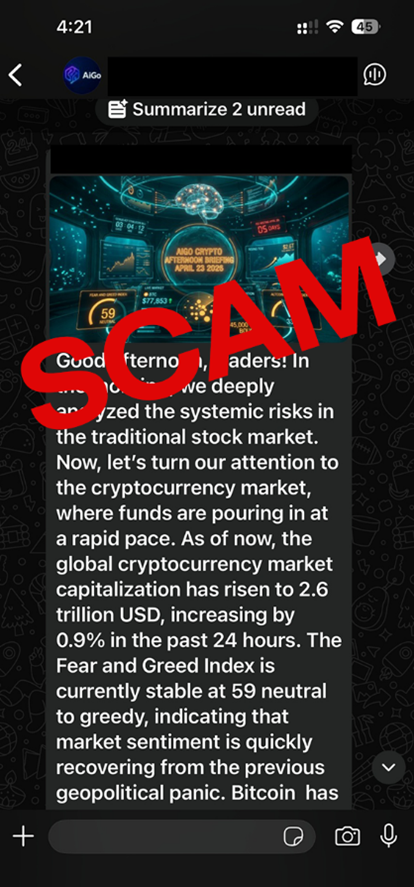
Example of fake trading platform
Example: Fake trading platform