ASIC Annual Forum 2026
Media content from ASIC Annual Forum 2026 will be added to this page as sessions are completed. You will be able to access media releases, key speeches, photos, audio and other highlights from the forum.
If you wish to contact a member of ASIC’s media team please email: media.unit@asic.gov.au.
Annual Forum 2026: Day 1 program
Annual Forum 2026: Day 1 gallery
Opening address and Keynote
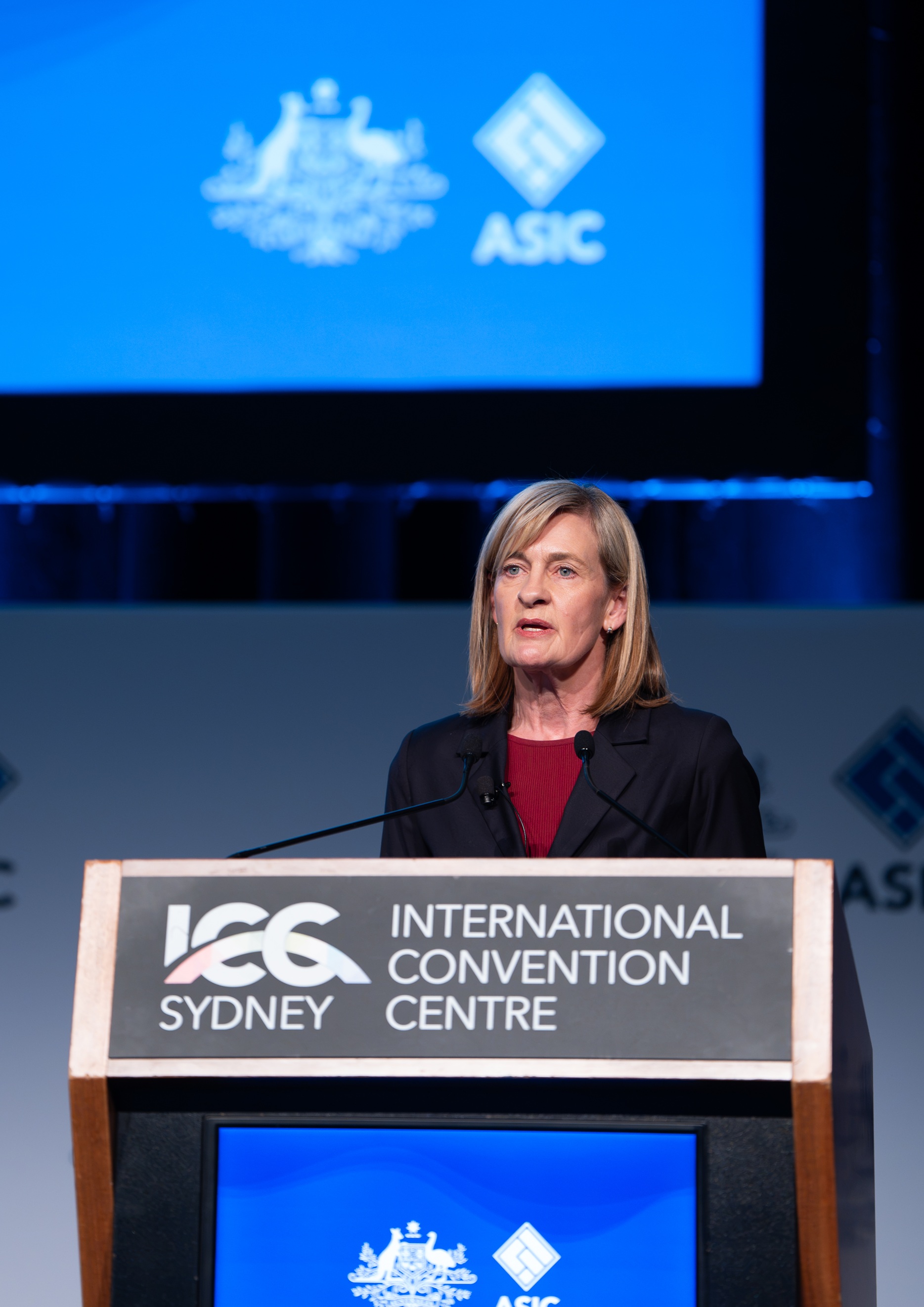
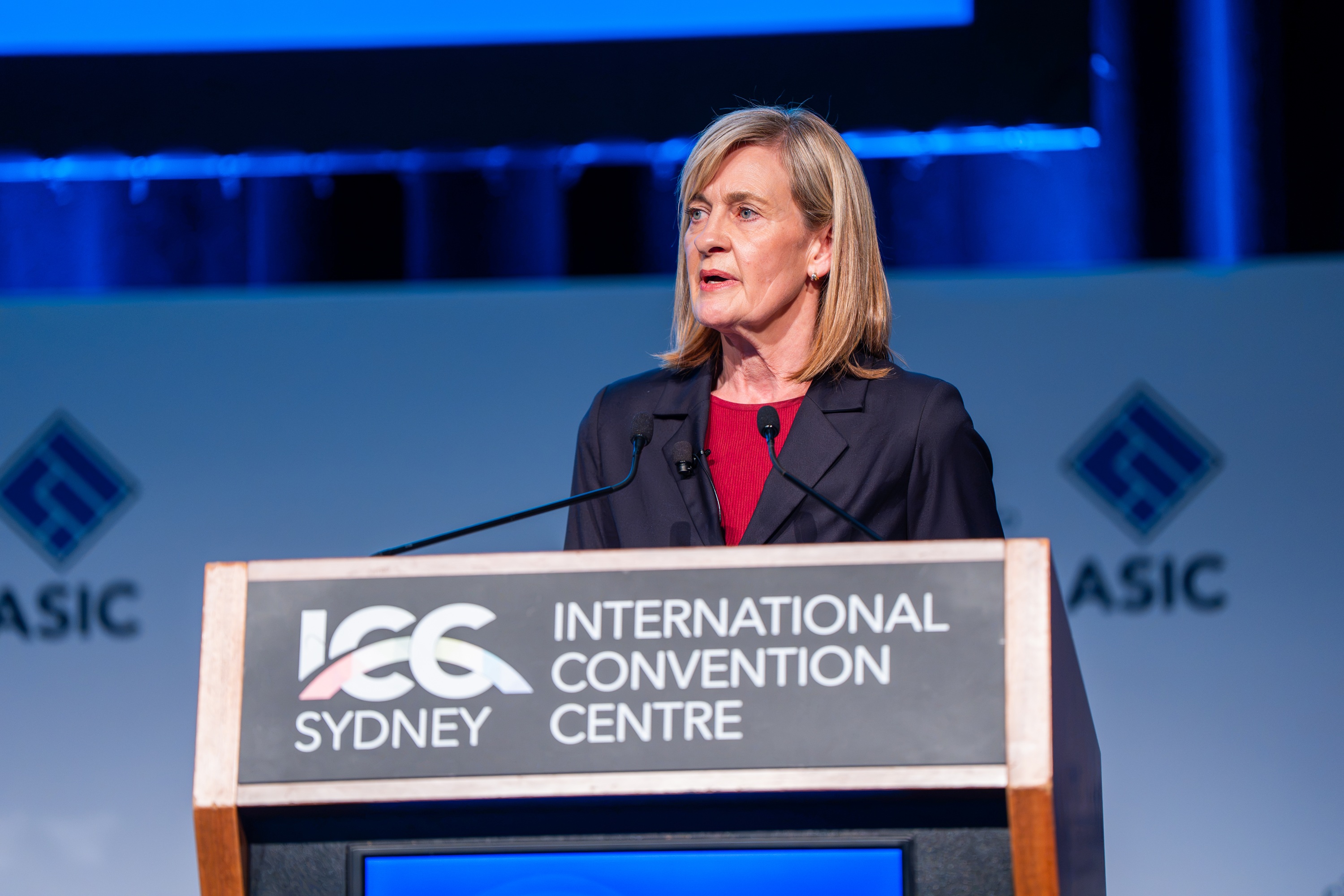
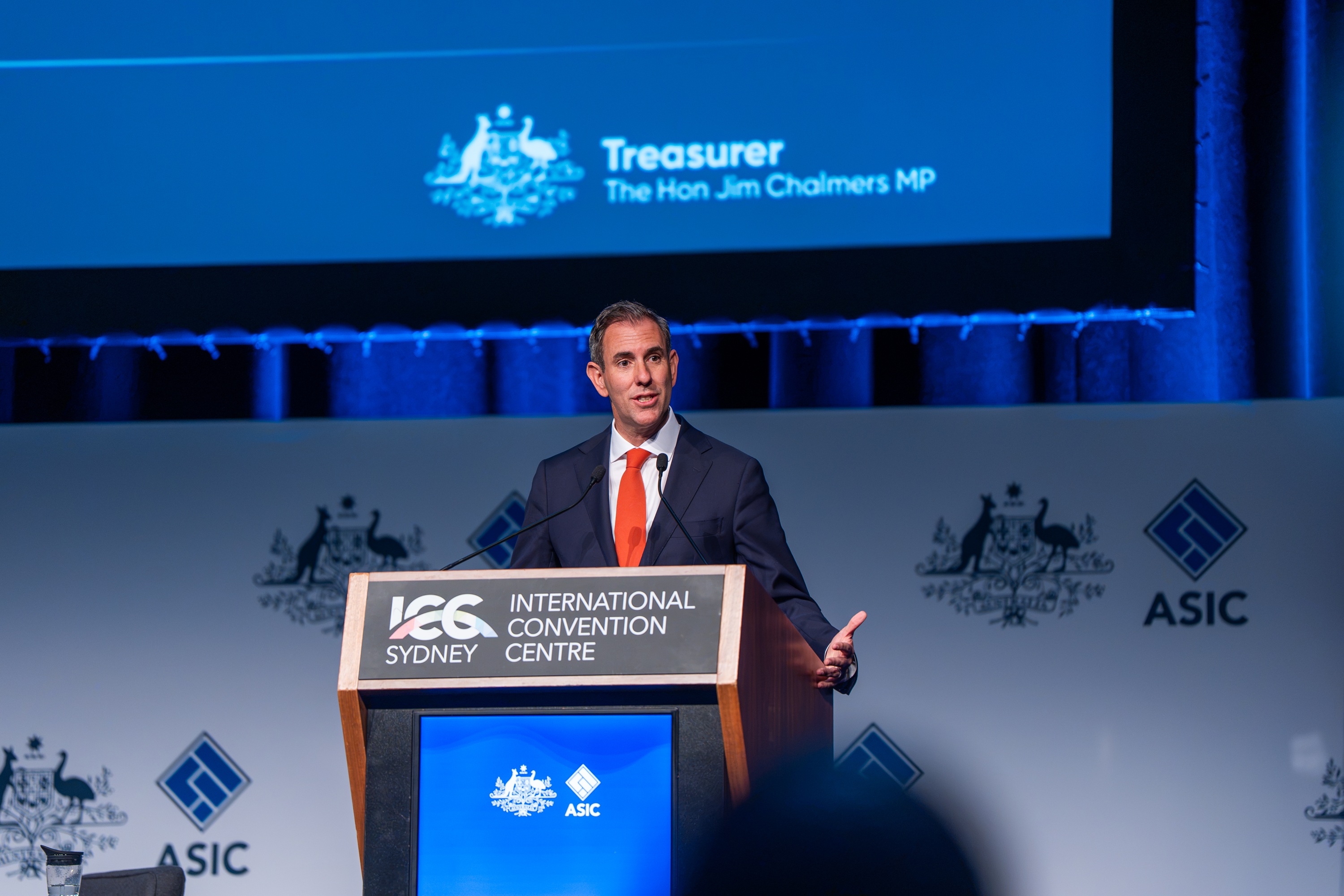
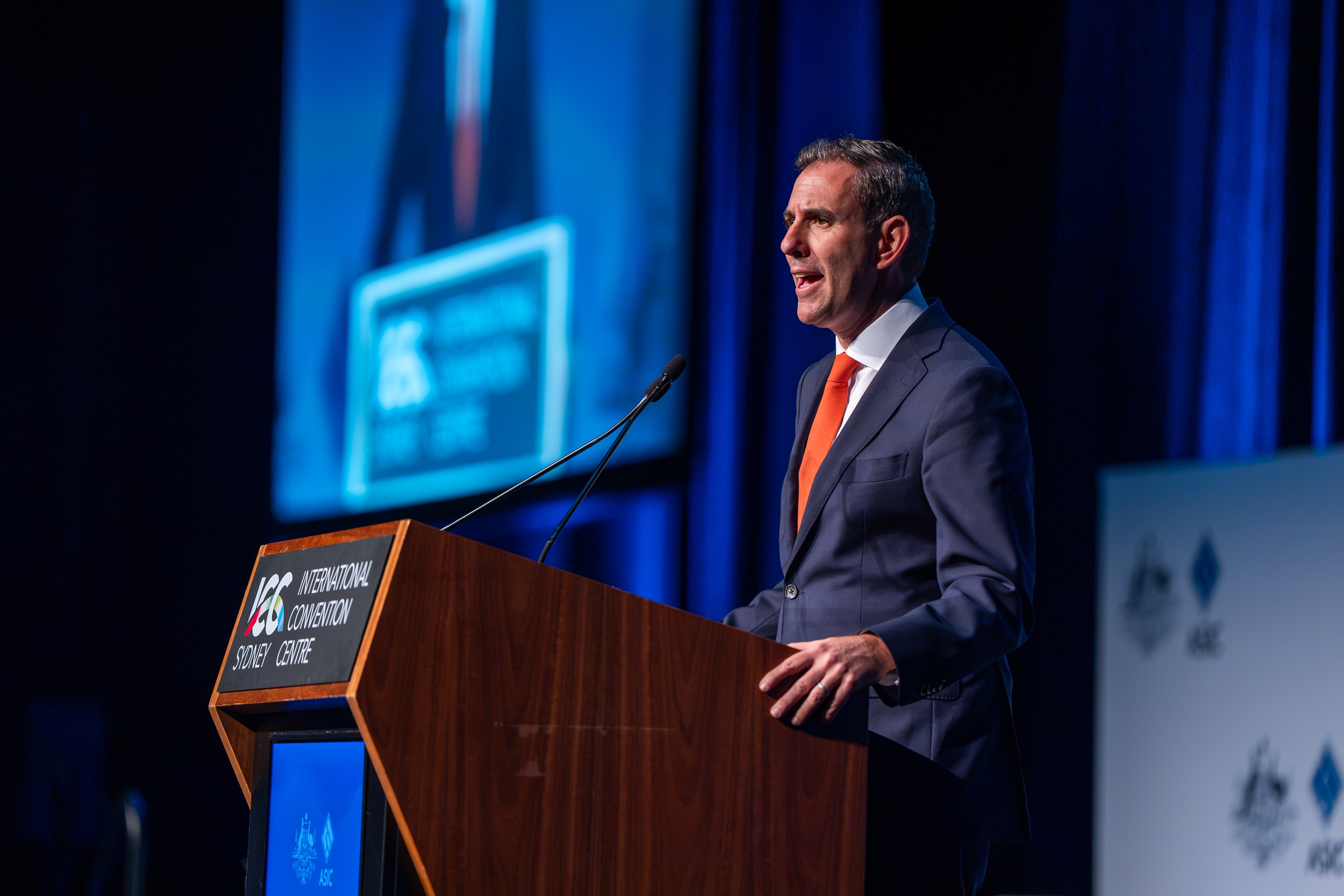
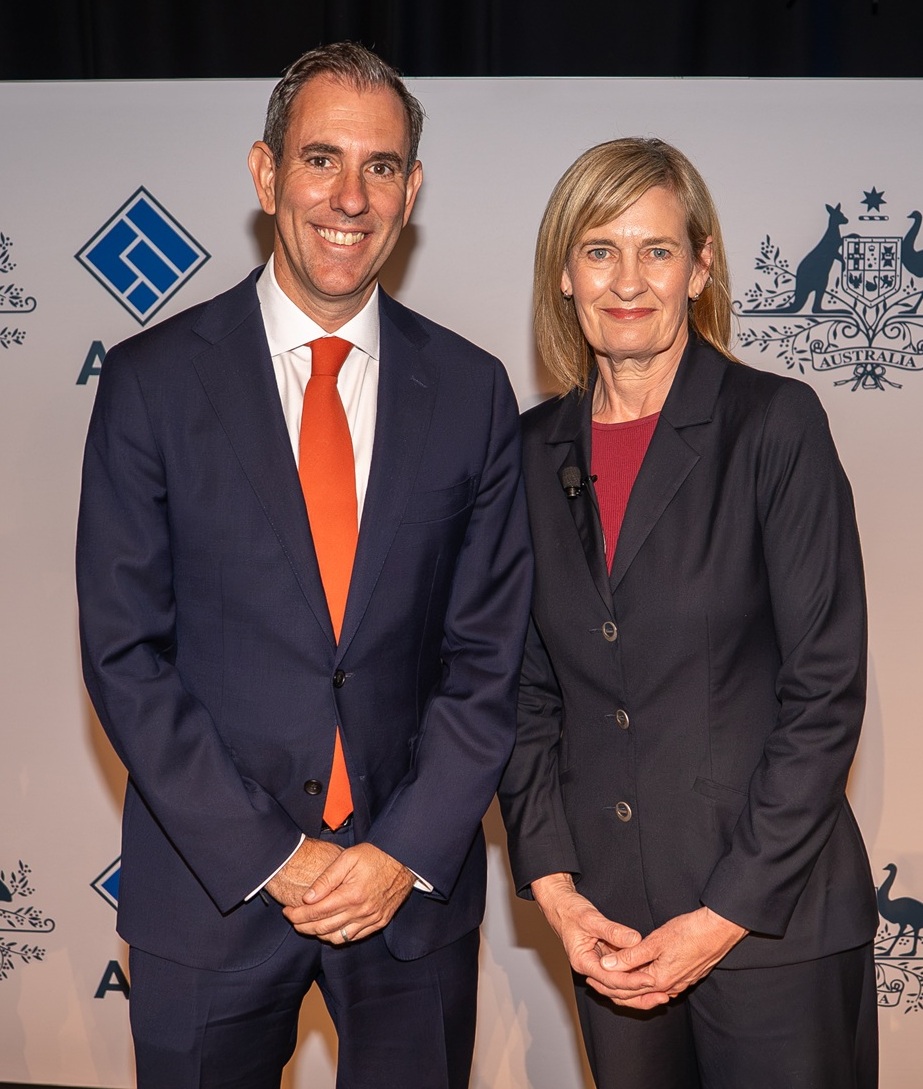
Plenary session 1: State of the Economy – the waves of change

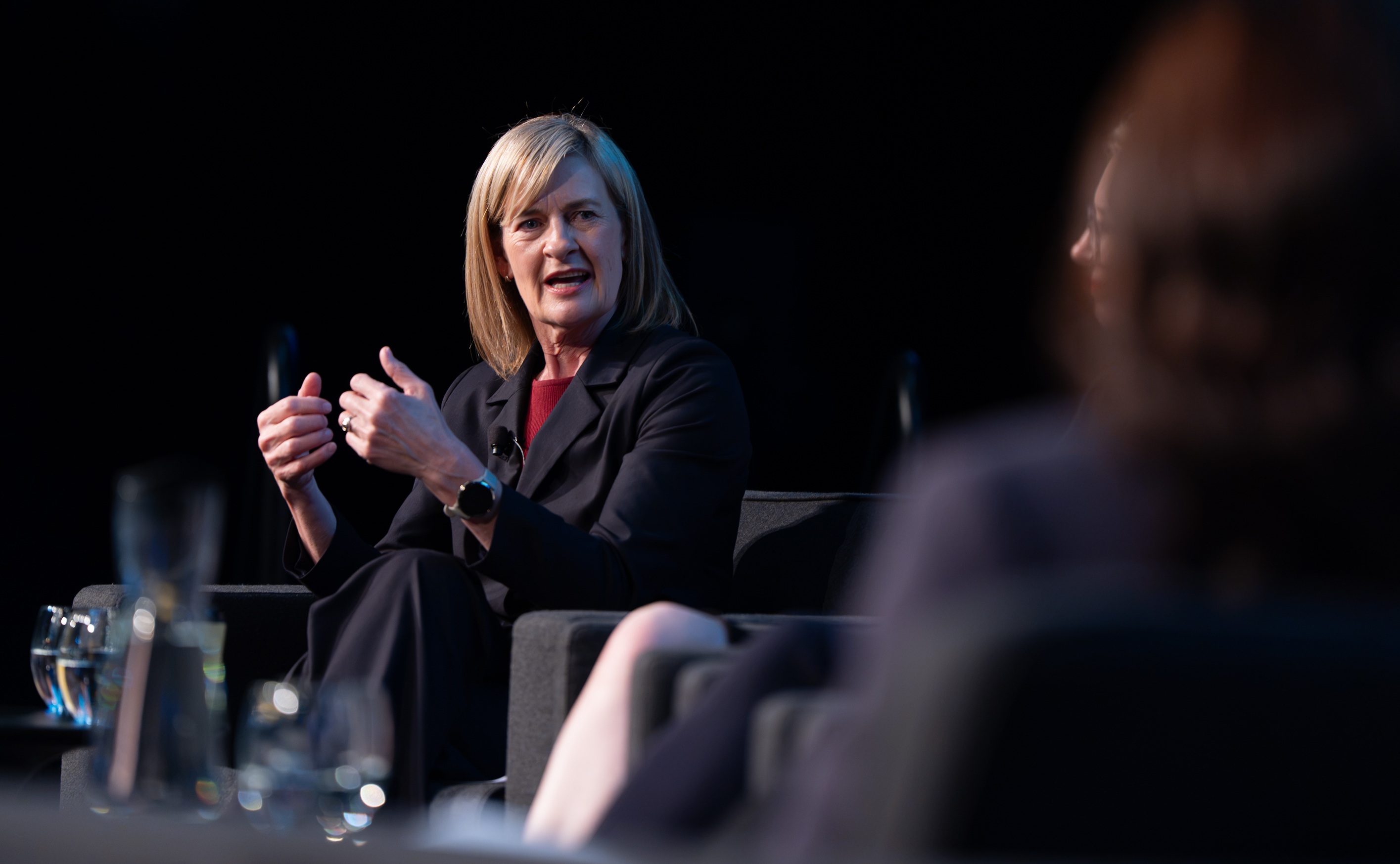
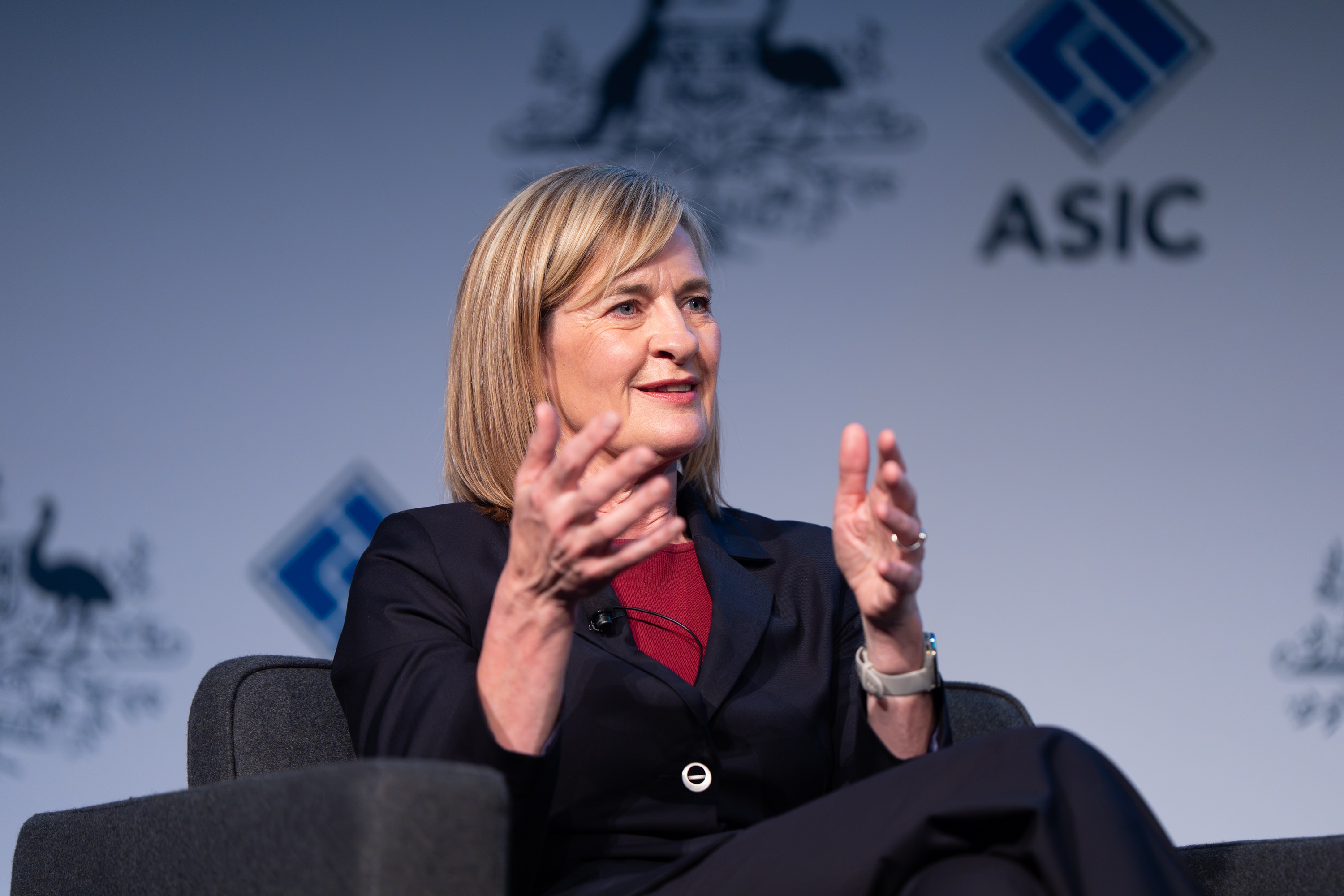
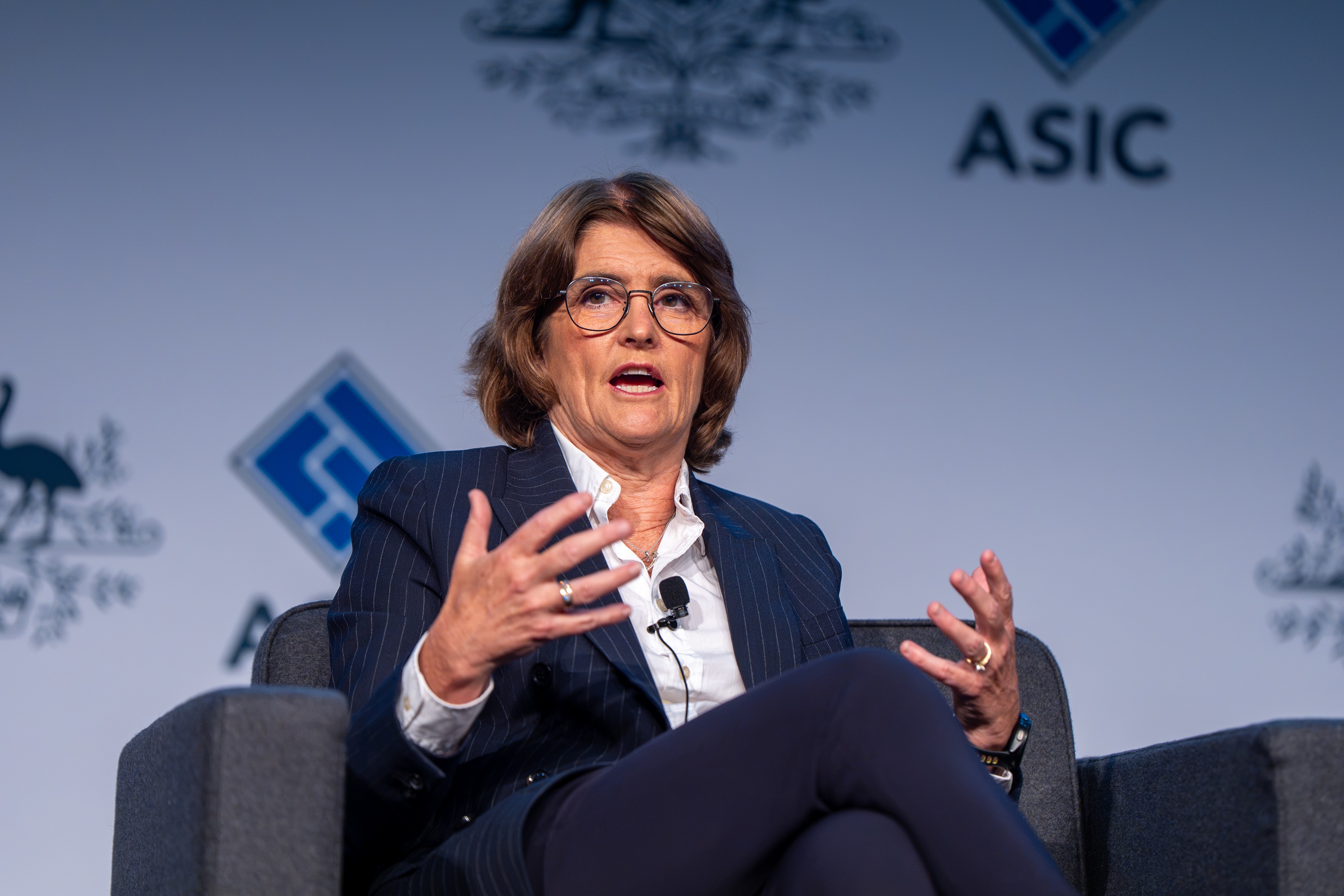
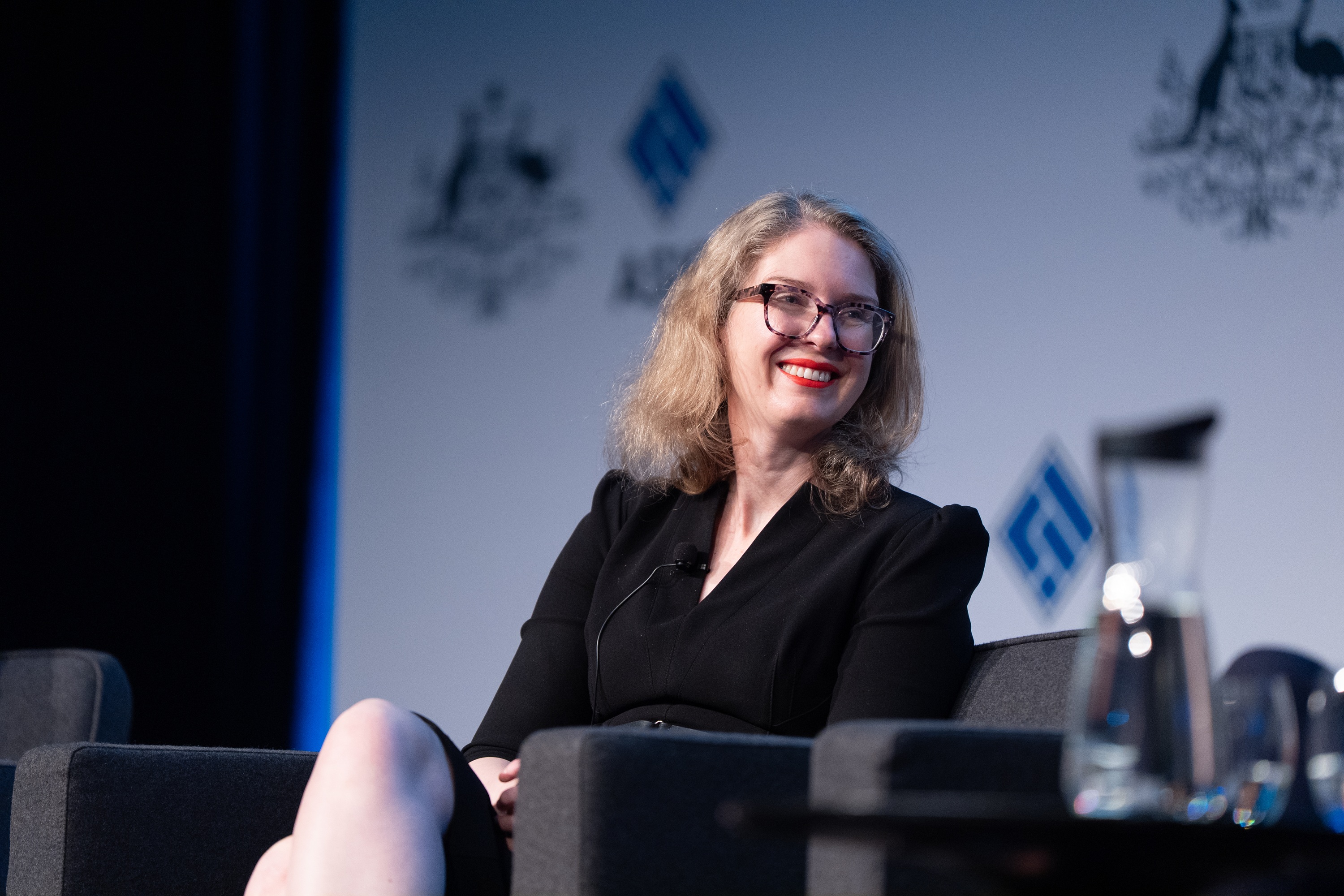
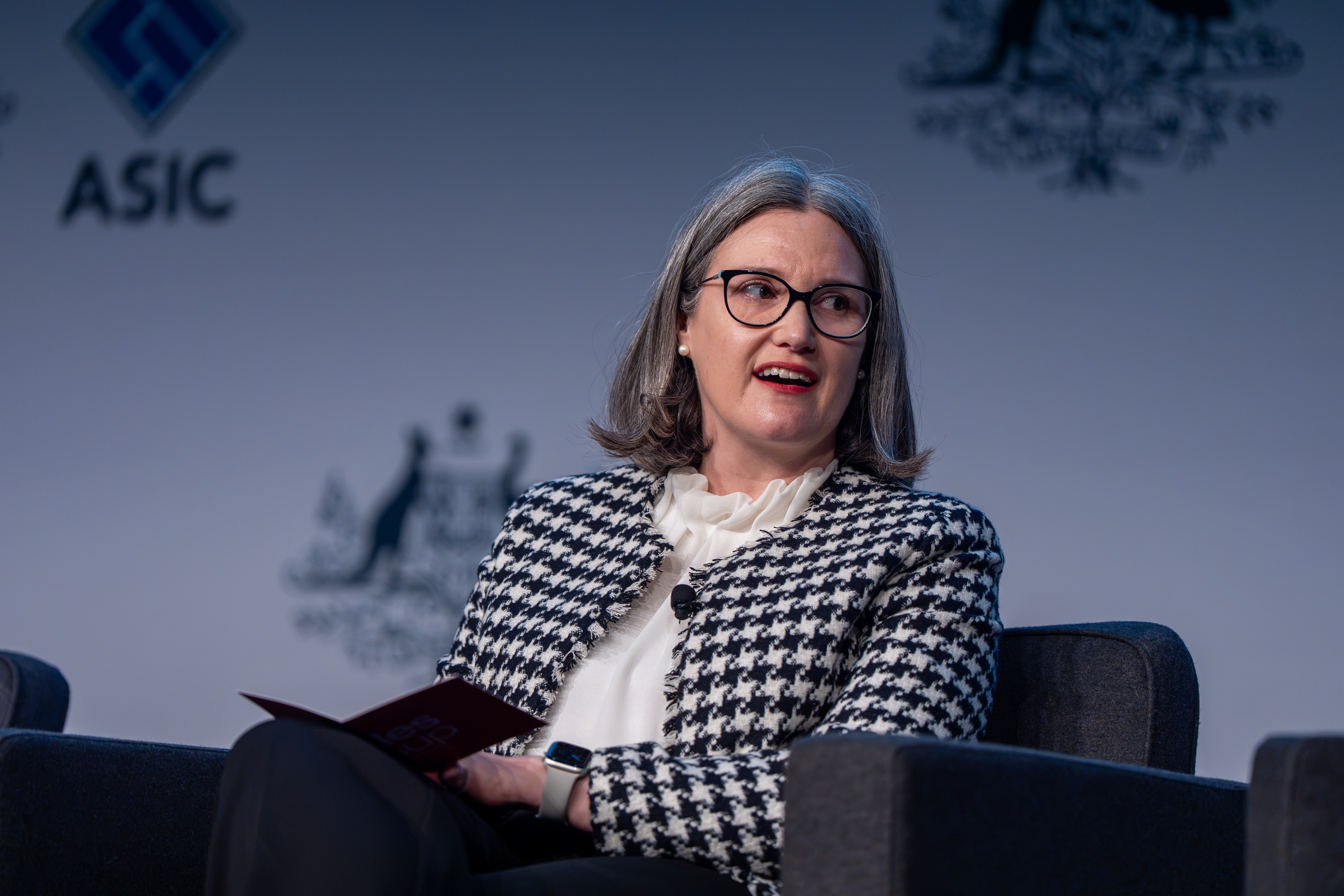
Plenary session 2: The human face of global disruption
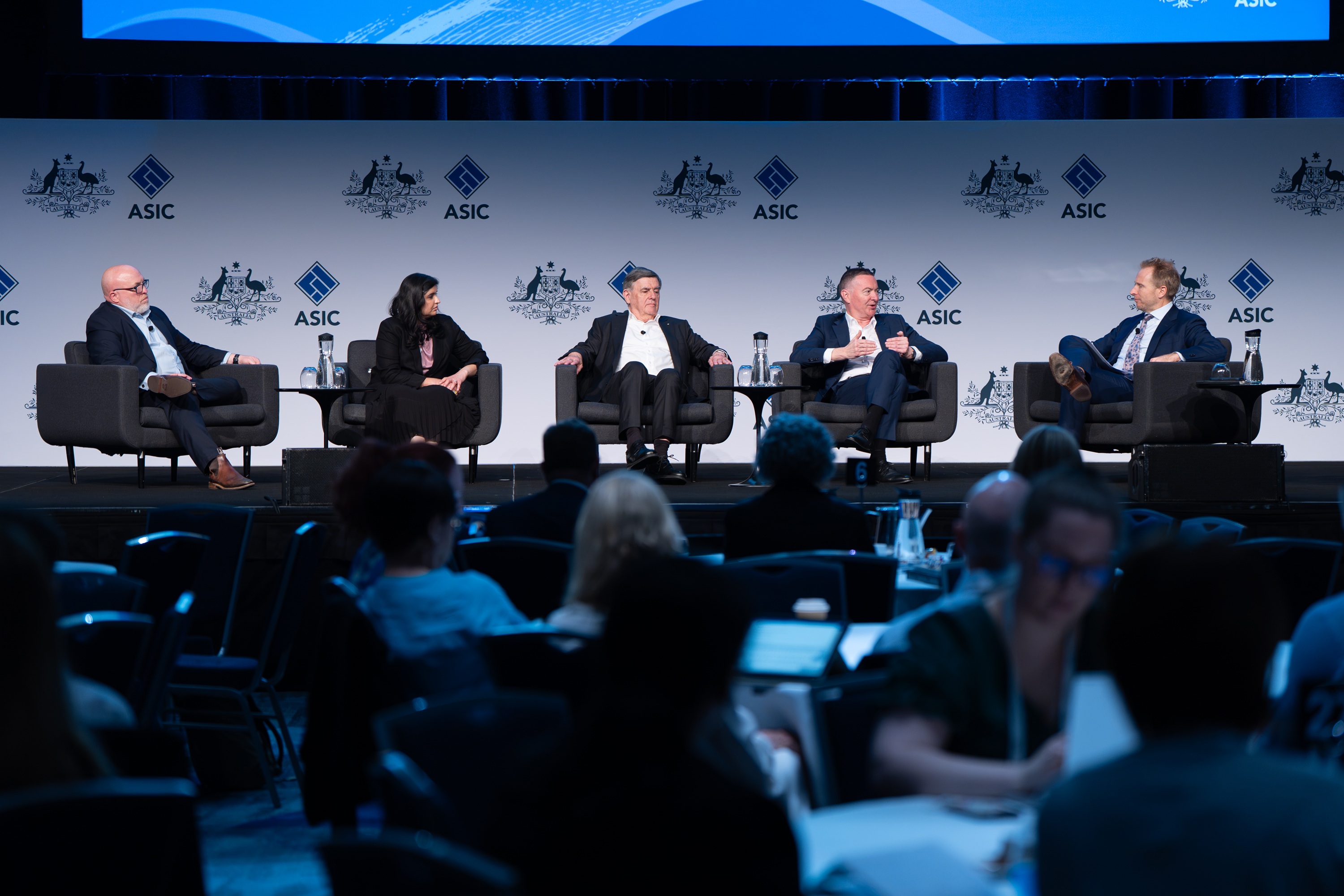
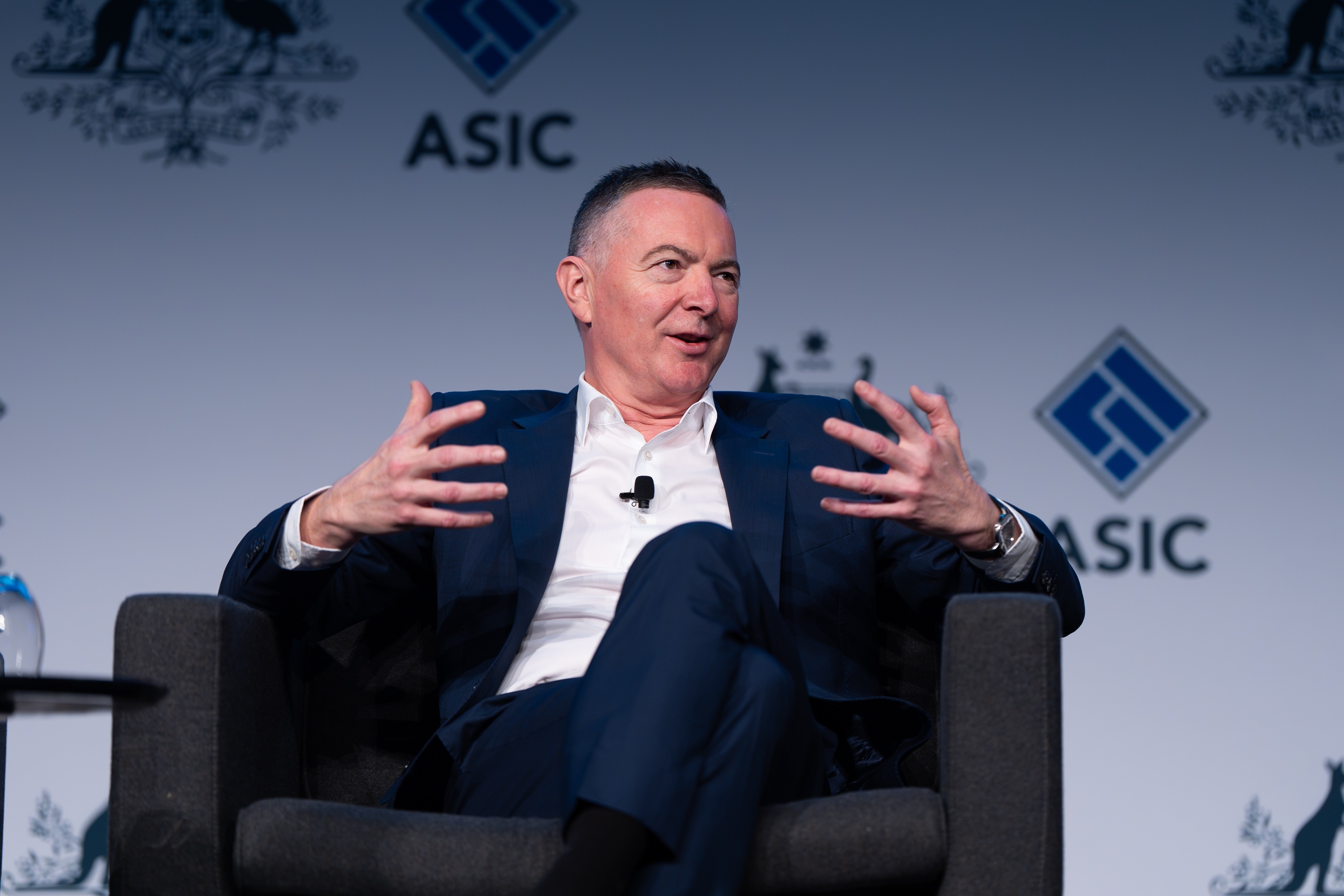
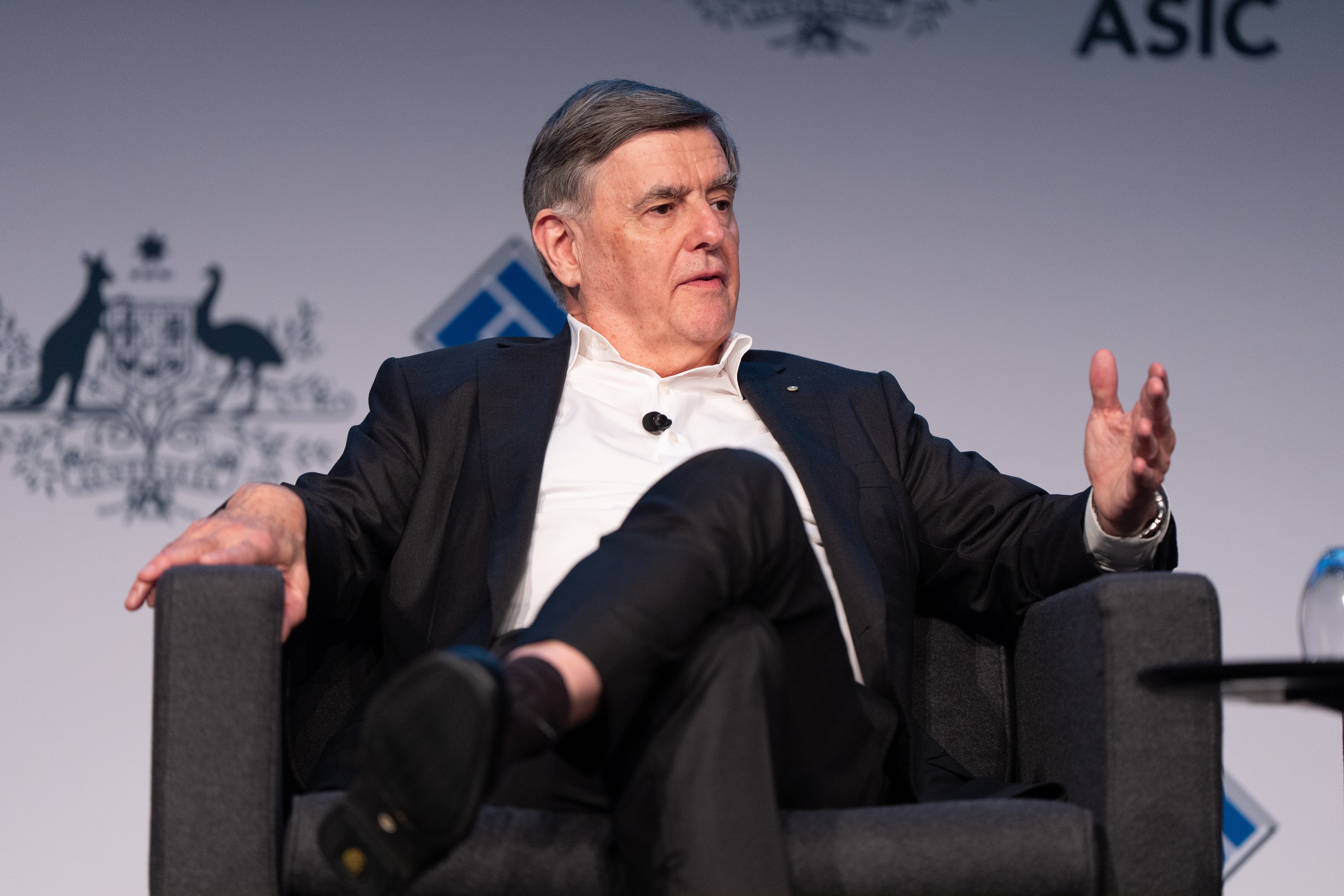
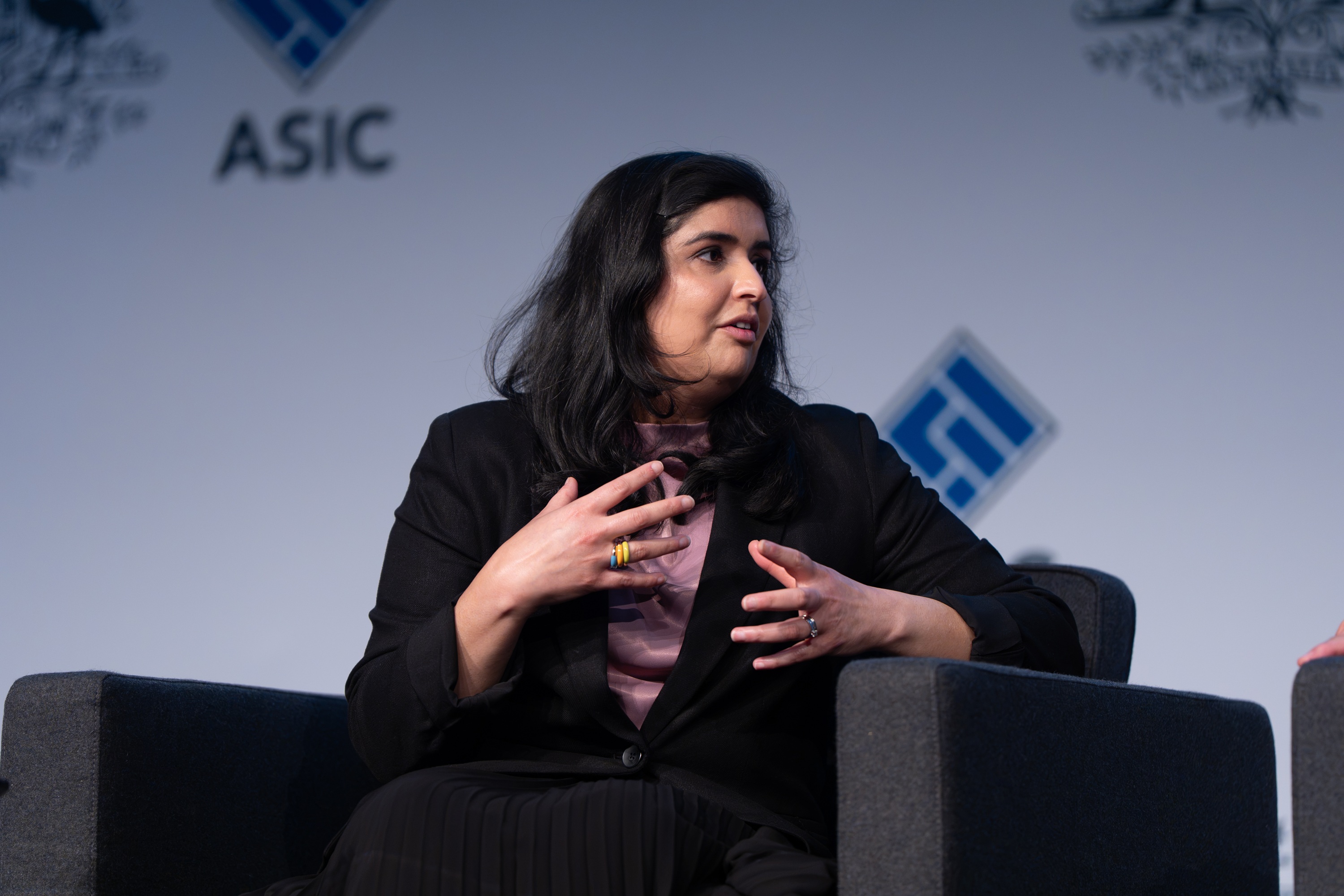
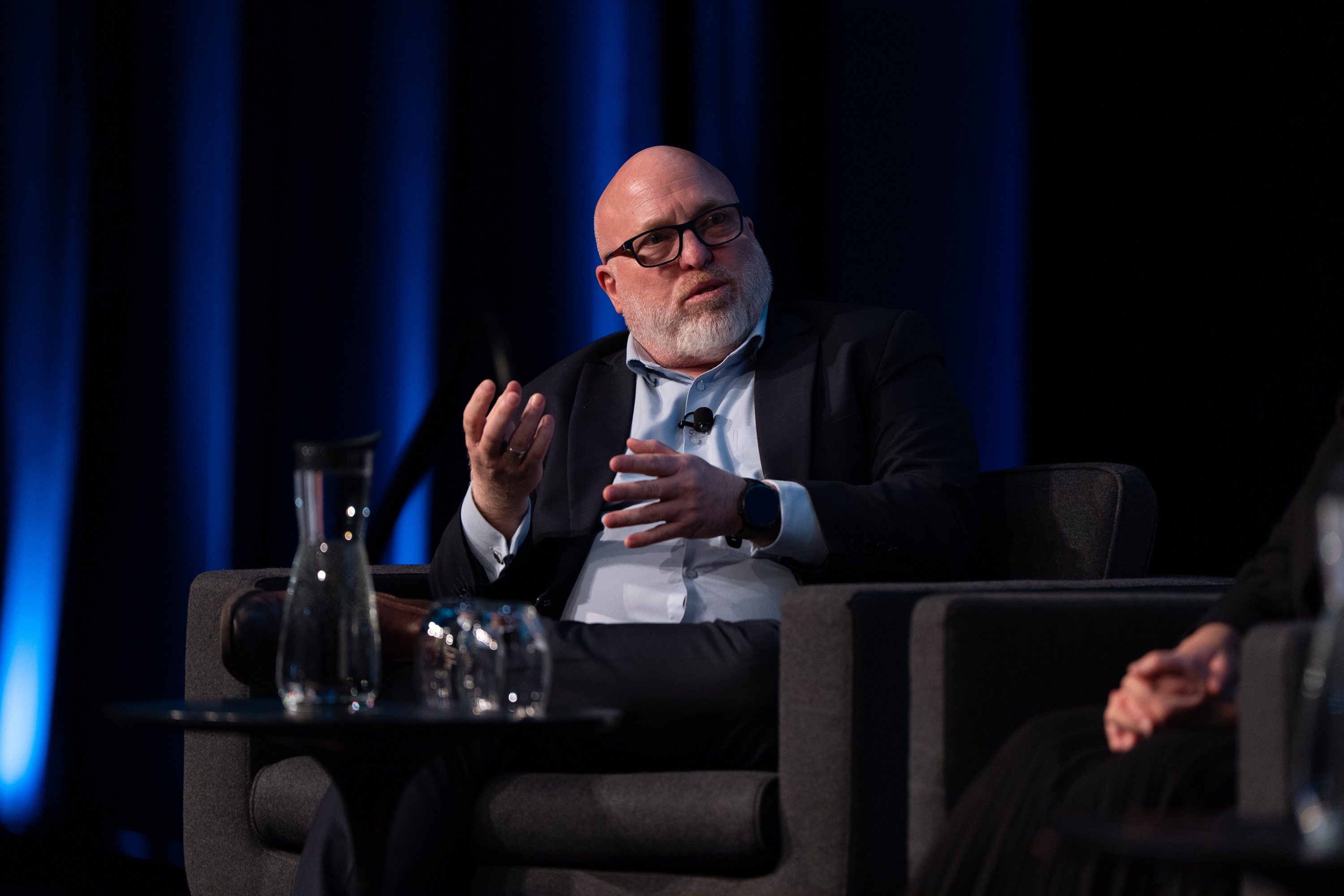
Plenary session 3: Unlocking responsible innovation

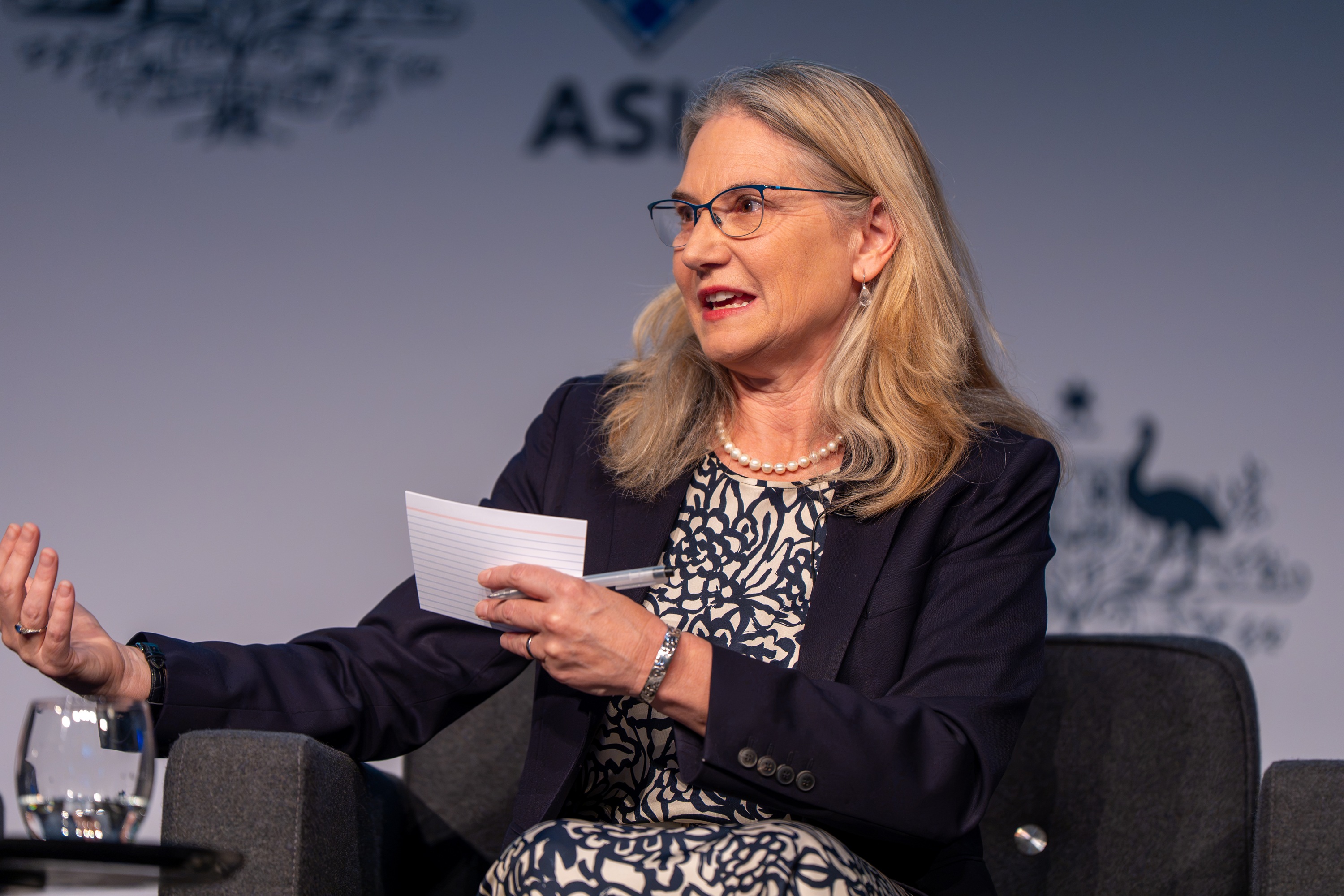
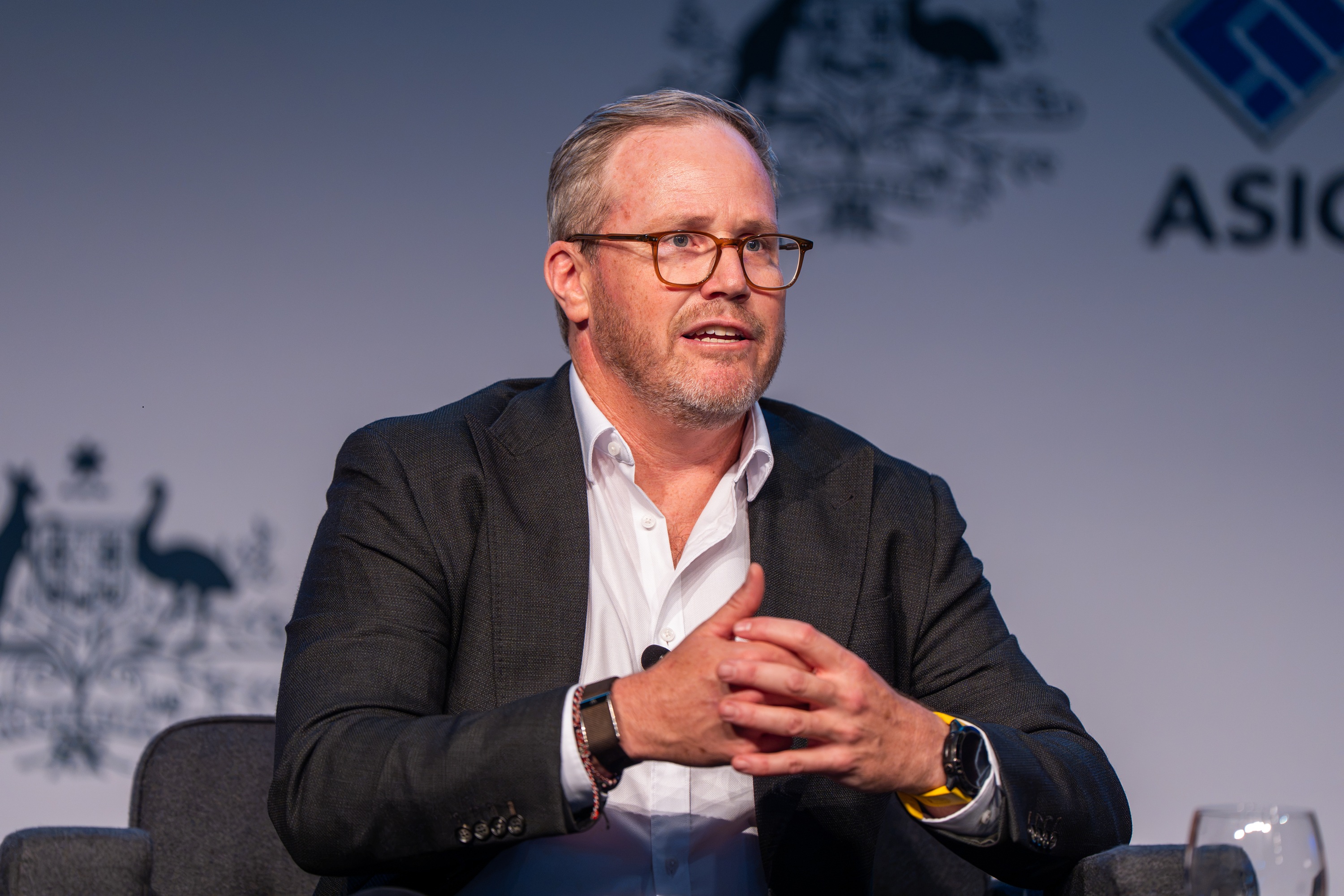
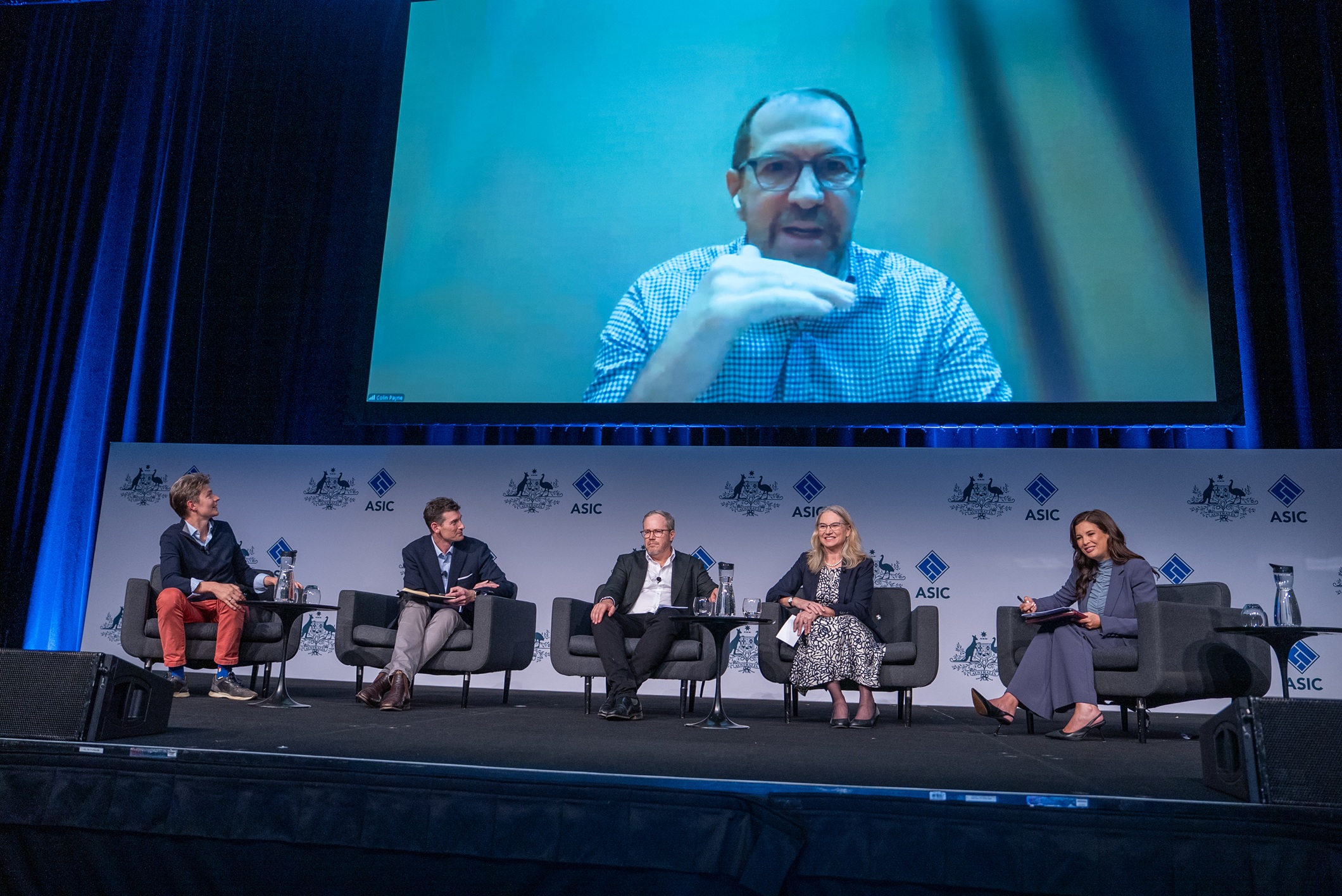
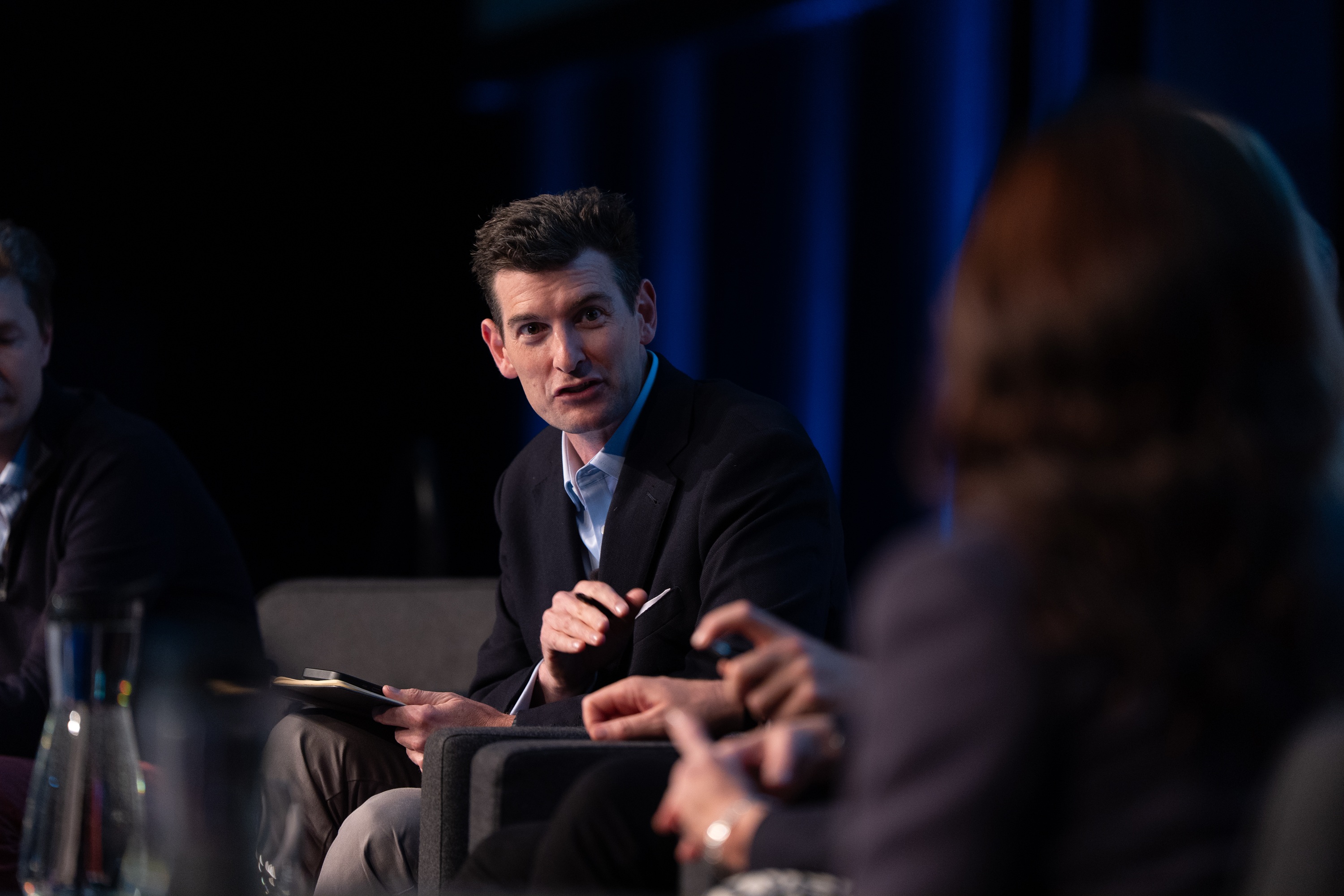
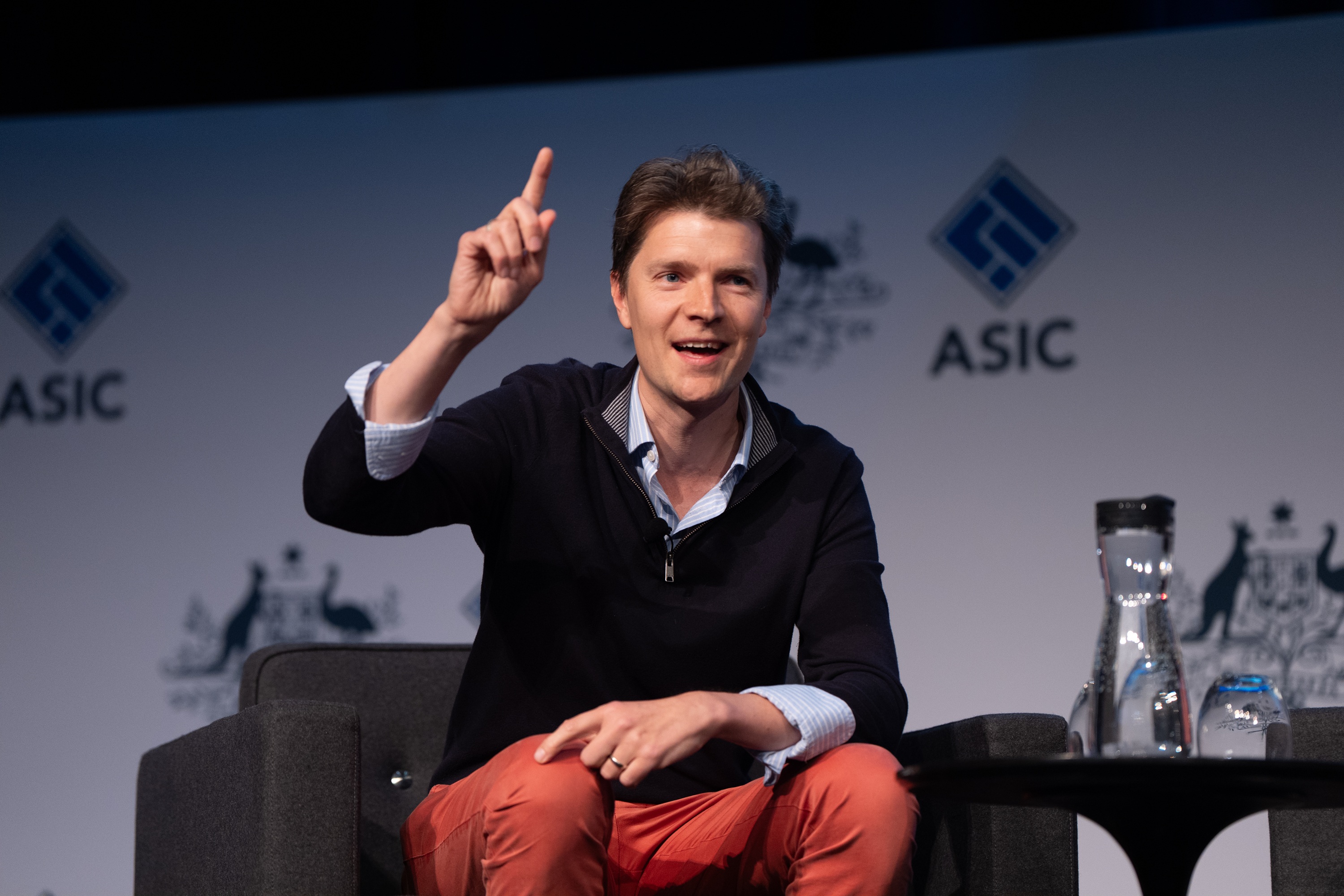
Plenary session 4: The future shape of markets
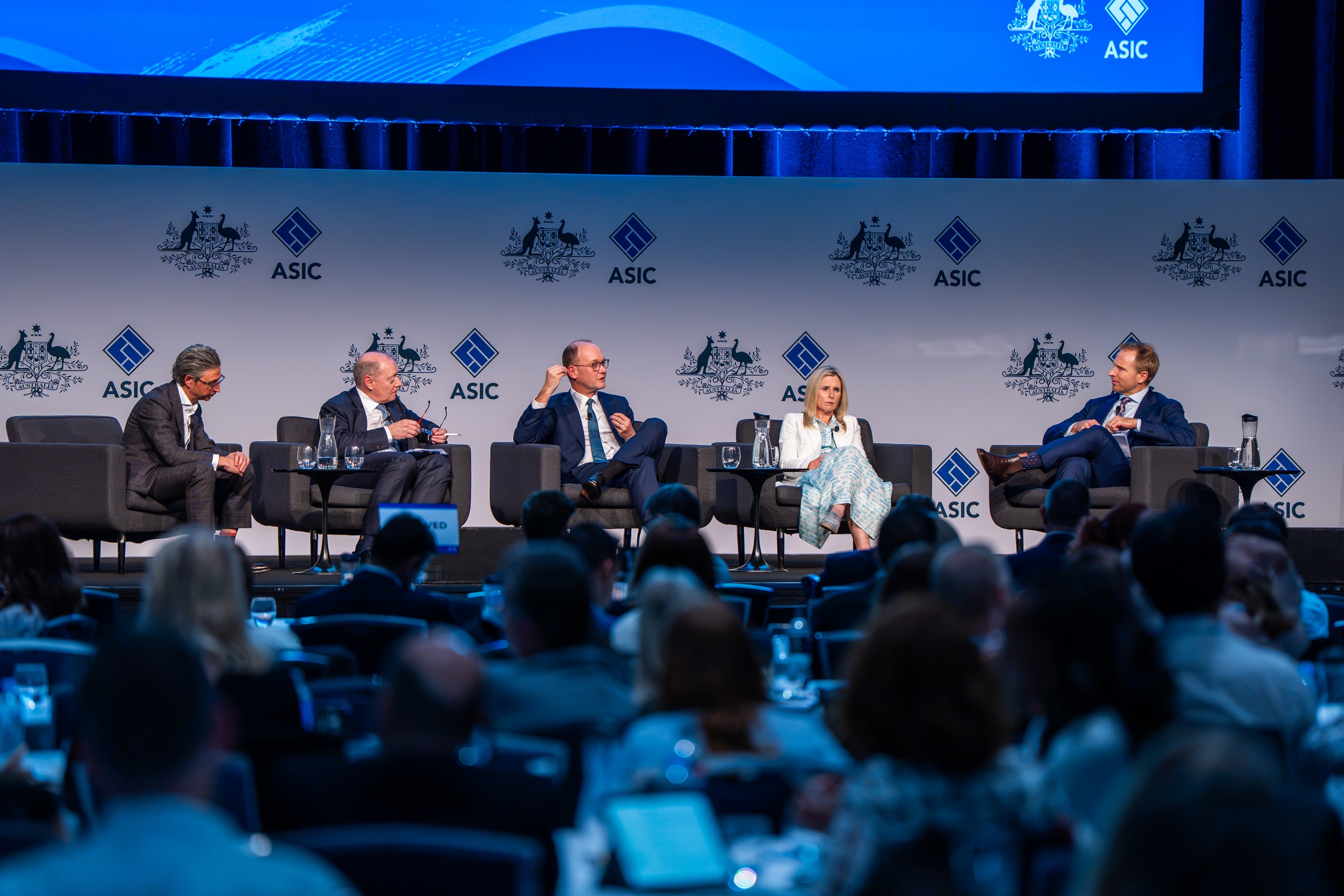
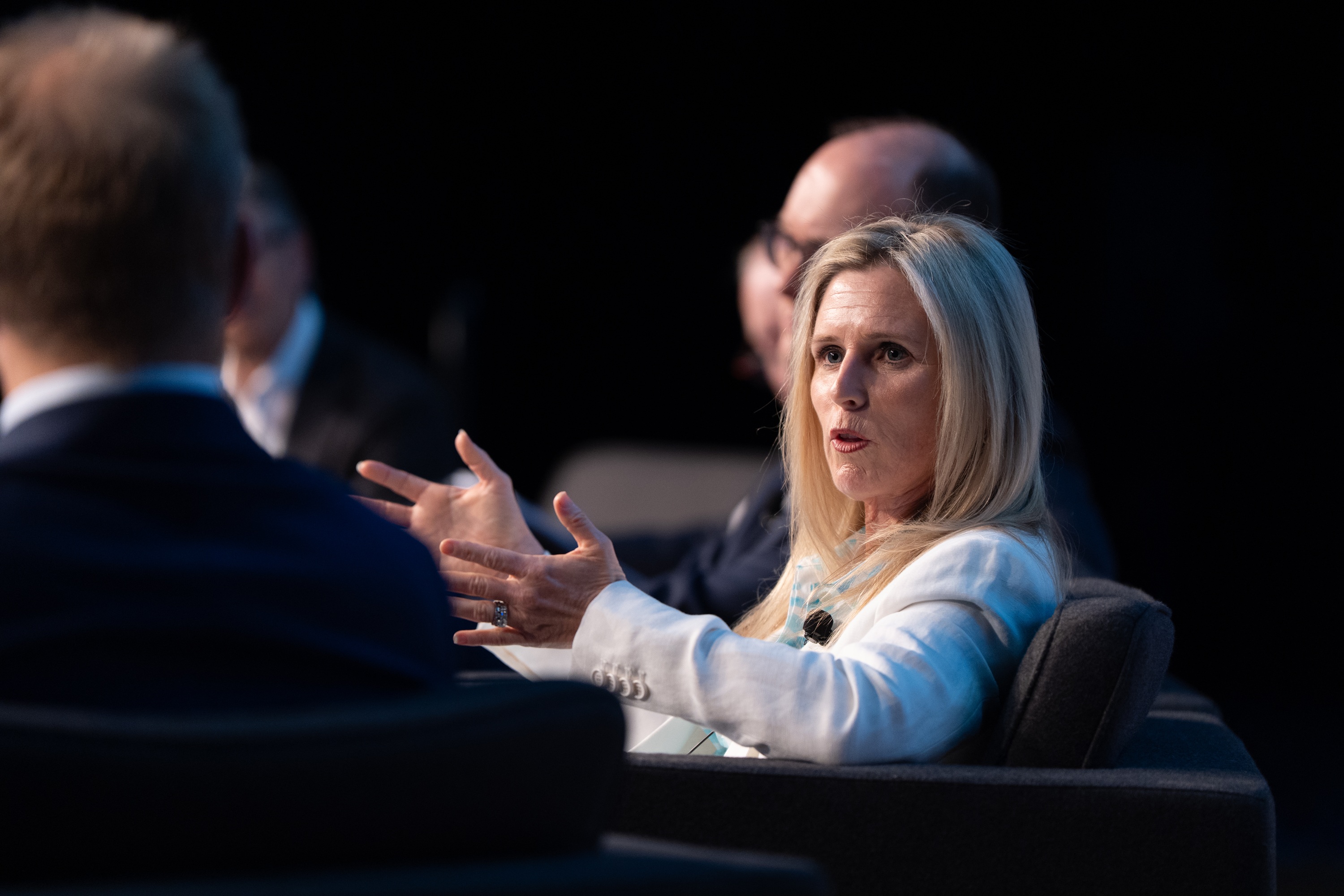
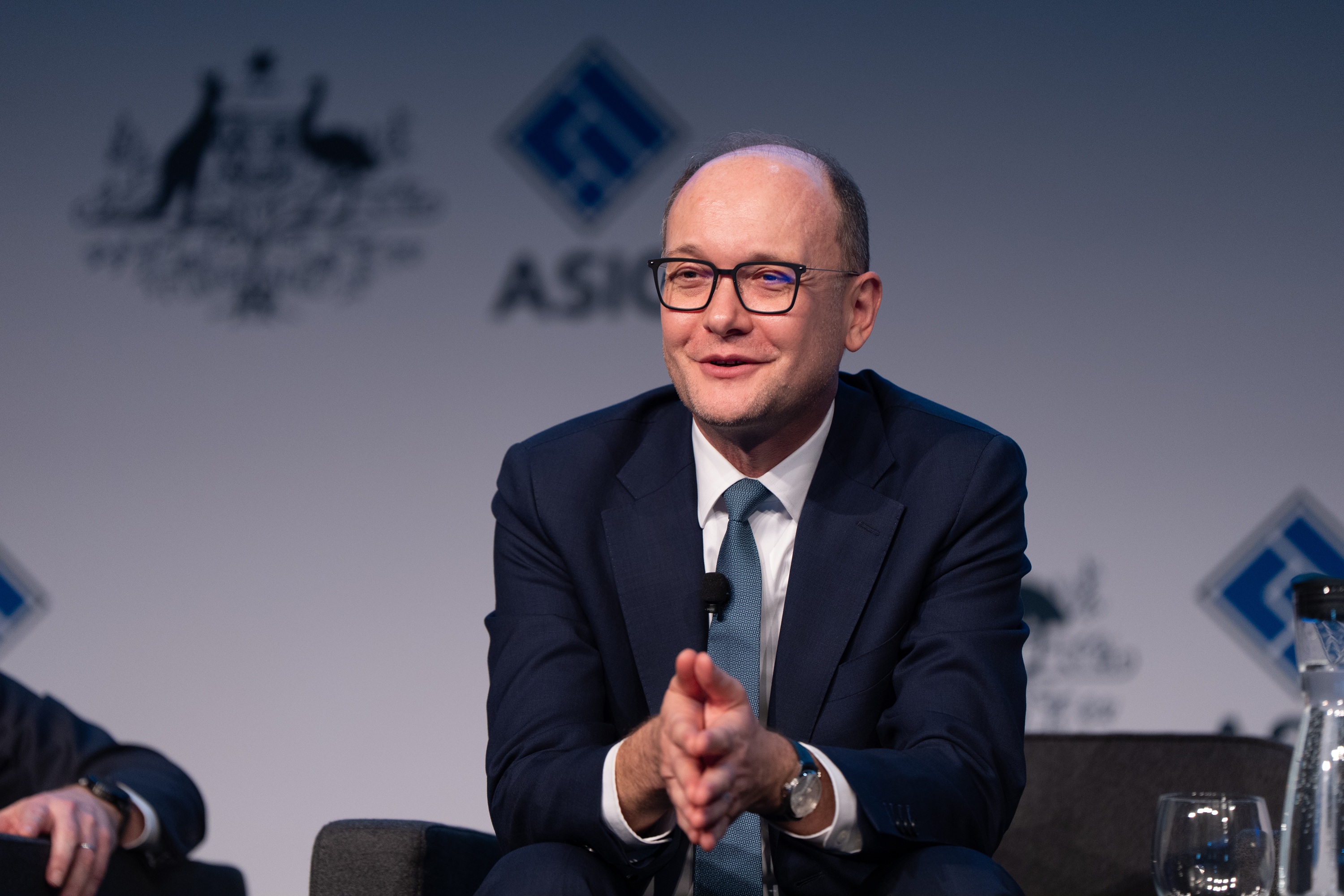
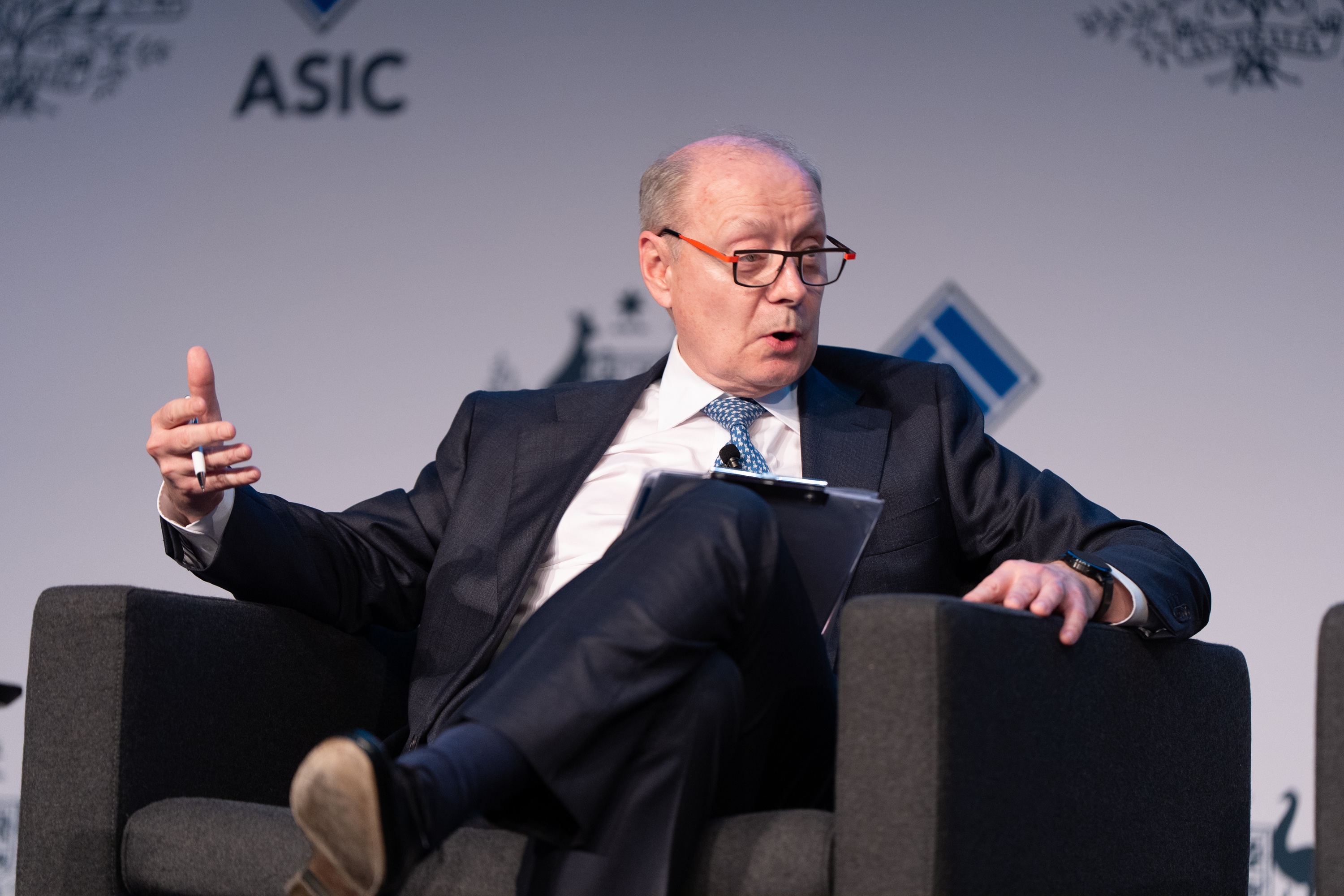
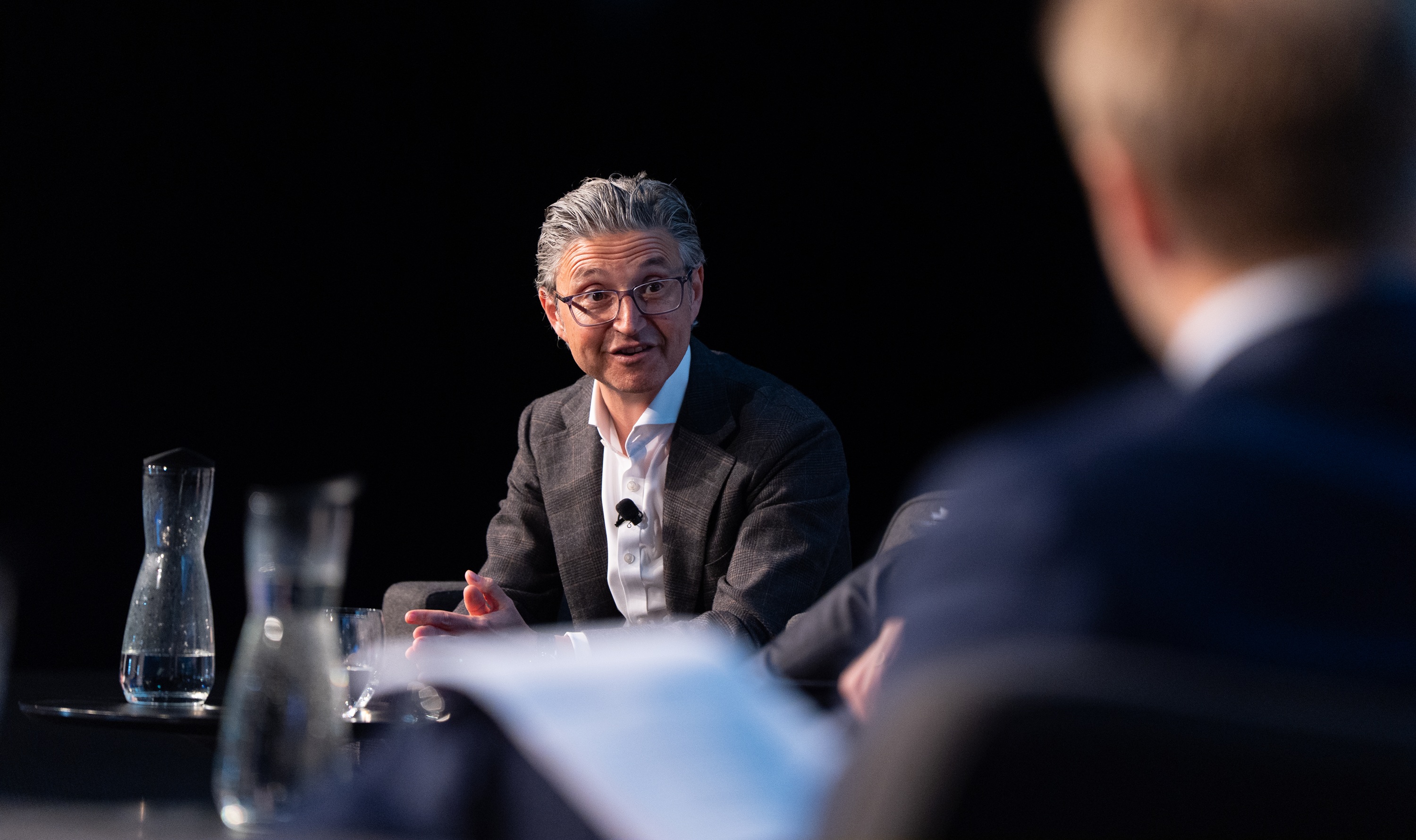
Elective session A: The role of codes in improving consumer protection
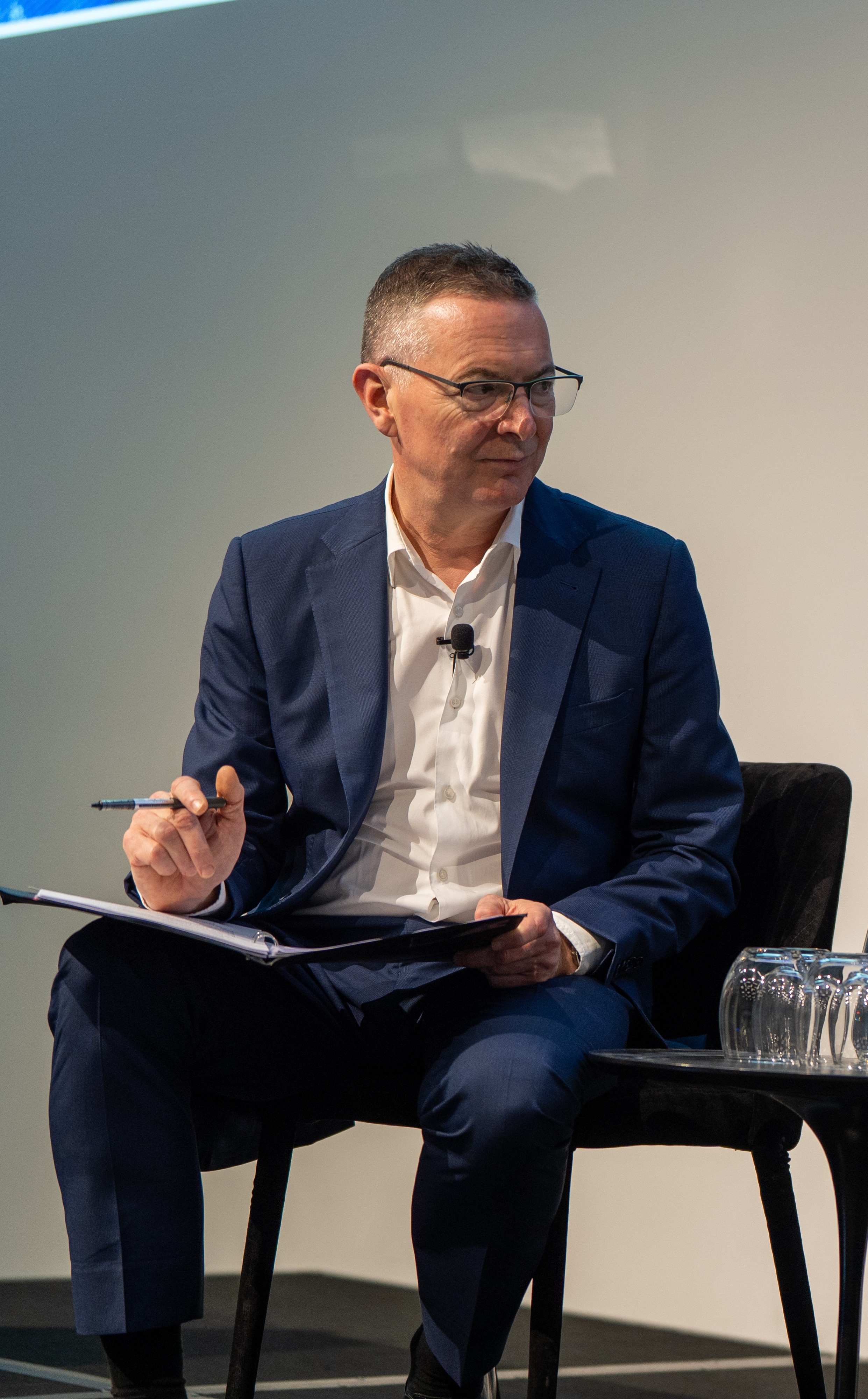
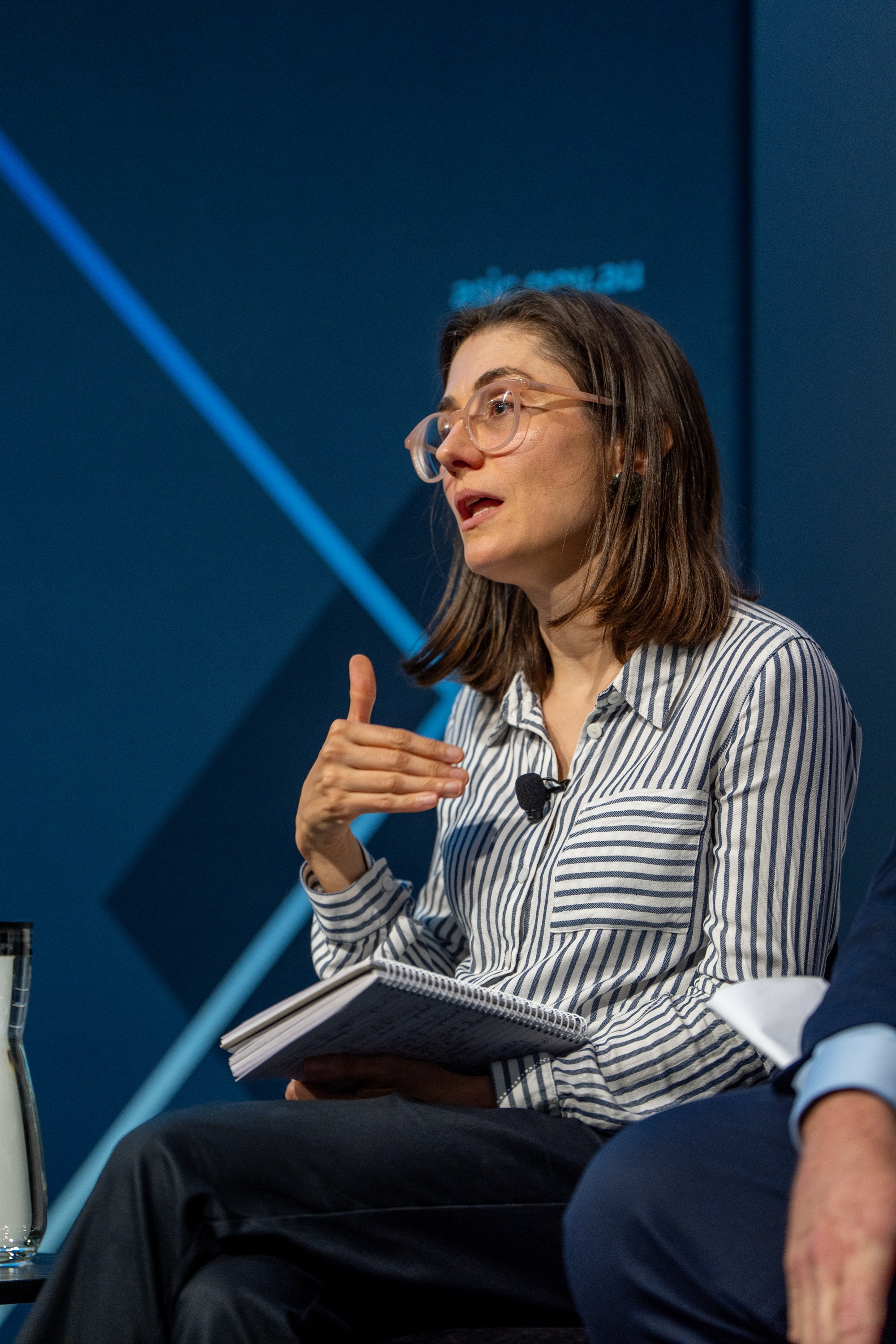
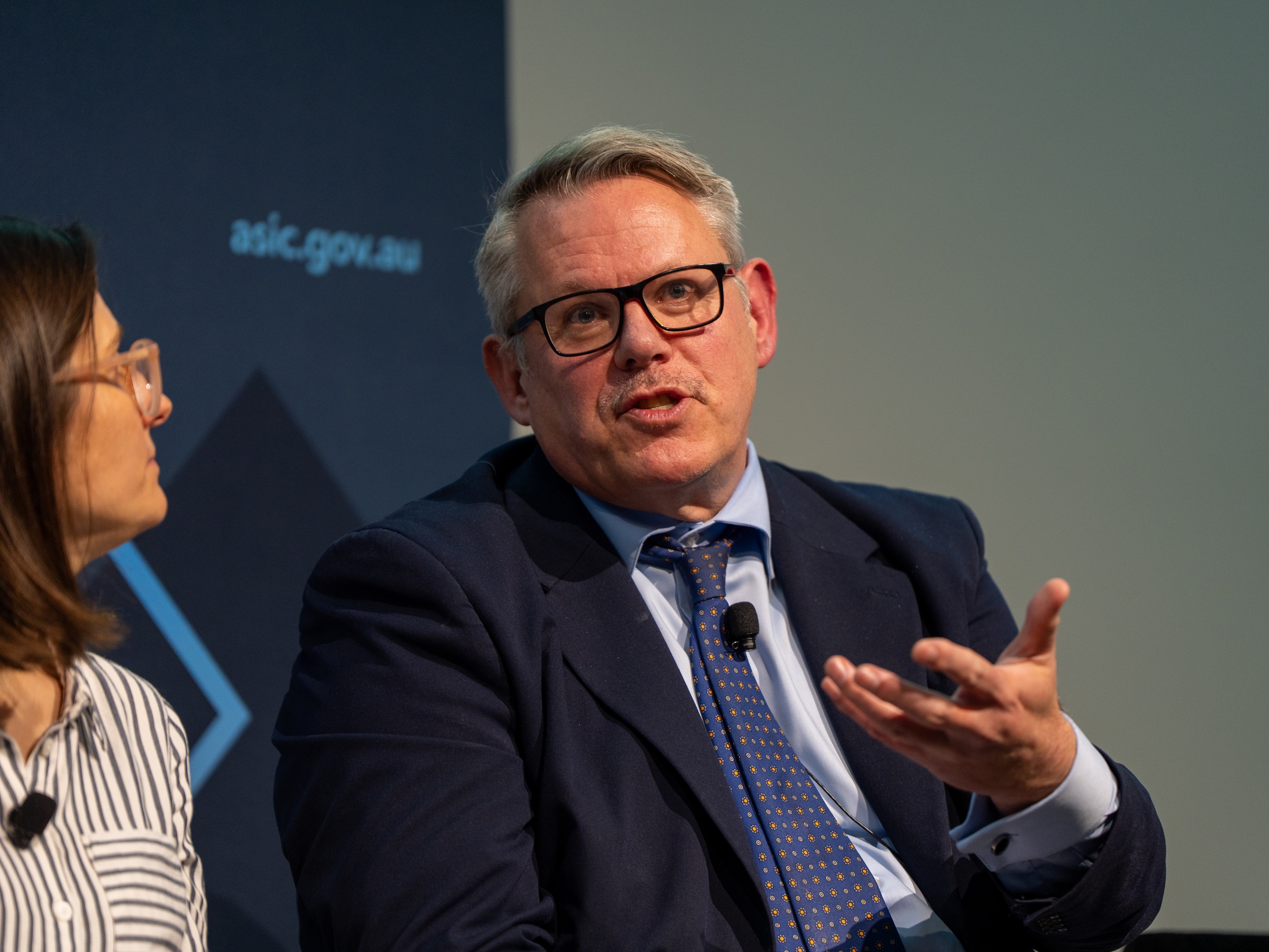
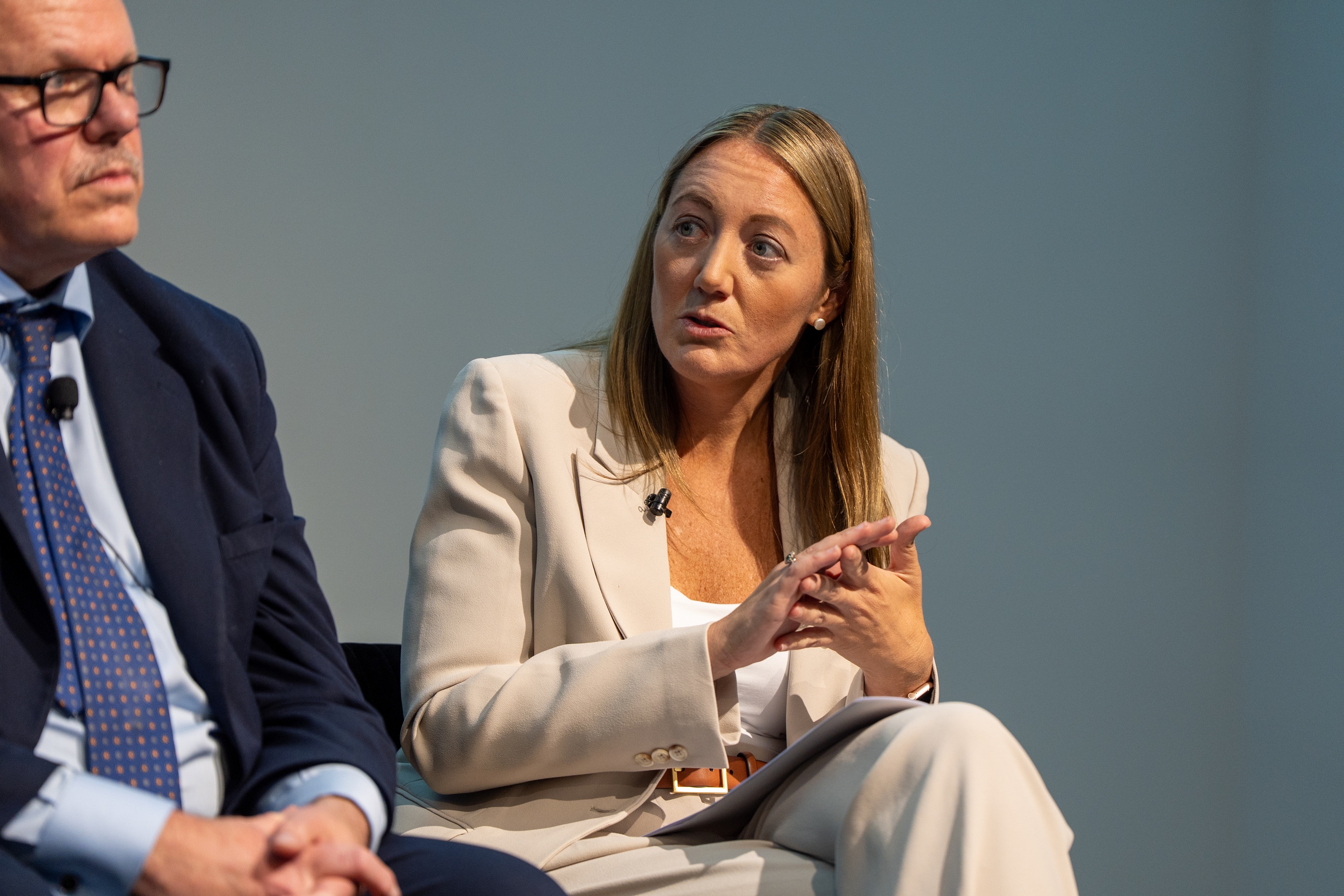
Elective session B: Professional services: building strong foundations
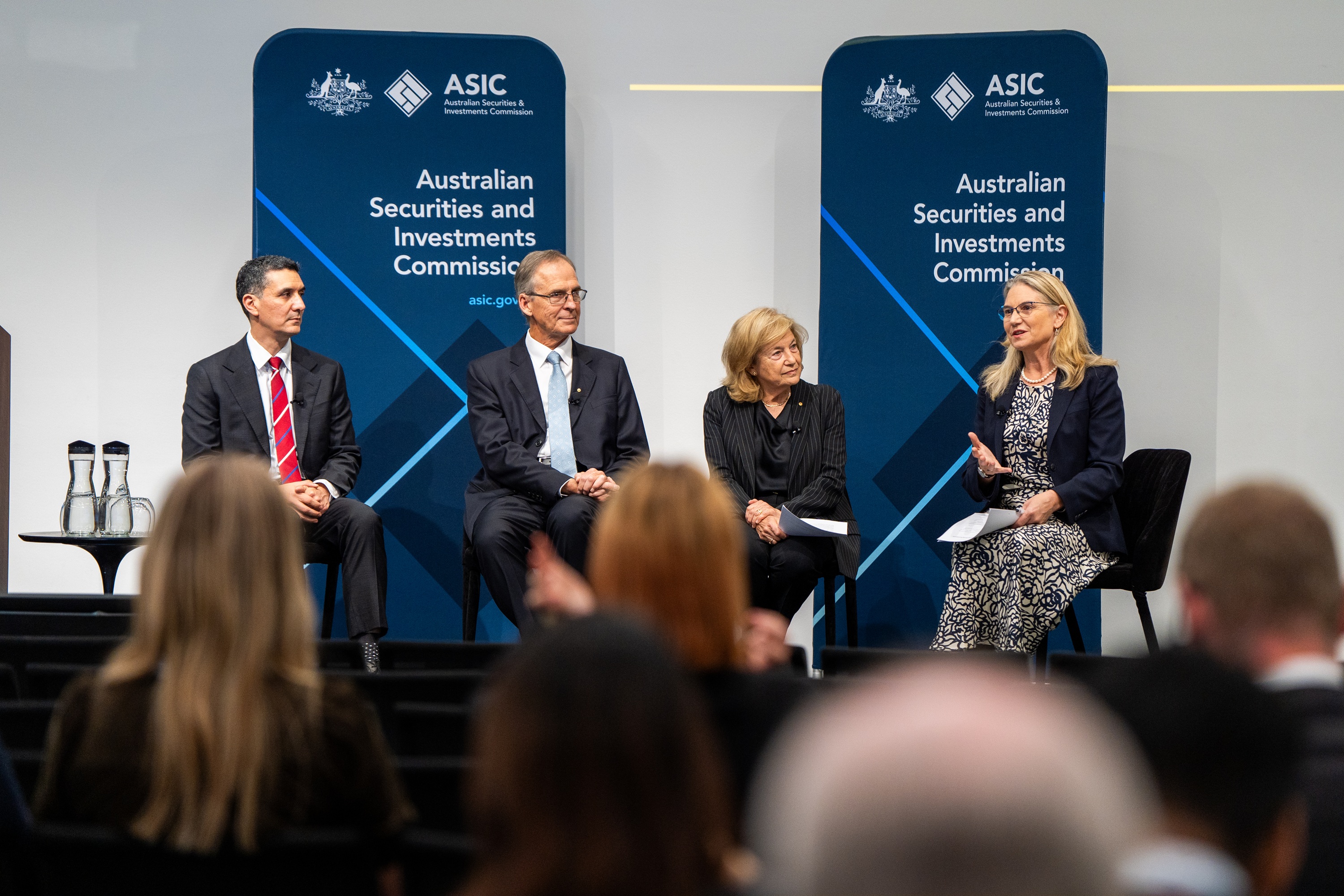
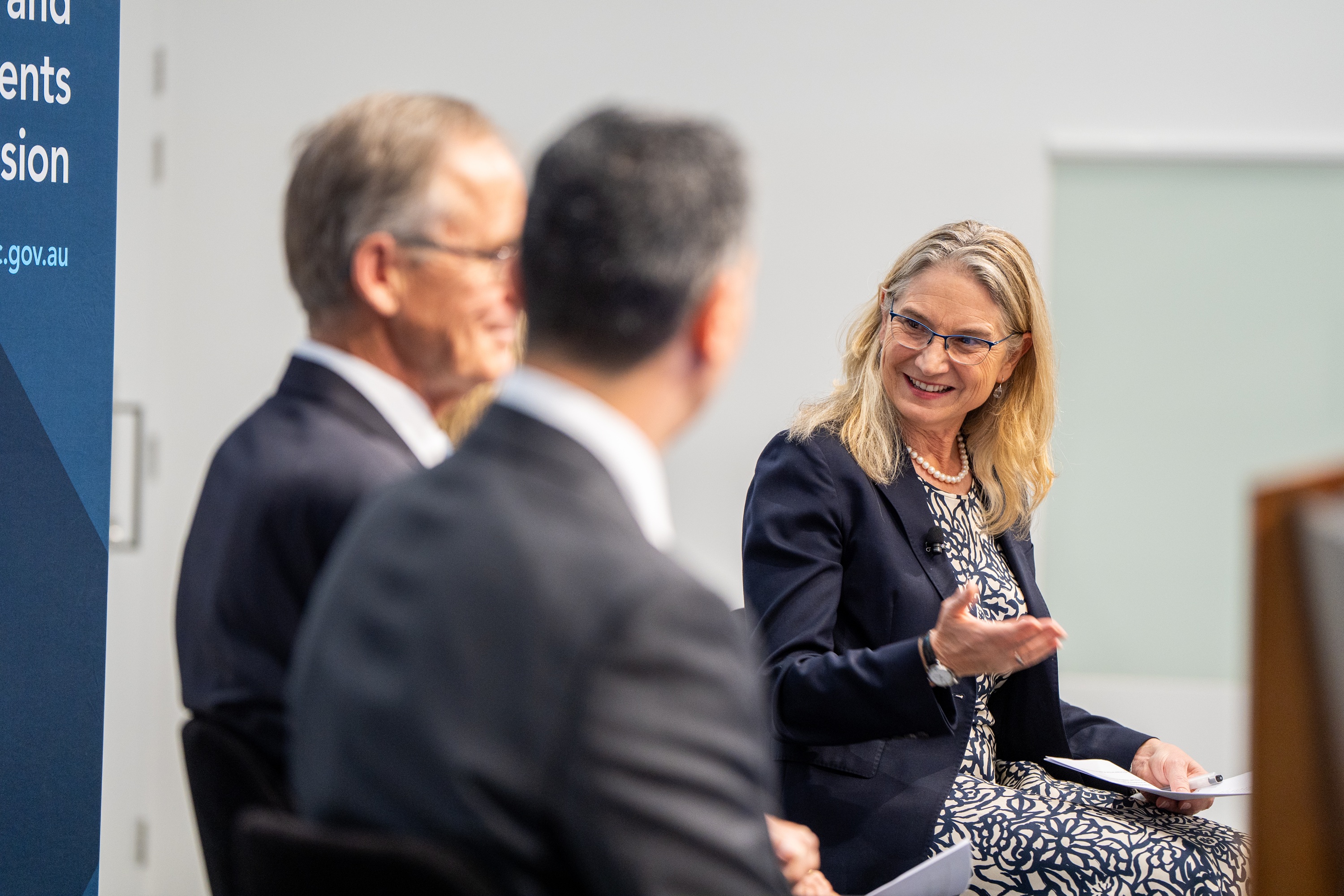
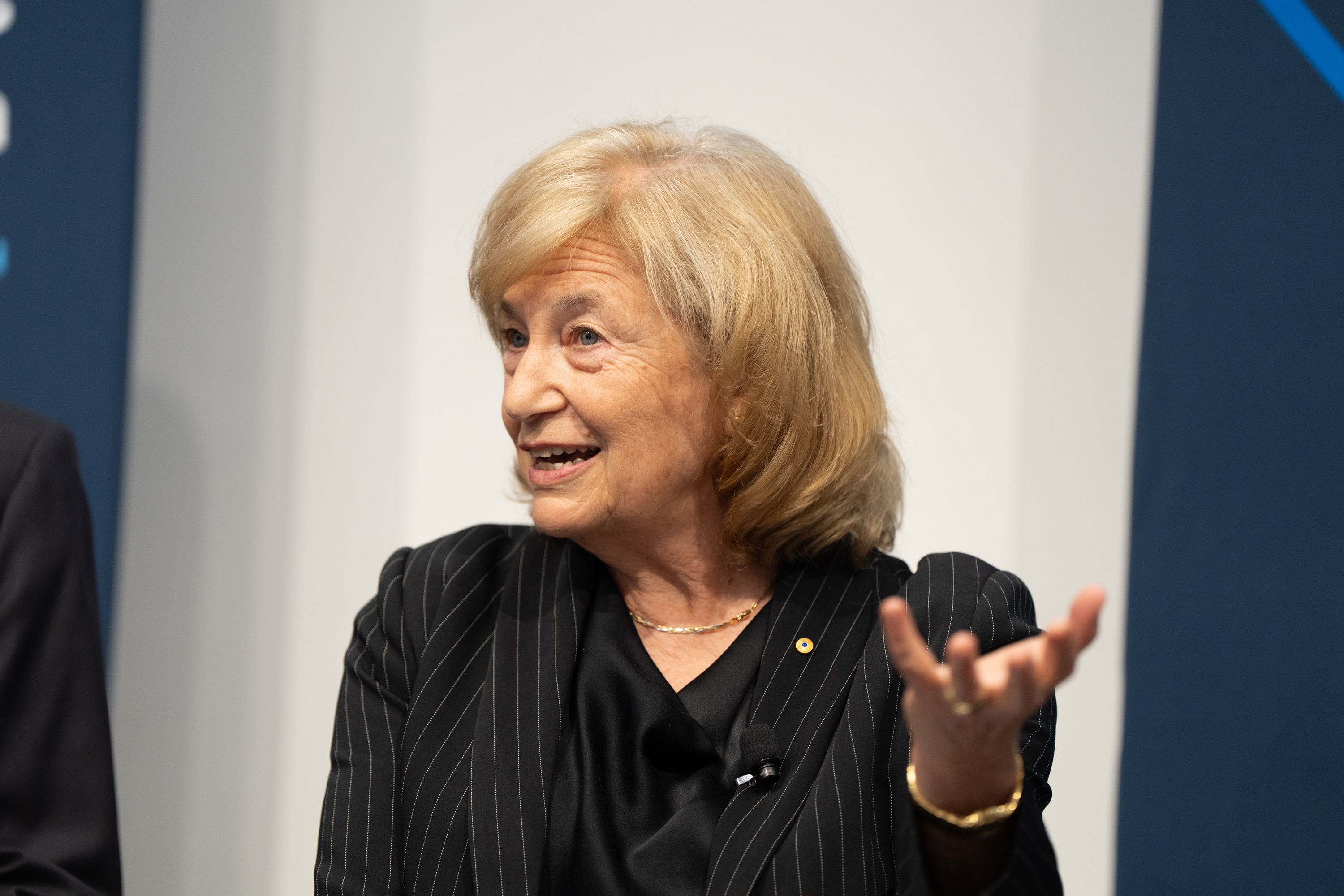
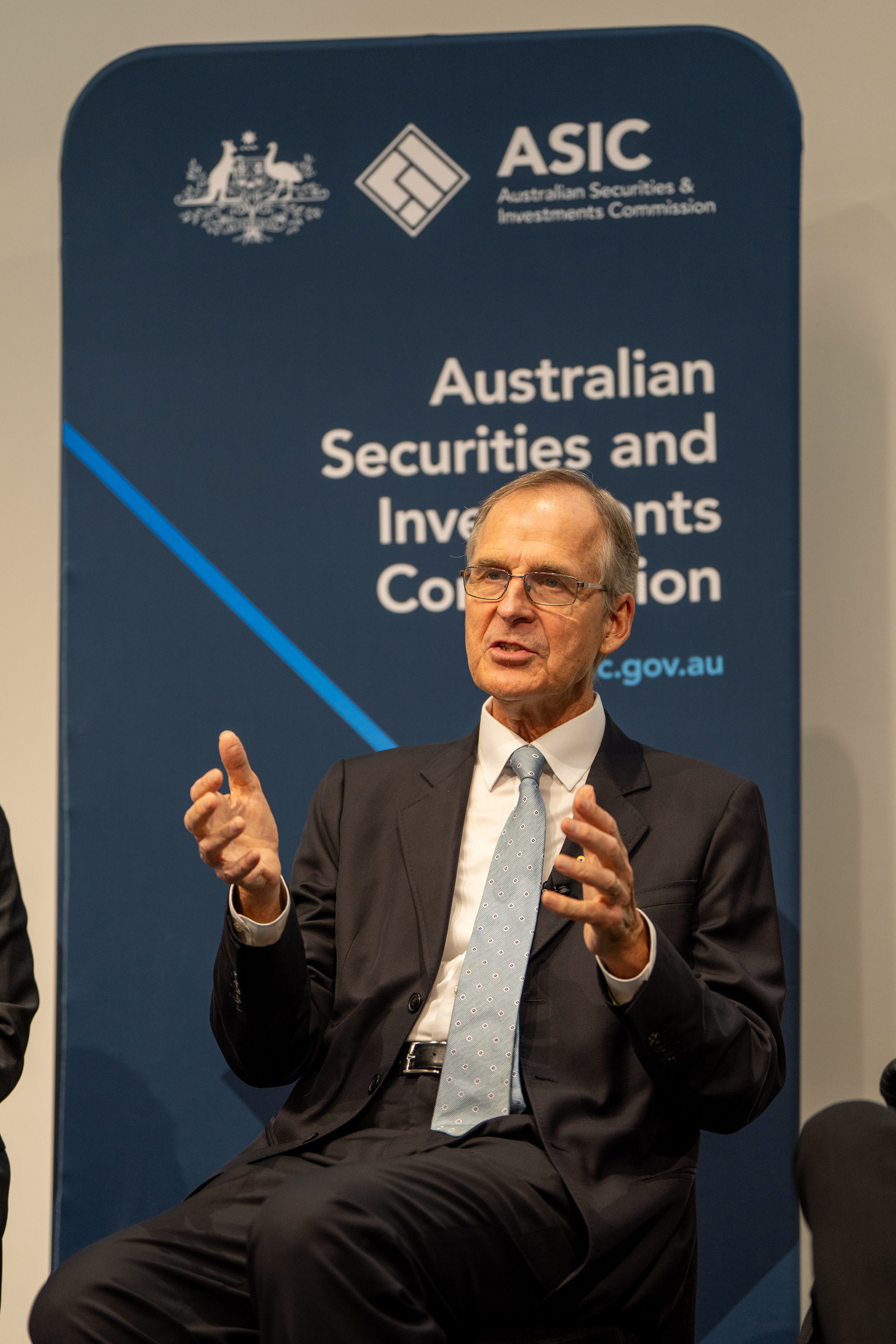
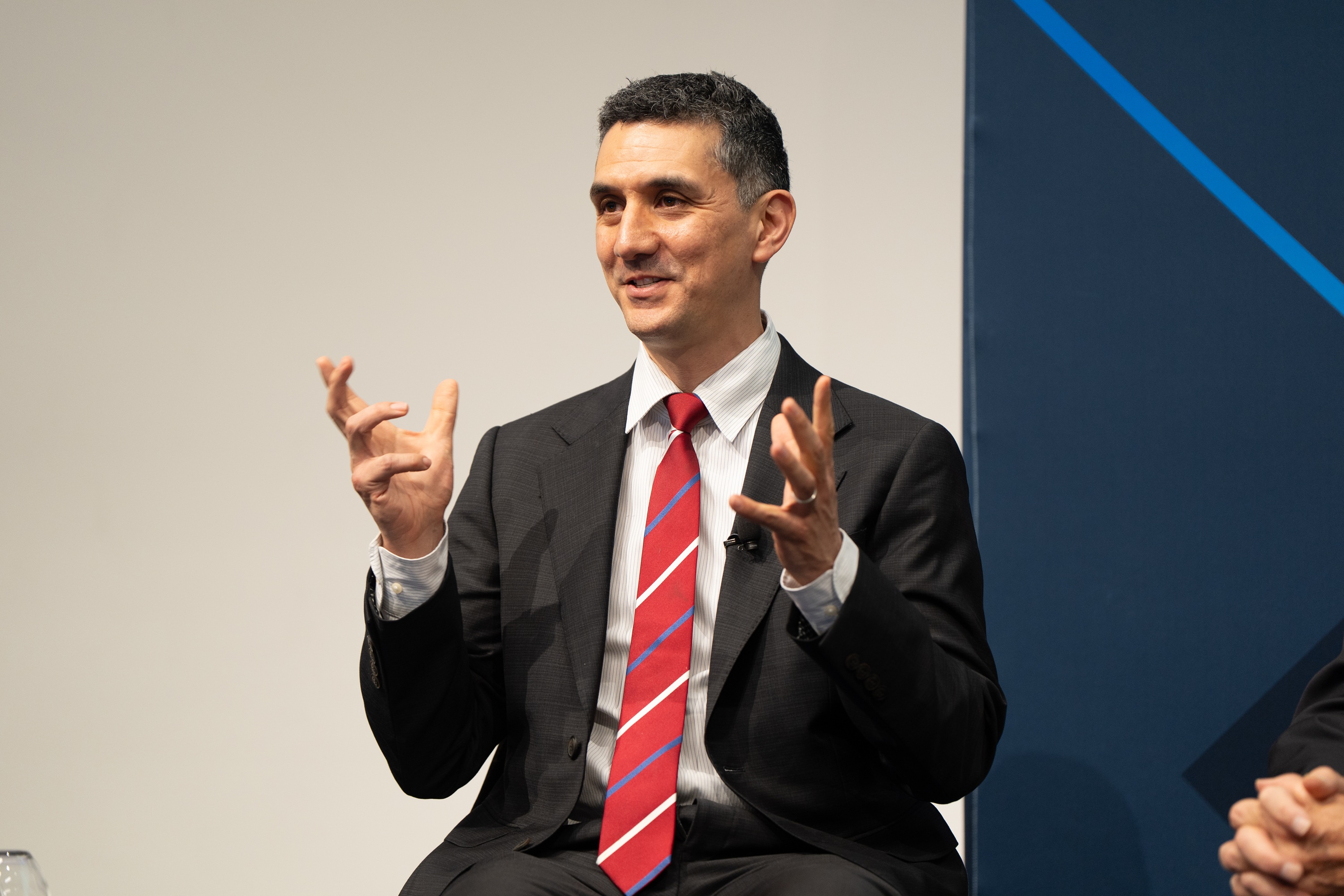
Elective session C: Financial advice – preparing for the future
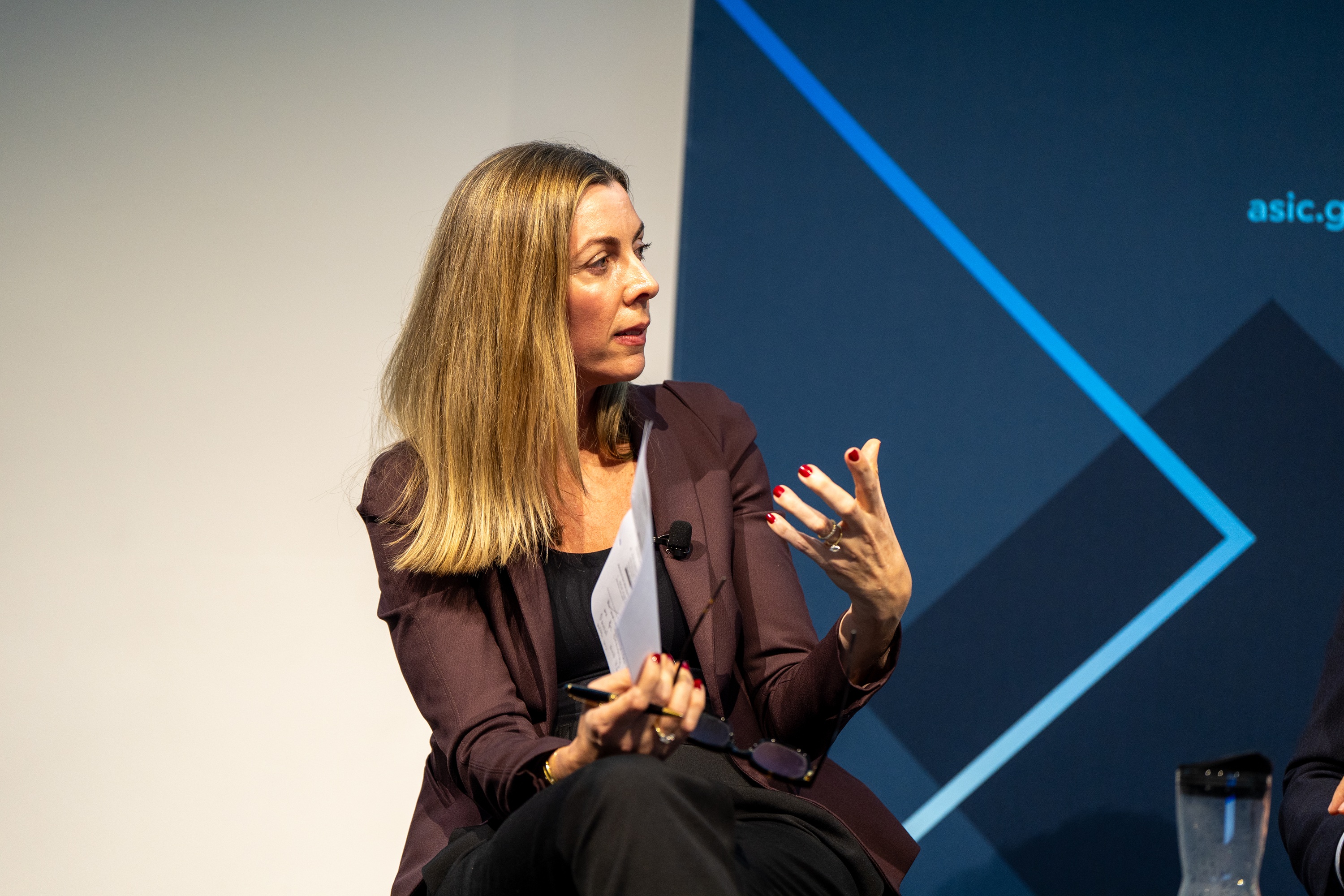
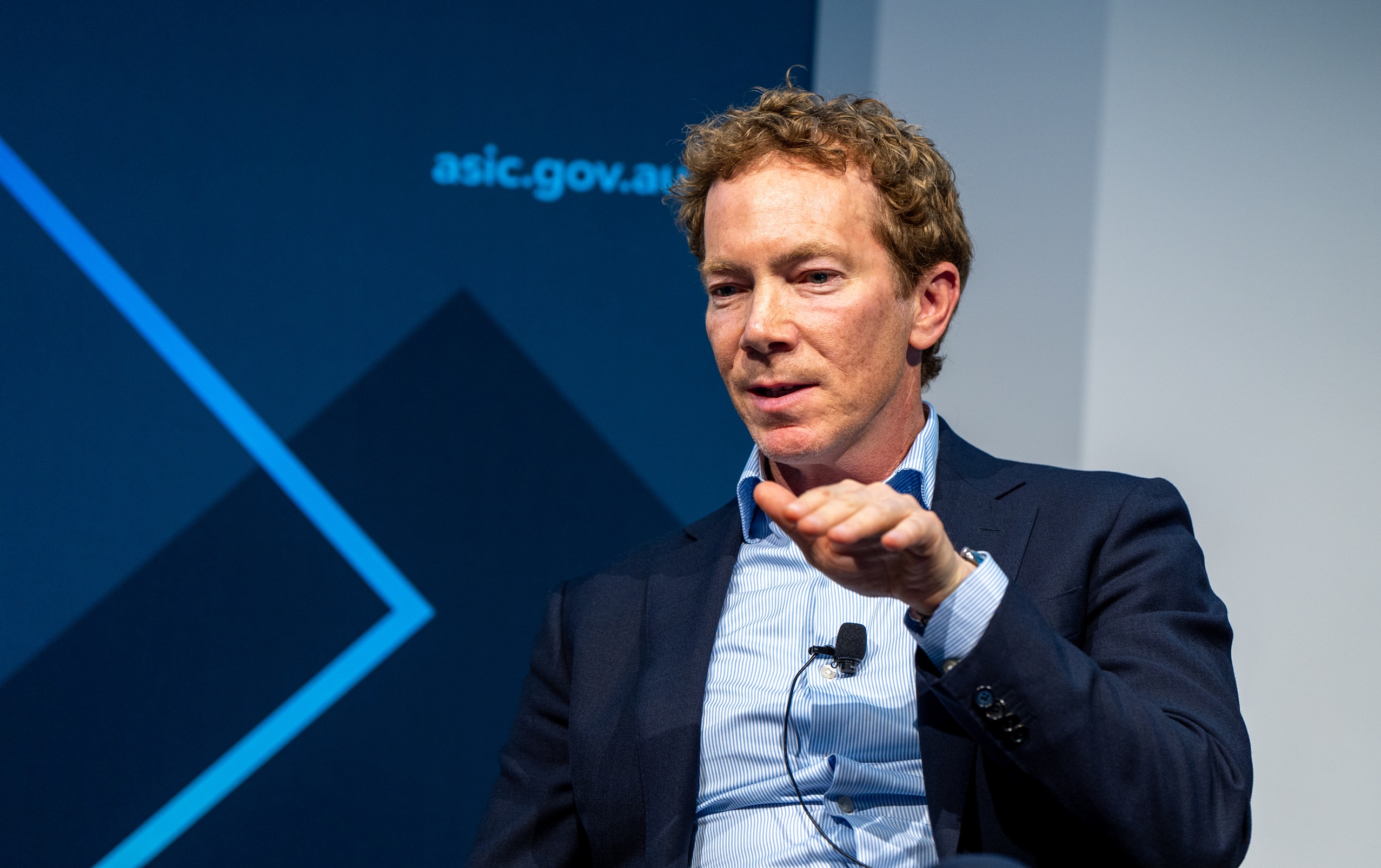
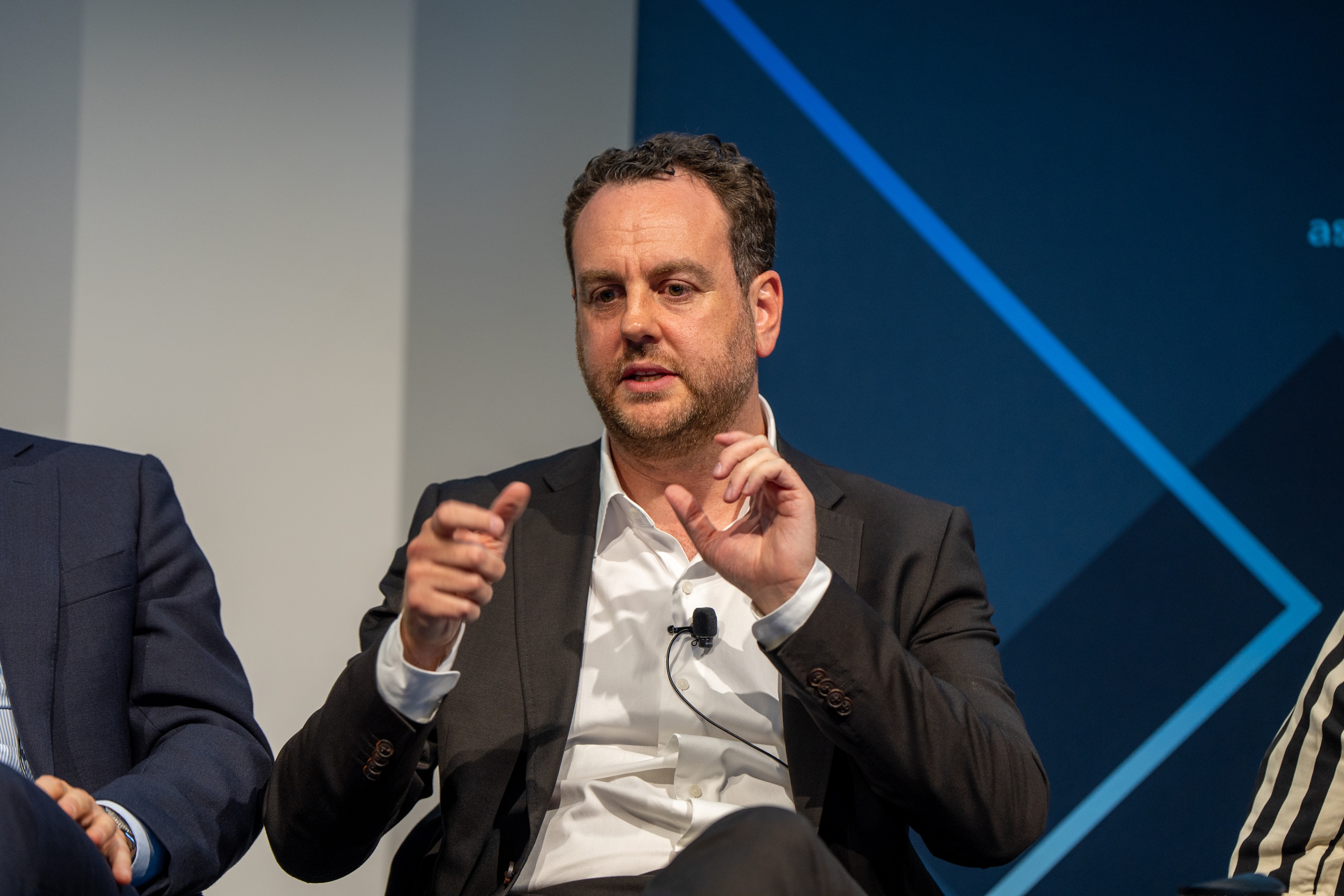
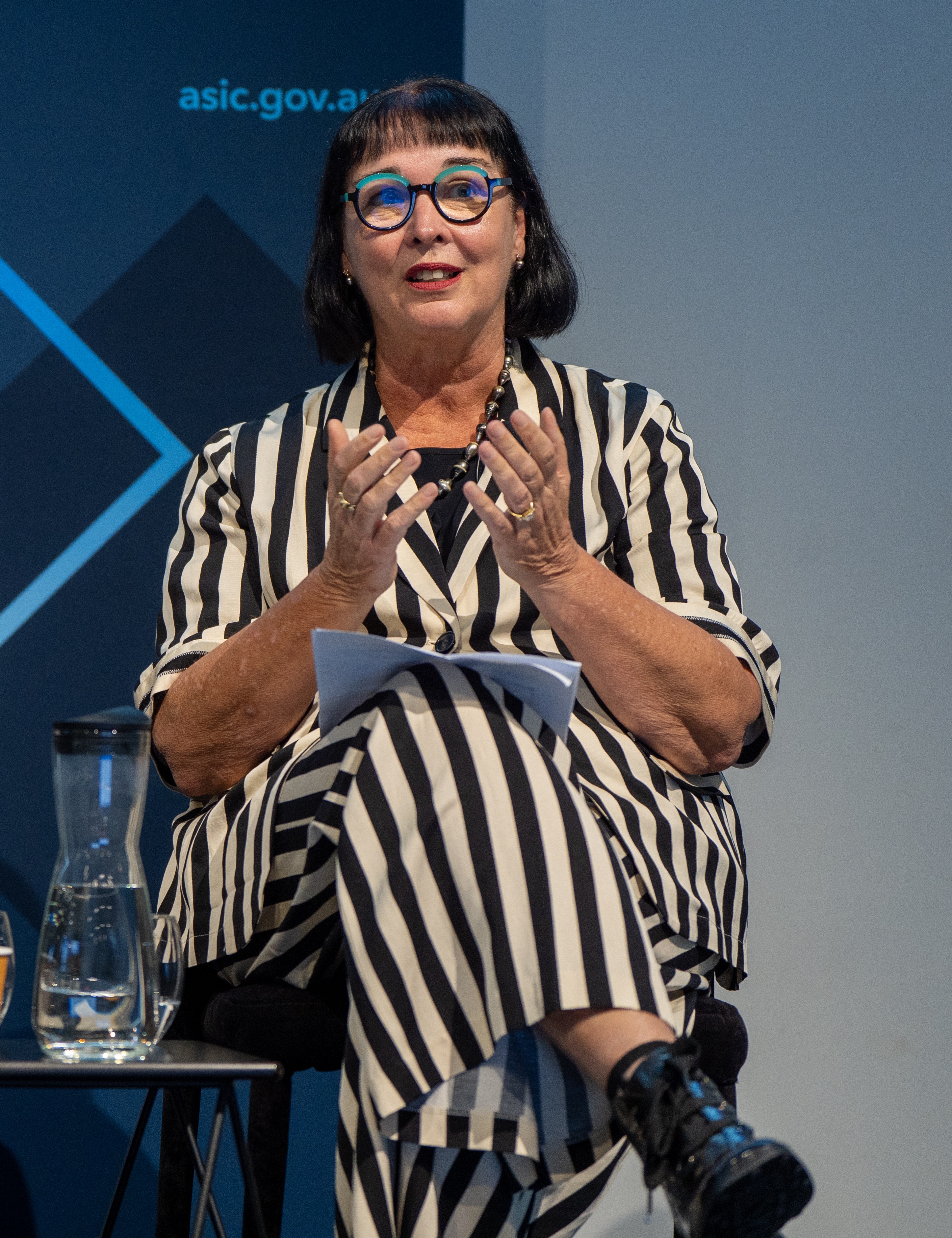
Annual Forum 2026: Day 2 program
| Session | Related links |
|---|---|
|
Virtual Keynote + Q&A by Martin Wolf CBE, Chief Economics Commentator, |
TranscriptMartin Wolf: Good morning to you. I’m very pleased to be with you. I’m not here for very long so I’m going to get going at once. I have a very short presentation, 20 minutes, to cover the world economy and when I’ve done that I think we’re going to have an opportunity for questions. So let’s go. OK, I believe you should be able to see this. So, staying ahead of the next wave: that’s what I was told to talk about. I’m going to start with a quotation, it’s a very well-known quotation from, interestingly, an Italian Marxist who was killed by Mussolini about a century ago. But I think he was discussing the 1920s which seems very apposite because 100 years ago the world was profoundly changing and, in my view, the world is profoundly changing again. So the old world is dying and the new world struggles to be born, and we’re in this transition period of very high uncertainty about what follows. So what I’m going to cover in my 20 minutes, are basically two things: the poly-crisis it’s sometimes called, the interlocking stressors and chaos of today; and then I’m going to talk about the dynamics of the economy because along with the crisis there are also some fascinating dynamics in our system on multiple dimensions which I’ll come to. And then I’ll have a very brief, very brief conclusion. So, let’s start with the poly-crisis. There are a number of aspects and so I think I’ve got six, and they interlock, but let’s start with geopolitics. First, and I think crucially, we are in the midst of, and in fact we have been in now for about 40 years a shift in the balance of power away from the West which Europe and its offshoots as it were, has dominated the world for the last several centuries. And that period is clearly and unambiguously ending with most of the shift being to Asia, east and south. We see the rise of nationalist populism worldwide, the combination of the two, it’s quite complicated, we won’t have time to discuss in detail, I think you’ve got some of that going on in Australia itself right now. We have, are seeing an undermining of the liberal international order on multiple dimensions with many of its core institutions either dysfunctional, almost completely like the WTO and others like the IMF struggling and the climate discussions similarly struggling to gain purchase on the world. And, so what we see, the breakdown of the [Kige? 00:03:09] and the West alliance, the malfunctioning, the failure of the functioning of international institutions as I mentioned, and inability to sustain international agreements, and I’ve given you already the example on climate. And we have lost also, we have lost our ability to avoid major conflicts. We have two very significant wars, Ukraine/Russia and US/Israel/Iran going on right now, which I am going to come to. The second aspect of the poly-crisis is deglobalisation. And here this is a question mark because we are in a period of stress and tension, the tariff war is an obvious example of Donald Trump which represented a comprehensive assault on the principles of the trading system in every way that the US itself created. I’ve just got time to show you one chart; this shows the ratio of the trade in goods to world GDP. It goes back to 1820, it shows two periods of globalisation, roughly from 1830 to 1900 when world trade grew almost three times as fast as world output. There was then a crash and it basically reversed all that by the end of the second world war. Since then, we’ve seen the biggest globalisation in world history, and this is just one measure. World trade has increased five times faster than world GDP. There were two great upswings; the reconstruction as it were of the Western system after the war and then even more dramatically, the great globalisation of the period up to 2010, roughly 30 years, the opening of China, the opening of the world economy when trade doubled again. Since the financial crisis, it stabilised and been falling but it hasn’t collapsed. The crucial point to note is trade is extraordinarily high relative to world GDP, it collapses when politics fails; that’s what happened in the inter-war period. And so there’s a big question of what would happen if the trade wars were to spread and we began to see a real collapse of world trade because it has such a long way to fall. The second thing, feature of our world economy is the extraordinarily high levels of debt. And here I’m just going to focus on public debt, government debt, because I don’t have time for more. Again, I like these very long periods, graphs, graphics. This shows the public debt to GDP, general government debt to GDP of the developed countries, the advanced countries in dark blue, and the emerging economies in light blue. And the key point to note is that both are at all-time highs, pretty close to all-time highs. And remarkably, despite what was basically peace time, the ratio for the developed countries, the advanced countries, is now basically as high as it was at the end of the second world war even though this was an era of peace. And much of that, half of that increase has just been since the financial crisis in 2007. The increase from where it was in the late ‘70s, early ‘80s, well basically the ‘70s, early ‘80s, half that increase was just in the last 20 years and it’s at peak. And for the emerging economies, it’s also at an all-time peak though at a significantly lower level. So we have a real question of the future of globalisation and of the future stability of global debt. At a time when, of course, interest rates have risen to, very substantially since 2021 which makes of course, debt much more expensive. The third aspect of this is what’s happened to stock markets. Again, I can’t go through all the detail I would normally do. But this chart is derived essentially from the important work of Robert Shiller who won the Nobel Prize for his work on financial markets and the problems of financial market. And this is derived again from his measurement, his concepts, goes back to 1900 and essentially the dark blue line shows the cyclically adjusted real earnings yield, the earnings yield on US stocks relative to the market value of US stocks. And what you’ll see if you look at the blue line, is that only once in the last 125 years has it been as low as it is now and that was in 2000 after the bursting of the dot com bubble. The previous time when it was pretty close to this was 1929. So basically, when the stock market looks like this, it’s telling you from a historical point of view it’s going to crash or it’s going to fall a long way. Valuations are extremely stretched. The other line shows the Excess CAPE which is the difference between the inverted yield that I’ve shown you and real interest rates in the US. And you’ll again see it’s not quite as remarkably low as in previous low but is very, very low. And essentially the difference between the real earnings on stocks and real interest rates is close to zero. There is no equity risk premium in these prices. Then we have, of course, the war. I don’t have time to go through the implications of the war, the Iranian war, what it will mean for oil markets; I simply don’t have time. But this is a really, I think, fascinating chart. Again, a long period chart. So I’d like you to focus on the blue line and what it tells you is despite this very major conflict in the Strait of Hormuz which is the most important choke point in our world oil markets, actually the real price of crude oil throughout this conflict hasn’t been much above, really rather little above its average of the last half century. So oil prices have remained quite astoundingly low which tells you a lot about the way it’s been cushioned, the flexibility of the economy, the reduced reliance on oil. But it also conceals something important which is quite a few refined products, diesel particularly is a good example, their prices have risen much more than crude oil. So it’s quite a complicated picture, too. And then, of course, since the COP is going on at the moment, this is to remind us that the temperature at a global level continues to rise significantly above pre-industrial levels. It’s now basically passed the 1.5 degrees which 10 years ago was thought to be the sensible ceiling. I’ve just written a column on this for tomorrow, and it basically argues that we’re clearly going to see it rise towards two degrees over the next 10, 15 years, and possibly on upwards. So climate is another of the big unknowns which is continuing to get worse. And that covers basically what I’m going to say about the different dimensions of the poly-crisis. The political transformation, the stressors on globalisation, the stressors of debt, and of course, geopolitics. Now, in the remaining 10 minutes or so, I’d like to look at growth which is, of course, the other side, as it were, of the system. And I’d like to just say before I give a little more detail on what I have to say here, there’s one really big point I’d make, or two big points I’d like to make. In the last 70 years, the world economy as a whole has grown faster by a long way than ever before in history. World average GDP per head in real terms has increased five times which is extraordinary and unprecedented. And the second remarkable thing is that it’s been remarkably consistent in every single year, the world economy has grown roughly between two and four per cent except just two years. One was 2009 when it just stagnated; it didn’t collapse, that was the peak of the financial crisis, but it didn’t collapse. The only year of really major shrinkage was 2020, COVID. So what this is saying to us is the world economy is a growth machine, the single best bet about the world economy is that it will continue to grow in the range, probably a bit lower than it used to be, of two to three per cent in real terms. Which means over any 10-year period, it’s going to increase by more than 20%, possibly 25% which is a lot. Now, what drives growth? Well, there are basically two things; catch up on the productivity of relatively high-income countries, the catch up process has created, opportunities created by how far countries are behind and how quickly they can absorb the technology at the frontier. And China has obviously been incomparably the most important catch up story of the last 40 years, and we’re not going to see anything like that again. But India is growing at six or seven per cent, and the country is as big as China in terms of population and is going to become substantially bigger. So that’s another huge source of growth. And there are other places which have, at least in theory, lots of catch up opportunities; Africa for example, and other countries in Asia. So the catch up opportunity definitely still exists. And the second driver, of course, is innovation. And we are seeing continued very important innovations and I’m going to cover one or two of them, and I’m only going to cover two, but there are three ones of the digital economy, now AI, the reduction in costs of energy, particularly solar energy with other things no doubt behind it, and of course, huge advances in biological science. Those innovations are going to continue to be transformative. And finally driving this now very considerable degree is the competition between the US and China for technological leadership. And we can see that more or less everywhere. So, I said I’d say something about the past; this shows this, the real GDP per head in log scale, it’s in 2011 values, that’s what comes, how the Madison project bases its calculations. But basically what it shows is average GDP per head for the world as a whole, that’s the pink line. It’s gone from about 3,000 to about 16,000, so a little bit more than five-fold as I said, over that period. China, you can see moving from essentially nothing to 20,000 which makes it about a third of the US levels, a little bit more than a third of Western Europe, the other big developed region. India is also now growing very rapidly, though not as rapidly as China did, but clearly much faster than the average. And there’s every reason to expect it will continue to grow very rapidly. And I haven’t put in all the rest of the world. But the picture here is of extraordinary dynamism; it’s slowing, there’s no doubt it’s slowing a bit, but not much. And that I expect to continue barring some catastrophe. Now, in terms of new technologies innovation, obviously the most exciting thing at the moment is AI. I have many charts on this, but I’ve reduced it to one in the end. I’m not going to discuss the bubble, I’ve written columns about this, most recently one a couple of weeks ago. But this basically shows from one of the, from a column on AI, that column that I did, which I took from a fascinating paper from bookings just published. It shows the scale of capital spending in the US on AI on an annual basis compared with the big investments of the past: the railroads, the highways, Telecom and fibre, the canals, this goes back to the 19th century and the great electrification boom. It’s what they are talking about here is a relatively brief period because nobody knows how long this will go on for. But right now, this is the biggest investment boom as a share of GDP in American history. It’s colossal. And it is, of course, driving growth, investment, and it is underpinned by extreme optimism despite recent excitement about the technology and its potential. My own view is that the profitability is almost certainly overestimated and there will be a correction, possibly quite a big one in the stock market. But at the moment, clearly something very, very big is happening in the optimism about AI and the investment that it is generating. The second thing, I thought I’d put a chart up, is on renewable energy and the most interesting thing here is the red line from the top down to 2024, 2009 to 2024 which is the latest year I’ve got this number. But basically, it’s showing that the cost of solar [Photovoltech? 00:18:12], a generation plant, largely because of Chinese investment has fallen from $500 per megawatt hour to $60 over just 15 years. And that, of course, is proving transformative; just written a column about this as I mentioned, and this will see almost certainly a continued very rapid growth of solar Photovoltech. In fact, in the last year, electricity installation around the world has been about 60% in renewables. There’s been a really remarkable shift towards investing in renewables to generate electricity, particularly obviously in areas where there’s a lot of sun. And this is for economic reasons, it’s not for policy reasons, even under the former Republican government in Texas there was lots of solar energy because there’s a lot of sun in Texas. So it’s not going to be enough to prevent continued rising climate because that’s a much more complicated set of issues, but this energy revolution is definitely going, in my view, to continue. I was going to talk about biotechnology, but I don’t have the time, unfortunately. There are two other things I want – well, one other thing I want to focus, which is the US versus China as a driver. And here I’ve got two contradictory pictures; one, this one shows the share of Venture Capital investment in the world up to 2024 again. And you can see that the US is responsible for about half of it. The US is the dominant player in Venture Capital, but quite a lot of that Venture Capital is actually invested abroad but the dominant part, of course, in the US. And it’s one source not, by no means, the only one of the US strength in new innovative technologies. The final chart, which shows the inverse [pic? 00:20:26] China; I don’t want to overplay what this means; I know there is a question about the quality of patenting and so forth. But when I got this chart together recently, I found it quite extraordinary. These are patent applications from [right over? 00:20:41] the world international property, intellectual property organisation, and you can see that China is now patenting at a rate almost equal to all the other big economies in the world together. It’s an absolutely staggering rate of patenting. And we can see from what’s been happening in China recently that this isn’t all nothing by any means. A lot of very innovative technology is now coming out of China and they are the world leaders in some very important areas including, perhaps most importantly apart from Photovoltech panels, electric motor vehicles. And they’re killing the European car industry as a result. So the conclusion, it’s a very high-risk world, multiple risks, and I think we can really take for granted lots of shocks in the years ahead. Unpredictable shocks of many different kinds, I think it’s a very safe bet. And obviously one of the big questions that raises for business is how do you hedge against this? How risk averse can you afford to be? What is the balance for countries and companies between trying to defend yourself against these risks when you also then run the risk of losing opportunities? I think it’s a big question, whenever I talk to businesspeople, policy makers more broadly, they’re all wondering about that. The second big point I make is there are very powerful sources of dynamism which we can see in the economy, the growth engine is almost certain to continue. And a very big point about our world which is different from the ‘20s which I sort of started with because I sometimes think there are obvious similarities, is at that time we were getting leaders and we did for the next 40 years, the major countries who are ideological fanatics. That’s not what we are seeing now; they’re not ideological fanatics. The worst of them are thugs, autocrats, but they’re not fanatics. This is slightly different, possibly somewhat safer than the world that blew up in the second world war, and then there are nuclear weapons which also change this. So my assumption is that, despite all the risks and the dangers, economic and political, we’re going to stumble on through. And so hiding away from the world is not a rational proposition for most people because it’s not really possible, but above all, it’s probably excessively cautious. And that is my 20 minutes. We will stumble on. [Applause] |
|
Plenary session 5: Enforcement priorities
|
TranscriptSarah Court: This is the fourth occasion on which I have announced ASIC’s annual enforcement priorities, but it’s the first time I do so as Chair. It will come as no surprise that my commitment to strong enforcement has not changed. Strong enforcement sets clear boundaries, it provides regulatory clarity, and it demonstrates our commitment to market integrity and the protection of consumers and investors. Yesterday we considered the forces that are reshaping our financial system, and today I want to turn to how ASIC will respond as change creates new opportunities for misconduct. Strong enforcement requires sound judgement about when and how we use our powers, and those choices matter. An ASIC investigation can affect a firm’s operations and an individual’s professional life long before a court determines liability. The financial and reputational consequences can be considerable, and we never take them lightly. But ASIC cannot avoid difficult cases merely because the evidence is complex, the outcome uncertain, or an individual may be held personally responsible. Trust and confidence in ASIC, and in turn the financial system, depends on our willingness to act when the evidence supports intervention and on the discipline with which we exercise that responsibility. Our enforcement priorities matter because they identify where we see heightened risks of misconduct, and where industry should expect particular scrutiny. By publishing them we give boards and executives an opportunity to examine their own practices, before regulatory intervention becomes necessary. The priorities also hold ASIC to account. Each year we should be judged by whether we did what we said we would do. They guide our attention, but they do not place rigid boundaries around our work, and this year shows why. When the 2026 priorities were announced, the scale of our work involving alleged confidentiality failures by KPMG auditors was not known. And while we had already identified risks in parts of private credit, we could not have predicted precisely how they would materialise, including through the collapse of the Bathla Group. We have redirected people and resources as those matters developed, and an effective regulator must retain the capacity to do that. Serious misconduct will always attract our attention, whether or not it appears on an annual list. Now I am often asked how ASIC decides which matters to pursue, particularly where individual liability may be involved. Corporate penalties will not always provide sufficient accountability. Where senior decision makers were personally involved in misconduct, or they turned a blind eye to it, action against the company alone may be inadequate. Our Signo Australia case is a good example of this. Consumers were charged more than $90 million in unlawful fees and given the scale of this harm, we pursued action against the individuals we considered responsible. The court imposed combined penalties of $1 million on the two individuals involved, and we have appealed those penalties as inadequate. Individual accountability is also an important part of our continuing work concerning the collapses of the Shield and First Guardian Master Funds. This year our action has included numerous individuals we allege were involved in or benefited from that misconduct. But at the same time, ASIC cannot act simply on the strength of public assertion or commentary, however firmly it is expressed. The threshold is evidence. We must establish a case under the law using admissible evidence, and put it before an independent court. Witnesses must be prepared to give the evidence, records must be available, and financial flows may require extensive tracing through complex structures, and the burden of proof is demanding, as it should be. We won’t win every contested matter. In my view, no regulator should. During the past year, the courts have not accepted every aspect of our cases concerning directors in Star, Nuix and Rex, for example, and certain aspects of those cases are now under appeal. Where a court reaches a different view, we must examine the reasons carefully and consider what the outcome means for our future work. But the possibility of loss should not result in inaction, where the evidence and the public interest support us bringing a case. If I turn now to our 2026 enforcement, by any measure it has been a significant year. Courts to date have imposed more than $570 million in civil penalty proceedings brought by ASIC, and there have been substantial remediation outcomes and serious criminal sentences. But volume alone is not the measure of effective enforcement. The more important question is whether ASIC’s actions address serious harm, including by pursuing those responsible, and whether we change conduct beyond the individual matter. Our work this year has produced each of those outcomes. At a time of sustained pressure on household budgets, we have pursued misconduct that left Australians paying more than they should. Our misleading pricing priority led to action against Budget Direct, where we alleged that customers lost online insurance discounts they were promised. In separate proceedings, aspects of the service provided by comparison business Choosi were found to be misleading, and the court also imposed combined penalties of $55 million against Harvey Norman and Latitude Finance for misleading consumers about interest-free payment arrangements. The court in that case found that sales and commercial interests had been placed ahead of consumers. Private credit was, and is, a key priority. We identified risks last year and we continue to see concerning practices today. The collapse of the Bathla Group has brought those risks into sharper focus, and we have previously confirmed publicly that our investigations are well underway. We have also seen the risks associated with private credit in our work on Shield and First Guardian, where many investors were effectively funding private credit loans. But the effect of our work is not confined to court orders. Nearly $40 million was paid back to investors following our review of the contracts for different sectors, and HSBC remediated more than $21 million to customers affected by scams, in addition to paying a substantial penalty for its serious failures. Enforcement has also changed compliance behaviour. Financial reporting became a priority after we identified significant failures by large proprietary companies to lodge their reports on time. Following data-led surveillance, we took action against 70 companies, including the Visy and Pratt Group, Mecca, Canva, Sephora, Mainfreight, H&M. In 2027, we will broaden this work across a wider range of entities, focusing on serious or persistent failures in financial reporting, licensing and record-keeping obligations. And that is what clear priorities should do. They should focus our attention on a significant problem, but they should change when the evidence shows that our approach has had an effect, or the risk itself is evolving. Our work to protect consumers in financial difficulty also continued. We had outcome against lenders including Signo, Green County and Money3. Online retailer Snaffle was fined more than $33 million for unlawful charges under credit contracts, and Westpac was penalised for hardship failures. In insurance and superannuation, we continued to pursue poor consumer and member outcomes. Hollard Insurance was penalised over its handling of a claim by a Victorian family, while TelstraSuper was found to have failed to respond to about one-third of relevant complaints within the mandatory period. Mercer Super was ordered to pay $10 million for systemic reporting failures. AustralianSuper has admitted failures in its handling of death benefit claims, with the penalty yet to be determined. Our actions have contributed to improvements in death benefit claims handling across that sector, but there is more for us to do. Outsourcing may change who performs a task, but it does not transfer a trustee’s responsibility for member outcomes. These matters all differ in scale, but each concerns a basic failure to deliver what customers or members were promised. Large financial institutions must have the systems and oversight needed to get the fundamentals right. Now, auditor misconduct has required considerably more attention than we anticipated when the 2026 priorities were set, and we have seen that audit failures can cause substantial harm. This year we took proceedings against Auditeo, the auditor of the First Guardian Master Fund, alleging serious failures in the conduct of that audit. We have also commenced proceedings against BDO Audit and its director, and we continue to investigate certain KPMG auditors. Our enduring enforcement priorities also produced significant outcomes this year. Most notably, record penalties of more than $300 million were imposed against collapsed contracts for difference issuer Union Standard, and its former authorised representatives, for systemic unconscionable conduct. Their business models deliberately targeted inexperienced and vulnerable people, and used aggressive sales tactics to pressure them into highly risky trading. ASX admitted its statement about progress on the CHESS replacement project was misleading. Binance was ordered to pay $10 million for onboarding failures, causing millions of dollars in client losses. We pursued continuous disclosure and directors’ duties matters, with significant cases against Star, Nuix and Rex directors, all of which were determined and are under appeal, and we commenced new proceedings against the former CEO of the Super Retail Group. Our dedicated insider trading team has continued to progress significant matters. As an example, former investment manager Rodney Forrest was resentenced by the full Federal Court to a prison term of more than five years for insider trading and procuring others to trade in Platinum Asset Management shares. And systemic compliance failures by large financial institutions also remained a focus. Large penalties were imposed against Macquarie for misreporting short sales; HSBC for scams-related failures; and Westpac for breaches of its hardship obligations. And then just last week, we commenced proceedings alleging that tens of thousands of CommBiz customers had been overcharged millions of dollars in undisclosed fees, and we took further action against Macquarie, alleging systemic failures to ensure customers received clear statements about their welcome interest rates. And finally, few matters better demonstrate the breadth of our enforcement work than our response to the collapse of the Shield and First Guardian Master Funds. It remains one of our largest and most complex enforcement cases. To date, we have launched 27 investigations and commenced 19 Federal Court proceedings against 38 defendants. More than $420 million has been returned for approximately 4,000 affected investors. Our action spans advice firms, licensees, lead generators, superannuation trustees, auditors, responsible entities, and officeholders. The collapses expose issues beyond those two funds, including conflicted advice, weaknesses in trustee and managed investment scheme governance, and failures by auditors and other gatekeepers. And these investigations have shaped several of the priorities I’m announcing today. So turning to 2027, we have nine enforcement priorities grouped around three areas; protecting vulnerable consumers and small businesses; lifting standards and accountability across the financial system; and targeting serious misconduct and holding wrongdoers to account. And while these groupings provide a clear structure, the issues overlap. A single matter may involve consumer harm or weak governance, while also requiring action against individuals. Our first priority is misconduct that compounds cost of living pressures, with particular attention to banks, insurers, and superannuation trustees. We will examine pricing promises that are not delivered, discounts that are not passed on, improper fees, poor claims handling, and failures to provide hardship support or other entitlements. Our second priority concerns predatory practices that are targeted at consumers and small businesses who are experiencing financial difficulty. The focus will include harmful debt collection and debt management practices. Financial difficulty does not diminish a person’s entitlement to lawful and fair treatment. The third priority is harmful financial advice and lead generation models. We will examine the commercial arrangements driving recommendations, referrals, and product distribution, and we will act where those arrangements place commercial interests ahead of clients. This work will complement the government’s reforms to the regulation of financial advice and lead generation. Our fourth priority concerns consumer harm arising from poorly implemented technologies, including AI and automated systems. We spoke yesterday about the significant changes we are seeing across the financial system as new technologies and artificial intelligence become embedded. Consumer protection must keep pace with the development of this new technology. And while artificial intelligence, automated decision-making, and chatbots may improve the delivery of financial services, they do not alter a firm’s legal obligations. The ability to obtain human review is particularly important where customers are making a complaint, responding to a scam, pursuing an insurance claim, or seeking financial assistance. And we will focus on poorly designed or inadequately supervised systems that produce misleading information, make inappropriate decisions, or prevent customers from accessing effective support and assistance. The technology may be new; the responsibility is not. Our fifth priority concerns misconduct in private credit and managed investment schemes. Our attention will focus on disclosure, governance, conflicts, and valuation practices. These firms must uplift standards and improve their governance and conflict management arrangements. They need to ensure their disclosures are transparent and their valuation and reporting practices sound. Our sixth priority is auditor and professional gatekeeper misconduct. Auditors and other gatekeepers of the financial system see information that investors and markets do not. We rely upon them to test what companies and funds report, and to challenge it where necessary. Where they fail in that role, the consequences can extend well beyond the individual engagement. And professional gatekeepers are those whose work gives investors, creditors, or markets confidence in information they cannot test for themselves. Their legal duties differ, but their position of trust carries particular responsibility. Our seventh priority is holding to account those responsible for the collapse of the Shield and First Guardian Master Funds. This work is unfinished, and its scale and complexity will continue to demand substantial enforcement attention. Investigations continue, and further civil or criminal action will be considered where the evidence supports it. Our eighth priority concerns failures to meet financial reporting, licensing, and record-keeping obligations. Our focus is not on isolated administrative errors that are promptly corrected. It’s on persistent or serious non-compliance that undermines transparency, impedes effective supervision, or raises questions about a firm’s ability or willingness to meet its obligations. And our ninth priority concerns exploitation and misuse of ASIC’s corporate registers. Businesses, creditors, and the public rely on these registers to identify companies and those responsible for them. A Western Australian man was recently sentenced to more than five years’ imprisonment for fraud and dishonesty offences involving the misuse of our registers, and we will target deliberate conduct intended to facilitate unlawful activity, misrepresent corporate affairs, or obscure ownership and control. Now, these priorities do not define the boundaries of our enforcement work. Alongside them sit our enduring priorities, and these include misconduct that damages market integrity or affects First Nations people, serious governance failures, and systemic compliance failures by large financial institutions. Conduct carrying a high risk of significant consumer harm also remains an enduring focus. And the examples I’ve outlined show what these commitments mean in practice. Union Standard, ASX, and Binance reflect our continuing focus on market integrity. Signo and our proceedings against the Aboriginal Community Benefit Fund illustrate the importance of individual accountability where vulnerable or First Nations consumers are harmed. And the outcomes involving Macquarie, HSBC, and Westpac show that systemic failures by large institutions will continue to attract serious consequences. The consolidation of earlier sector-specific priorities does not mean that banks, insurers, or super trustees will receive any less scrutiny. Serious member service failures by trustees will continue to attract our attention, and financial markets should expect us to pursue insider trading, market manipulation, and serious continuous disclosure failures. Annual priorities concentrate additional attention where the risks are changing, but enduring priorities make sure that serious misconduct does not become less serious, simply because it no longer has its own line on our annual list. Now, announcing an enforcement priority does not create a presumption that every failure will lead to litigation, and nor does the absence of an issue from the annual list prevent ASIC from escalating it where the circumstances require. Our response will depend on the evidence, the seriousness of the conduct, and the harm caused or likely to result. And we will distinguish an isolated failure that is identified and remedied promptly from misconduct that is extended, repeated, or systemic. A firm’s response will matter. Effective remediation and genuine cooperation will be relevant, as will any failures to address known risks brought to the attention of senior leaders. Now, in closing, as the Chair of ASIC I remain firmly committed to enforcement that is strong, visible, and consequential. Our 2026 record demonstrates substantial outcomes against the priorities that we set. It also shows where work remains unfinished, and where the risks have changed. The priorities for 2027 identify where greater scrutiny is now required and where industry should expect us to act. Where firms make genuine efforts to comply, ASIC should be easier to deal with. Where serious misconduct occurs, those responsible will find us harder to avoid. Thank you. |
|
Plenary session 6: Meet the regulators
|
TranscriptModerator: This session will explore how Australia’s regulators operate separately and in alignment, how they work together, where their responsibilities intersect, and the challenges and opportunities that they see on the horizon. Thank you all for your time this morning, we appreciate it. Gina, the ACCC is of course always focused on protecting Australians from harmful products and practices. But I suppose looking ahead at the next year, your priorities, what do you see as the greatest pressures emerging, and how is the ACCC anticipating that and planning to respond? Gina Cass-Gottlieb: Thanks Amelia. I always start with fundamentally the incredible strength for the ACCC in a combined mandate of protecting both competition and consumers. Because competition, everyone in this room knows, delivers choice for consumers, higher quality services and products, and in addition, lower prices. It is also the case that when consumers trust in the marketing claims that are made to them and in the value of the products and services that they acquire, that that trust underpins their ability to confidently engage in markets, to make purchases, make choices, and indeed to support competition on the merits. We are seeing very significant changes, looking at Martin Wolf’s description of profound changes in our markets, particularly through the expansion of digital services across every sector in the economy. That provides both the opportunity through innovation for incredible growth and increased productivity, but also challenges which threaten consumer trust. If I look for you at where the expanding set of digital technologies across the economy, including now, with the very evident benefits and uncertainties arising from AI, where does it affect risks? It affects existing risks to consumers and competition. It can make scams, misleading claims and manipulative design interfaces easier and more rapid to create, almost instantaneous, harder to detect and more widespread. It can also strengthen the dominance of existing firms in markets across the AI supply chain, and their capacity to self-preference their services against those of smaller competitors. In each of these areas, it is critical for regulators to be seen to be monitoring, to be at the front of understanding these impacts, and to provide safeguards so that Australian consumers have the confidence to engage and to take up these opportunities. I want to give you two examples of the range of the ways in which our intelligence, our surveillance investigation and enforcement action has already operated in relation to AI to seek to underpin competition and consumer protection. The first was the action that we took against Microsoft Australia and its parent corporation, Microsoft Corporation, for allegedly misleading approximately 2.7 million Australian customers when communicating subscription options and price increases after it integrated its AI assistant, Copilot, into Microsoft 365 plans. After we took that action, which is still before the court, Microsoft offered to Australian customers of the personal and family plans the choice to continue to receive the bundled Copilot, or to remain on their previously existing plan without Copilot at the original lower price. This allowed not only many families who took the option to reduce the price they were paying, but also the greater freedom to choose between competing AI assistants. The second one is the anti-competitive conduct matter against Google, where a pecuniary penalty combined with changes to contractual arrangements, opening up the capacity for other pre-installation and defaults on Android phones, work together to help create greater opportunity for competing search providers to reach Australian consumers at this critical time, with the deployment of AI-enhanced search and now agentic AI. From July 2027, we will have a new protective tool when the new unfair trading practices prohibition, a principles-based legal tool in the Australian consumer law to tackle manipulative practices in digital markets, will commence. This will cover the use of all technologies, including AI. We are soon commencing consultation on the guidelines across business, small business and the consumer stakeholders, and we look forward and I look forward to engagement in relation to that. Moderator: A busy year ahead. John, a key theme yesterday was getting the balance right. APRA has highlighted the need to strengthen resilience against these geopolitical shifts and the changes in technology. How do you do that while continuing to support competition, innovation and productivity? John Lonsdale: Well, thanks, Amelia, for the question. Good morning everybody. I mean, that is the key challenge in front of the prudential regulators. So we are charged with keeping the financial system safe in a world where risk is increasing, but we also want to do that with as small a footprint as we can. So this is a regulatory efficiency issue. So risk up, but less regulation. How do we kind of square that? So start with the good news on safety, which is the key mandate. The financial system is very strong. You can look at all the key financial metrics, I think will tell you that, the classic ones. Where the risk is really increasing is in this bucket of non-financial risks, and geopolitical is the key one that has turned the dial up. There are elements of that that you can see. We have conflicts around the world. That feeds into the global economy. We have got heightened inflation. All of that feeds into regulatory settings and the entities that we regulate. So you can see that. Then there are the more disguised varieties like operational resilience issues, cyber, and AI is almost in its own bucket. So there is a lot of work happening on all of that. Geopolitical; for the first time we put out very clear expectations this year on what we are expecting and we are supervising against that, and we did that also on cyber this year as well. So all of that is in the safety bucket and we are stress testing the system, not just individual industries, but across the system to provide us with that assurance. Getting the balance right, that is what we like to call the other element. I just want to be clear what it is. It is not about cutting safety standards. We are not about doing that. As a mid-sized economy, we need unquestionably strong safety standards here. It is about can we do our work better? I said to the Treasurer last year we would deliver nine things, eight of them we will do by the end of the year, things like faster licensing, simpler rules, we are doing all of that. I think we have done some really good work with New Zealand in harmonising global prudential rules, and that is delivering real benefits to the banks. And we will complete our work on reducing risk weights for business lending and infrastructure lending this year, as well as a range of other things we are doing. So there is a lot happening in that space. Moderator: Thank you. Brendan, speaking of getting work done, your focus is on your anti-money laundering regime. How difficult is that in this new complex environment, risk-focused environment, and what will success look like for you? Brendan Thomas: Yes, as people know, the money laundering regime changed quite significantly in the middle of this year, where a whole range of industry sectors that hadn’t been subject to money laundering controls previously are now subject to money laundering obligations. In particular those involved in real estate transactions and the creation of company structures and corporate person arrangements. Australia had had, I say, a swinging open door for illicit finance in those sectors for a long time, and we at AUSTRAC had seen significant amounts of money being laundered in the Australian real estate market, for example. I often quote one example of when I first started in this role of seeing one family with links to the Interpol Red List who bought $700 million worth of real estate in Sydney in one series of purchases over a week, and the purchases stated occupation was a housewife. No requirements to ask any questions about where the money was coming from. That changed on the 1st of July this year, where those involved in real estate transactions now have anti-money laundering obligations. And for anybody that’s involved in those industries that’s been getting ready for those reforms, I just want to say a big thank you on behalf of AUSTRAC. The level of engagement of what we call the Tranche 2 industry sectors has been quite significant and quite extensive, and the take-up of those money laundering obligations in the first 140 days, really, since they have commenced, has been incredibly strong. But what success looks like for that in the future is a couple of areas. One is we’re using the information that we get from those businesses to break up organised crime networks more effectively in those areas I’ve spoken about. But also those businesses are understanding illicit finance risks to their own businesses and starting to shut those out. And we’ve seen that happen progressively in other parts of the Australian economy, in the banking sector, in casinos, in gambling, we’ve seen that, but that’s followed very heavy enforcement action from us. Hopefully we don’t have to take that in this area, but we will if we need to, there’s no question about that. But we’re already seeing benefits coming from those businesses coming under money laundering obligations. We’ve had more than 1,000 reports coming out of those businesses, and some of them have been quite significant, highlighting illicit finance going into Australian real estate purchases. We’ve uncovered money laundering networks that we otherwise didn’t know about. We’ve seen the flows of illicit funds coming from Southeast Asia and the Pacific into Australian real estate markets through reports we’ve got from real estate agents and conveyancing businesses. We highlighted one significant international money laundering network that was completely blind to law enforcement prior to that report. And on the company structure side, we’re getting very significant and valuable information about how organised crime networks are moving money through company structures, particularly money resulting from the illicit tobacco trade in Australia. And it’s given us a much greater insight into how they’re structuring and organising their businesses, and that information has gone to police, and police and law enforcement are using that already in enforcement activities. So there’s already significant benefit coming from that. Still a long way to go in terms of maturing that engagement and making sure businesses understand their risk, and are focusing on risk. And also a lot of work for us to do to understand the illicit finance risk in those sectors so that we can best inform industry where to focus its effort, and what kinds of controls are most effective in reducing illicit finance in those businesses. Moderator: Thank you. Sarah, as a journalist, I’ve seen firsthand the work that ASIC does in terms of your enforcement priorities. We’ve just heard a lot of them in your address. Specifically when it comes to scams and other forms of financial harm, what will you be focusing on next year and what will it mean for consumers? What change will they see? Sarah Court: Yes, I mean we did quite a lot of discussion yesterday about scams and I think Gina has also mentioned just the significant changes to scams, their industrial scale, the increased sophistication as a result of AI. And I think what we’re really focusing on, Amelia, and working closely with the ACCC and the other national anti-scam centre regulators, is we do a lot of work educating consumers in terms of protecting them through the Money Smart website. And then one of the challenges with scams is that the traditional enforcement approaches don’t really work. It’s very hard to ascertain where scams are originating. Usually it’s outside of the Australian jurisdiction, of course, and so the real regulatory tool dealing with them has to be one of disruption. So we spend a lot of time and a lot of resources taking down investment scam websites. We spend a lot of time alerting consumers whenever we become aware of a potential investment scam website, which goes onto a list. I had a look at it last night. There’s nearly 5,000 different entities that are listed on that site. So our real work in relation to scams is about disruption. And then, of course, we’ve got the new Scams Protection Framework that is coming into play from March 2027, and that is really going to mark a very new approach in Australia. It’s interesting, I mentioned yesterday I’d been spending some time overseas recently. People are really watching what Australia is doing in relation to scams. Is this new framework going to make Australia just a harder target for scammers? And that’s, I think, what we’re all trying to do. We’re trying to deter scammers from targeting Australians, and the way to do that, I think, is by having these strong frameworks. Moderator: Thank you, Sarah. We do have a question from the audience, and if anyone else has anything they’d like to ask, please do submit the question via the app. This is a question for you, John. Yesterday there was a discussion of individuals giving AI agents access to their bank accounts. Has APRA been doing work on what the prudential risks associated with this might be? John Lonsdale: The answer is absolutely. I mean, AI is such a big issue, (a) for productivity, but (b) on the regulatory side. And there’s probably three key areas we’re focusing on AI. So one is we know our entities are using it. We are technology neutral in the way that we think about it. We don’t say, don’t use that model, use this model. It’s up to them as to what they use, but we want to make sure that they’ve got the appropriate governance and controls in place. And when we did a thematic review earlier this year, what we found was concerning, and we have set out some expectations in April. We’re now supervising against that, so that’s point one. If you’re using it, you’re a bank, you’re a super fund, you’re an insurer, make sure you’ve got the governance and controls that you need. The second really concerning place that we’re looking at is how can AI be used or weaponised against the entities that we’re regulating? And we’ve had years of open source software being employed. There’s a lot of patching going on at the moment, but it’s very, very difficult. I was in the US last month talking to global banks. The amount of money, the amount of resources going into this is enormous. So there’s a big issue here for us, because not everybody can employ those resources. So that’s a really big thing. The third element, I’d say, is third-party risk. So we published something, a system risk outlook last week. One of the big things in that report is we’ve got about 100 material service providers that are third parties. Most of those are unregulated, and most of those are domiciled overseas, and so how should we think about that as a system? We’re saying to entities, you need to be thinking about the governance and controls in place, but we are working collaboratively. In fact, all the people here are convening public-private type sessions with banks, super funds, insurers, third parties to really understand these risks and better share information. So it’s not just on the regulatory side we’re taking action, but we think it’s a public-private partnership that can actually help lift standards as we go forward. So a lot of work in this area. Thanks for the question. Moderator: Brendan, there is a lot of interest from the audience, and I guess more broadly, on these AI agents, but AUSTRAC draws on financial intelligence to identify emerging threats. Is AI agents what we should be focused on, or is there something that we’re underestimating or putting too much focus on in the current environment? Brendan Thomas: Yeah, we’ve done a crime assessment of the use of agentic AI in money laundering in Australia. We’re not seeing the use of agentic AI being reported significantly in Australia yet. We are seeing some trends of it internationally, and particularly with the movement of large cryptocurrency scam funds through Southeast Asia. There’s certainly no question that agentic AI is being used to launder those funds very quickly through different digital currency exchanges, and then back out into the regular financial industry. But as John said, we’re working very closely with major financial institutions in Australia and globally around the use of artificial intelligence in financial crime programs. More and more, we’re seeing big financial businesses shift what were traditional rules-based transaction monitoring activities to more behavioural-based activities using greater levels of artificial intelligence. It’s giving some significant benefits. One is it’s reducing a lot of the noise that was otherwise in the system and the false positives that were coming through. It’s starting to pick up greater avenues of behaviour in criminal activity. We’re using it in partnership with data we’re getting and testing with some of our big banks, which is highlighting sophisticated money laundering networks and the nodes of those networks in literally days, where it was almost impossible to pick those up through individual reporting before. Some really powerful analytics coming out of the use of AI on major data sets across multiple financial institutions. But we certainly are seeing AI being used across the criminal network, particularly in the creation of synthetic identities, documentation fraud. We certainly saw it in the work we’ve done earlier in the year around mortgage fraud, where people are using artificial intelligence to defraud systems. I know some of our overseas counterparts in Europe in the banking sector are seeing that incredibly significantly. But the use of AI also gives us the ability to start to think differently about how we might regulate some of these businesses faster, on a larger scale, and in a way that’s much more intuitive than we were able to do before. So there’s a lot of benefits there. But from an organised crime point of view, we are starting to see, we’ve certainly seen in Australia and the growth in our region of what we call crime as a service, where people, organised crime groups will specialise in a particular type of activity and sell that activity to other crime groups. And we are starting to see on the dark web, people selling AI services to organised crime groups. That is, I’ll design a bot for you to go and commit the scams that you need to commit. And there’s certainly a growth of that regionally and for that take up in Australia also. Moderator: Yeah, it’s just incredible. We’ve heard from each of you the individual priorities of your agencies. But as John alluded to before, you also do work together. Sarah, how important is that collaboration, but also while I guess maintaining your individual mandates and decisions? Sarah Court: Yeah, look, I think it’s very important. Excuse me, just give me one second, Amelia. Moderator: It’s contagious. Sarah Court: It is. Don’t sit too close. Look, we work extremely closely together. All of the regulators up here and also with the RBA, of course. And I think part of the question, Amelia, is about how do we collectively maintain trust in the financial system? And I think it has to be through working collectively. It was interesting, reflecting on some of the panels yesterday, where the attraction of Australia for capital investment, the issue that was being talked about was the fact that we have strong regulations, strong regulators, and a well-functioning financial system. And I think that’s something that we need to cherish and to keep working at together. And then I think in terms of our individual mandates, I think I can speak for all of us by saying that we’re all acutely conscious of our statutory powers and obligations. And maybe, Amelia, I should just stop talking. Moderator: We’ll let you have a rest. Well, Gina, I’ll follow up with you. There has always been, I guess, a little bit of a blurring between responsibilities. I know sometimes I’ll call someone and they’ll say, no, that’s not us, that’s not us, it can be quite frustrating for a journalist. How is technology, I guess, further complicating that and blurring that boundary further? Gina Cass-Gottlieb: There is no doubt. I mean, we have been looking at the question whether a product enhanced by AI is a product or a service, because it is still the case under the Australian Consumer Law that there can be different rights, different remedies, and different obligations if it’s a product or a service. So that is just looking at one fundamental way that it introduces a question, often as between the separation between the important consumer protection roles of both the ACCC and ASIC. If you have a product combined with a financial plan, then it can enliven both sets of jurisdiction. What is really important is that each of the regulators here are working together to both share information, understanding challenges and risks, but also to find solutions. I’ll give a small number of examples of those. First, recently, the ACCC provided approval to a project of the Australian Payments Network, informed by work that has been taken by APRA and ASIC, looking at the cyber risks to share information, to share understanding of risks and how such risks can be met. So that is an interim authorisation. It is enabling a pilot, and then with the benefits of the pilot will be the chance for it to expand. In addition, as Sarah has been noting, there is incredibly important collaboration happening between the ACCC, the National Anti-Scam Centre, ASIC, ACMA, AUSTRAC. And in that, I’ll just give a few examples. So it firstly involves capturing intelligence, sharing it, and the National Anti-Scam Centre shares it both manually and with APIs, and we are now shifting to real-time sharing with ACMA and ASIC, and we are building such connections with broader stakeholders. It also enables some areas of entities that are not currently regulated under the Scams Protection Framework, such as cryptocurrency exchanges and super funds, to be able to be provided with this consolidated intelligence to expand across platforms and challenges the disruption that occurs. And then I think a beautiful example, frankly, are the fusion cells that have existed between the regulators and the private sector, looking at romance scams, currently scambling, the scam-adjacent gambling risks that occur, but also in the first one in investment scams and also in employment scams, which has worked also with digital platforms, banks and telecommunications companies to bring together consolidated information and set up engagements that have persisted to help recognition, identification of risk, disruption activities, and ultimately prevention activities. Moderator: Thank you. Speaking of dual responsibilities, we have a question from the audience for both APRA and ASIC. So John, we’ll get you to answer this one: “Can industry expect meaningful regulatory support for growth, productivity and efficiency-improving measures through APRA and ASIC’s new Statements of Intent? Will both agencies take a more active role in this as part of their mandates?” John Lonsdale: So the short answer is it’s part of our mandate. So this is what we do. Sarah can supplement my answer. So we’ve got a new Statement of Expectations. I’ll just give you a sense of the challenge here, which goes, I think, to one of your earlier questions. So two new clauses. So one clause said we want you to lean in more to efficiency and productivity in how you think about regulation, and see whether you really need all that regulation. That’s the gist of it. Another clause, we want you to look really closely at AI and promote really hard the safe use of AI, more regulation, potentially. So this is the conundrum, I think, before us. And so what are we doing? We’ve set ourselves a target. We’re not interested in lifting the bar on regulation. We’re trying to be neutral here. So we’re looking very hard at existing rules and saying, well, look, as things move, can we reduce regulation in some ways? And we’re doing that on some risk weighting elements. On the other hand, where we see risk, particularly on the non-financial side, we might lift safety standards on that. So it’s constant. It’s evolving. We’ve got a long list of things, as I said before, that we’ve said to the Treasurer that we’re delivering on. That is happening. But I think the other part that Sarah touched on before is how we work together. And a big insight from the Royal Commission was we want the twin peaks, but the twin peaks have got to be closer together. And I think you are seeing that in the work that we’re doing on enforcement. We’re actively talking about who will take the case, who will lead it. And Shield and First Guardian, I think, is a really good example of that happening. As well as running active sessions with the private sector on how we can make things better; we want to hear. If there’s rules out there, if we’re collecting data in multiple ways, we want to hear that. So don’t be shy in telling us, which I know you won’t be. Moderator: The theme of the forum is staying ahead of the next wave. And a big wave that is coming our way is, of course, the drawdown of superannuation, millions of Australians accessing their savings. Brendan, how concerned is AUSTRAC that retirees could be targeted by bad actors in the years ahead? Brendan Thomas: Yeah, we are concerned about it. We’ve done a financial crime risk assessment of the superannuation industry, which is, or superannuation generally, which is available on our website, and developed some specific guidance for the industry about how it might develop controls to limit its exposure to financial crime risk. But the risks are certainly there. And we’ve seen it in a number of ways. We’ve seen some very small, very small occasions of criminals actually drawing down on their own super funds to fund further criminal activity, which is an interesting thing to see, not often, but we’ve seen that a little bit. We’ve certainly seen cases where individual fund holders have been defrauded. One case in our financial crime guide shows where an overseas organised crime group hacked into an individual’s personal computer, and from that hacking got access to that person’s superannuation details, followed that person on social media, and waited for that person to leave the country. And when they did, impersonated that person to their superannuation fund, and requested a release of funds from that fund. Thankfully, that person noticed that from overseas, and the bank had also noticed an anomaly and frozen the transaction. And that was the case of a number of systems working together to block that. But there’s certainly increasing activity happening there. We also see, as Gina was talking earlier about scams, older Australians being targeted for cryptocurrency investment scams. We’ve focused very heavily on that, particularly the transition of cash to digital currency through ATM machines, which you might have seen the parliament pass some legislation this week, which should give the Minister some powers to outlaw high-risk money laundering activity with that particular channel in mind. But we’ve certainly seen millions of dollars leave Australia out of super fund investments and into cryptocurrency schemes. The other area that is kind of a sleeper is not so much the older group who are coming to maturity now, but the younger people who may not be paying attention to their super balances. I don’t know how many 32-year-olds regularly check their superannuation balance; I’d suggest not many, and therefore perhaps not noticing if they’re suffering frauds in those superannuation balances. But as that grows, and as sophisticated criminal groups internationally understand the value of that, we’re going to see more exposure. And we’re working with the industry to understand the nature of that risk, and to work with them to develop guidance and controls that might be able to prevent and limit that risk. Moderator: You’ve prompted me to check my super balance this afternoon. John, from your perspective, focusing on superannuation, what are you most concerned about in the years ahead? John Lonsdale: Well, superannuation is just such a big topic for us. Like I start with a really important point; it’s approaching $5 trillion in total, most of that is APRA-regulated. It’s largely unleveraged, and it will soon be the largest part of the financial system in Australia. So you just pause on that for a minute. I mean, that is unique globally. And so we have been spending a lot of effort actually understanding what that means in the totality, making sure that the linkages, how the whole system would perform under stress is understood, not just by the regulators, but actually by the participants themselves. So that has been a really important piece of work. And I’ve got to say, it’s a real strength of the Australian financial system. Leveraged system in the banks supported by an unleveraged system in superannuation, very, very strong. At the member level, we’re also charged with making sure that trustees are operating in the best financial interest for members. And retirement as we age in Australia is a really big issue. We’ve got a retirement income covenant that both APRA and ASIC are administering. We’ve made our expectations very clear on that. And to be frank, people expect when they retire that the money that they’ve accumulated is going to be there. There’s going to be a sense of investment governance around it. They will get their money seamlessly, free of scams. So if that doesn’t happen, then financial detriment can happen. So retirement’s a big focus for us. Investment governance, a big focus of work for a number of years, more recently on platforms. And when you think about retirement, we want funds to really think about the different appetites that retirees might have, which might well be very different for their savings in retirement. Liquidity is another big issue that we’re looking at as well. So there’s a whole range of issues on the retirement side, big. Moderator: Yeah, it is. Thank you for that. We do have a question from the audience: “With the SPF framework to come in very soon, with rules and codes yet to be finalised, how does ASIC and the ACCC assess industry readiness, given the tight implementation period and your thoughts on how to approach regulatory supervision and enforcement?” Gina, what’s your take on that? Gina Cass-Gottlieb: Thank you. It’s a very important question. As Sarah referred to earlier in her speech, we are soon to come to March 2027 when all the obligations will come into place. We are aware of the challenges that some members of industry, particularly smaller participants, are facing with the timing. What, first of all, I think is really important to say is that with every piece of new regulation, there is a bedding in time. It is important for it to start, for the regulators together to give really clear guidance, and we can then work through a period in which industry participants are ensuring that their systems are in place. But we think it is important that it starts March 2027. In addition, we are working on a statement that will be very clear as between ASIC, the ACCC and ACMA about what are the specific scope, and earlier on, Amelia, you were talking about the blurring of the boundaries, the specific scope and roles of the three regulators, including where we are going to delegate certain of our powers to the sector-specific regulators, so that we make clear which sectors and which regulator each members of the industry are likely to be dealing with. In addition, we have had a very good first testing, because the first time was the coming in and membership of the relevant three sectors into AFCA membership to support external dispute resolution, and we have had a strong take-up, and the ACCC has been monitoring and would enforce. But of course, the financial services sector is already members. The important question was, would telco and digital platforms join, and in large measure, and the largest digital platforms, have. So it is the right foundation going into March 2027. Moderator: Shifting back to artificial intelligence, Brendan, we have been speaking about the balance, getting the balance right. There is this AI arms race at the moment, and as a result, financial crime controls are having to become more sophisticated in response. So how do you ensure that you can disrupt criminals without unnecessarily excluding legitimate consumers or placing burdens on lower-risk businesses? Brendan Thomas: Yeah, it is the constant challenge, I think, in regulation generally, money-laundering regulation specifically, about how do we make sure that the controls are proportionate and that they are focused directly towards the risks that we want them to focus on. Certainly, greater technology, a use of technology gives us a better understanding on the nature of those risks. So the technology being deployed in financial businesses and our own artificial intelligence use in data is giving us a much more specific focus of where money-laundering risk exists, both in terms of the criminal environment, but also in terms of where controls are being breached and how criminal organisations are working in between those controls, for example, to try and launder money. So the use of artificial intelligence in data and analytics is giving us a much greater understanding of it through that environment. But working with major businesses to understand the use of artificial intelligence and to help guide that use is making sure that the controls that are in place are much more targeted, much more directed than they otherwise would have been. And the legislation that passed the parliament at the end of 2024 and that came into effect for existing regulated businesses in the AML world in March this year put a much stronger emphasis on risk. That is, businesses understanding their own risks and having a very strongly defined risk assessment, but it also provided a range of provisions around low-risk kinds of transactions and low-risk customers. Which again provides the statutory basis for businesses to target their financial crimes much more specifically around where those risks are. And we’ve been engaging with industry much more about focusing more heavily on risk, and less heavily on those areas where the risk doesn’t exist. And certainly we’ll be doing that much more throughout the course of the next year, and not only looking at how businesses are managing their illicit finance crime risk, but how they’re taking a lesser approach to those areas where the risk is lower, and a much stronger focus on client needs in those areas. Moderator: Gina, with all this change, it does weaken a consumer trust. How important is it to maintain competition in this environment, but also visible enforcement? How important is it that you are seen to be taking action when it’s required? Gina Cass-Gottlieb: There was a really, I found, interesting, spurring comment last night in Alastair Campbell’s presentation, which was what can most significantly undermine the trust and the underpinnings of markets, and in fact all conduct that we are relying upon, is if the population, the community feels that it is weighted against them, that it favours the largest or the best position, positioned, as distinct from being fair, objective, transparent and enforced in a proportionate way. Every regulator here is a critical part of the support of the communities and businesses trust that our regulation is in place, targeted to the right harms, where there are market failures, implemented in a proportionate way and in an objective way that allows businesses as well as consumers to have confidence. These are aspects that are really critical at this time of profound change. We are wanting to also show that for the very largest global companies that are in a truly necessary position in a digital platform sense, that the ACCC has a strong record of taking actions where necessary, and securing settlement and change behaviour also where necessary in the interest of Australian businesses and Australian consumers. We continue to have very significant actions against Microsoft, Amazon and Meta in relation to our allegation about allowing the proliferation of scams in the social media properties. Each of those show that the right regulation is in place, not for the sake of having regulation in place, but in order to deliver better outcomes and strong fundamental underpinnings for markets and the Australian economy. Moderator: Another question from the audience; I like this one: “With regulators increasingly being asked to do more, how do you decide what not to do?” Sarah? Sarah Court: I’m not sure I can even try, but I’ll give it a – no, I don’t think – I think you might – Moderator: We’ll move on. Sarah Court: I have to concede defeat. Moderator: How do you decide what not to do when there’s so much going on? Gina Cass-Gottlieb: This is a really difficult question, including because we and our teams get very invested in the work that they’re doing. However, it is always the case that we must prioritise. We are informed firstly by the deep set of engagement that we have. We last year had over 115,000 reports to our info centre that come from across the economy and mainly from consumers. We have detailed engagement together with stakeholders, together with other regulators, both domestically and internationally. For that, we prioritise where the greatest harm is likely to be, and we then do restrict our effort and in some cases cease doing activity. Very importantly also, we have done a review in the manner that John was referring to before of the areas where we are the regulator to cover competitive questions and aspects. In telecommunications, for instance, we did a review and ceased regulation in various areas where we considered it was not necessary, reduced the regularity of that regulation, ceased gathering information and shifted to a full consultation on what we should do. The critical answer is it’s all dependent on our assessment of harm, and on whether we need to continue to target particular areas and particular risks. Moderator: John? John Lonsdale: Well, I think it’s a great question because we don’t often talk about what we’re not doing. We’ve got to keep the system safe in APRA. We have a prioritisation session, lots of them in fact. But the important thing that I think has moved in recent years is that’s constant. We had a discussion yesterday at the board on, OK, we’ve got the corporate plan, what have we got to reorient here? What are we seeing? Put more resources in here. That is happening all the time. So the agility and the prioritisation I think is really important. We’re an island a long way away, but it doesn’t mean that we can’t be connected. So as Gina said, we’re always talking internationally. I’ve just come back from the US, I’ve come back from Europe, we’re watching the risks out there. Those risks can become our risks, and it’s being open, I think. So it’s not all about domestic issues, it’s about international issues and how that contagion can feed through. So I think it’s being curious, and it’s being a bit humble on what can happen and trying to be prudent. That’s what we try to do. Sorry, and one other thing that’s very important, I think. You are seeing, I think from all regulators, but I’d speak on behalf of APRA, much more transparency in what we care about and what we don’t, we care about less. And you’re seeing that in the press releases, you’re seeing that in the corporate plans and the annual reports. And I think that does hold regulators more accountable, but it also makes clear to the community what we’re doing. Moderator: I think Sarah spoke to this in her address earlier. These are our priorities, but just because you’re not one of them doesn’t mean you’re off the hook, everyone’s on notice. Brendan, is that the same approach from you? Brendan Thomas: Absolutely. I mean, this is a constant question, I think, for all regulators. For us, it’s a question that we’re asking ourselves almost every week. How do we set a clear set of priorities, but how do we maintain a level of agility in the organisation so that we can respond to new and emerging threats? I think as Sarah mentioned earlier about ASIC’s enforcement approach, it’s very similar to AUSTRAC. We have probably the heaviest level of enforcement we’ve ever had in our organisation. But if you look at it, it’s broad, it’s across multiple industries, but it’s very specifically targeted towards identifiable financial crime threats and where we’re really trying to shift the dial on a particular channels dealing with threats or a particular industry sectors dealing with particular threats. And so we focus very, very strongly on where we see the greatest level of harm, and we try and shift our resources to focus on that harm in a way that’s going to lift the bar of everyone’s ability to deal with controls around reducing that harm in a particular sector or a particular industry group. Moderator: Another question from the audience, this time regarding crypto ATMs. It says, “They are a clear scam vector and there’s undeniable evidence that there’s no legitimate use case. What more can regulators do to just ban these machines causing harm, particularly to older Australians?” Brendan Thomas: I’m happy to take that one. You might have seen the Parliament passed a change to our legislation this week, and that change gives the Minister for Home Affairs the power to put controls or prohibit high-risk money laundering risk sectors, and the Minister’s been very clear about that power being first used in looking at this particular sector specifically. We focused very heavily on this particular area for the last 18 months. Our intelligence area identified a significant amount of illicit finance flowing through these cryptocurrency ATMs, and particularly where there’s a vector where people can move cash into other forms of activity there’s a greater money laundering risk, and this is one that’s very specific. We think they’re particularly used for scams, for money laundering, for the purchase of large narcotics from overseas crime networks, and we’re focused very heavily on every business that’s involved in providing ATMs in Australia. And I won’t go into too much detail on the work that we’ve done, but there were 10 businesses providing these services, there’s now only three, and they’re reducing significantly. But the parliament has just given the Minister Home Affairs specific statutory power to deal with this particular threat. Moderator: Looking ahead, thinking about these, staying ahead of the wave and the theme, I’m interested to hear from each of you if there is one change or one step that regulators, industry or government should make now to maintain confidence through the next major shock. Gina, I might start with you. Gina Cass-Gottlieb: What I’m going to take up, and I’m going to cheat, I’m sorry Amelia, but speak about two. The first is that all new regulation, and indeed all new business plans, should have underpinning it a consideration of how to maximise competition and contestability. If we each keep that front of mind in a principled sense, we will maintain what is the key driver of innovation and productivity, which is competition. But the second is transparency, transparency and transparency, which is critical for government, for regulators and for key, frankly, the governance mechanisms of major corporations in Australia. Because when the community as a whole has the chance to really understand what we’re doing and why, and why we consider it produces better outcomes, we are going to have more confidence and a better debate where there is a contest and differences of view. Moderator: John? John Lonsdale: Well, I’m a big believer in getting in front of the issues. That’s good when you’re a safety regulator. So I think you ask yourself the question, assume we have a shock, and what is it that we and what is it the entities wish they would have done? So I think facing that question, for all its uncomfortableness, I think is really important. We are going to have shocks, we are going to have problems. So assume we’ve got the problem, how do we make sure that we’ve got service provision happening in the community. You’ve got the problem, can people withdraw money, can people make payments, can people receive their superannuation benefits or get insurance? So I think it’s facing into those issues more, and the answer is not more regulation, it’s not only for government, it’s not only for the private sector, but it is this team working together collaboratively to do it. So that would be my one thing. Moderator: Brendan? Brendan Thomas: Yeah, I completely agree with what’s been said. I think the other thing we need to focus on is forecasting risk, and understanding where that shock’s coming from and what the consequences of it might be, and what we can do to better prepare ourselves and the economy more generally to be able to manage those kinds of shocks. I think we’re getting, all of us, across the board much better at analysing our own data and engaging with industry to understand trends as they’re emerging. And to put that together where we can forecast what future risk and future shocks might look like, and then work together to better plan amongst ourselves and also with the broader economy about how to manage those kinds of shocks collectively, prospectively. Moderator: You’ve all discussed what you can do, but what can we do? What should consumers be doing to prepare for these shocks? You mentioned awareness, just knowing what’s happening with your super. Is there any other steps that the public could be taking? Gina? Gina Cass-Gottlieb: We always want to be careful. We want to give consumers and the public as much information and guidance as possible to assist decision making. We also do want to though always say that the responsibility sits with business and the suppliers to not be misleading, regardless of whether it continues to be a human sales assistant or an AI chatbot sales assistant. So undoubtedly we are all doing as much work as we can, informed also by consumer representatives, to give consumers more information to be better informed. But we also know not all consumers actually are sophisticated, and that is why it’s important that businesses sit at high standards to protect and to continue to deliver to against their obligations. Moderator: Yeah, it can be hard to keep up. But John, is there anything that the public can be doing to make your job easier at the moment? John Lonsdale: Well, just buyer beware. Be aware of the risks. I mean, be prudent. If something looks too good to be true, just ask, yeah. Moderator: And Brendan your take? Brendan Thomas: Yeah similar. I mean one of the things that does worry me a little bit is how willing some members of the public are to turn a blind eye to financial crime when they see it. I mean the example I often use is the growth of illicit tobacco in Australia. All of that money is going to the same people that are supplying drugs and doing other organised crime activities. Yet millions of Australians are prepared to buy cigarettes from those people. Thousands of real estate agents are prepared to lease shops to those people. There’s a lot of the economy that’s turning a blind eye to what is serious criminal activity, and it would be great if they didn’t do that. Moderator: It certainly would. We do have time for one last question from the audience. John mentioned that many of the material service providers are not regulated. Are there any plans to bring any of these into the regulated environment, especially given the systemic risk that many of these represent? John Lonsdale: Well big issue. I think the first point to make is this is an issue that’s broader than the financial sector. We’ve got a dozen critical areas in the economy. Financial services is one of those. So these issues present in others. It’s an issue for government in terms of what the rules set that would apply. So that’s the first issue. But in terms of what APRA is doing, we are doing a lot. Certainly I would say we’re on the edge of our mandate on what we’re doing. So we are, as I said, convening meetings not just with the entities that we regulate, but we’ve got third parties in the room. We’re dealing bilaterally with the significant third parties. We’re asking them about what their risk settings are, how they’re providing the service. We want to be convinced. Some of those are easier to handle, to be frank, than others. I think if you’re a big offshore hyperscaler, Australia is just one of a number of countries and you’re not domiciled here. So there’s a whole gradation of difficulty around that, but it is an area that we are pushing into hard. Gina Cass-Gottlieb: Amelia, I might just add, because there’s a spectrum here and I understand very much the reason for the question. So there are certainly, particularly in a financial services context, specific regulated entities working upon licence obligations and a whole set of frameworks. What has come through the scams, for example protection environment, is the recognition by government that there are multiple channels for these risks to reach consumers, and it has expanded out from financial services to telecommunications and also to the digital platforms as well. So there is that thinking happening and there is always the capacity to expand it. You then have, particularly in the Competition and Consumer Act, across the economy regulation that applies to every business that does any business in Australia. And the High Court has made a marvellous decision, in the context actually of the Ruby Princess case, that any foreign corporation, even if the contract is made offshore, and the customer in that case was actually an offshore customer who suffered a failure under the Consumer Law in Australia, the High Court said regardless of offshore domicile, regardless if it’s a hyperscaler, which happens to be structured and based in other parts of a jurisdiction, for example, the law applies. The Australian Consumer Law applies to protect people operating within Australia, and consumers within Australia, and that the High Court said it not only applies as a matter of law, it sets the standards for business conduct. So I have no doubt about the jurisdiction that applies to every entity as expressed under these general principle prohibitions under our Act. Moderator: Thanks Gina and thank you all for your time this morning. It’s been interesting to hear your priorities for the year ahead and I look forward to being here next year and we can see how things have changed. It’s changing very quickly out there. Thank you also to the audience for sending in your questions. Please do rate this session on the app, we do love to hear your feedback. It’s morning tea time now so please make your way out to the foyer when you can. We’ll be back here in about half an hour’s time for a fireside chat with Australia’s Solicitor-General Dr Ruth Higgins, so don’t miss that. We’ll see you soon. |
|
Fireside chat
|
TranscriptModerator: Please take your seats when you get a moment. We hope that you enjoyed your morning tea and that you are ready for this next session. I am very excited about it because I am about to welcome to the stage Australia’s Solicitor General, Dr Ruth Higgins. As I said to her just before, she is an incredibly impressive woman. Ruth took up that prestigious role in June, becoming the first woman to serve in that role. As Solicitor General, Ruth is counsel to the Commonwealth, providing advice on some of the most significant and complex questions of law facing government. Ruth has had a distinguished career at the bar, practising nationally across constitutional and competition law, class actions, corporate criminal law and corporations law. Ruth holds a PhD from Oxford. She was called to the bar in 2006 and took silk in 2017. She is the immediate past president of the NSW Bar Association and, relevant to this audience, was a part time member of the Takeovers Panel for a few years. She brings breadth of experience to this role and a unique perspective on the law, our institutions and the challenges they are navigating. So, it brings me great joy to welcome Ruth to the stage. [Applause]. Ruth, it’s wonderful to have you with us. You are relatively new to this role, as I just said. It involves being the second law officer of the land, advising on and appearing in matters that raise novel or difficult points of legal principle of particular significance to the Commonwealth. Was that an aspect of the role that particularly appealed to you? Ruth Higgins: Yes, the opportunity to appear in Australia’s apex court, instructed by practitioners immersed in constitutional doctrine and arguing cases on novel and difficult points is an almost irresistible prospect. Beyond that, many of the issues to be considered by the Solicitor General, whether it’s in advice or appearance work, are issues that have real and immediate effects on the lives of Australian citizens and non-citizens. That imbues the work with an additional dimension and that is the practical reality of laws working on the lives of people is manifest every day. That, in turn, emphasises the practical as opposed to merely theoretical importance of each arm of government operating with in proper constitutional limits with faithful obedience to the law. My work at the private bar involved cases of that kind. And not only cases in the High Court, in which I appeared, like NZYQ. Cases involving privacy, whether they were for the Office of the Australian Information Commissioner or for private entities, such as in the facial recognition technology case. It also involved pressing immediate issues of that kind and so, too, as this audience knows well, to cases involving director’s duties and consumer competition matters. But the difference in the role of Solicitor General is that almost all of the work I am asked to do is of that kind. There’s also a stream of international work appearing for Australia in investor state disputes and in international tribunals such as the ICG. Being able to do that work is a wonderful opportunity and a genuine privilege. As you mentioned, I completed a doctorate about 25 years ago, or a quarter of a century, more alarmingly. That was on the topic of the conditions under which the State’s claim to a legitimate monopoly on the use of coercive force can be justified or, conversely, when we as citizens have a moral obligation to obey the law. That topic is surprisingly adjacent to much of the work that I’m now doing. I’m fascinated by how legal actors understand themselves and their actions and limit those actions according to law. So, to adopt T. S. Elliot, I suspect I’ve arrived where I started and have an opportunity to get to know the place for the first time. Moderator: Well, we spoke about your experience when I introduced you. You have spoken about, I guess, some of the key differences in the role but I wonder how you see the work of this role being different to the advocacy you’ve done in the private bar. Ruth Higgins: Yes, aspects of the exercise of advocacy are essentially the same. I believe very strongly that advocacy is a craft or art in its own right, which can be studied in its own right. It’s both a technique and the development of correct judgement. Forgive this classical Greek reference, but in his rhetoric, Aristotle defines rhetoric as being able to see the available means of persuasion in each case. That must proceed by reason and it must be informed by its audience. That much, I think, is universal to all advocacy, be it directed to a judge, be it directed to a board, be it directed to a gathering of the members of a company or otherwise, you have to understand the available means of persuasion for that audience. Continuing on the slightly pretentious Aristotle theme, he made two other observations, which I think are deeply true about advocacy. The first is that character is almost the most authoritative form of advocacy and that character can’t be subordinated to reason because it’s so profoundly tied up in the work of advocacy. And secondly, that character is action. I think those two observations helpful mark a difference between appearing at the private bar and appearing as Solicitor General of the Commonwealth. Character can’t be manufactured and if I’ve learned one thing from being in court, it’s that because of the urgency of the thought involved, people cannot avoid being who they are. Under that much strain, people will be themselves. That takes on a different aspect from appearing as Solicitor General for the Commonwealth, because it means appearing on behalf of the legal person of the Commonwealth or one of its emanations as the repository of significant powers under the constitution or a statute. In each appearance, being responsible and accountable for the lawful exercise of that power and, I think makes quite a different demand of character. It requires a coherence of character over time. There are some more day to day differences between appearing at the private bar and appearing for the Commonwealth, again, which all regulators here – Sarah and others – will be well familiar with. In the role of Solicitor General, policy considerations and the operational landscape that inform your instructions are markedly difference to work at the private bar. Clients will often have to balance a range of complex policy considerations, some of which are legal and some of which are not, when considering how to instruct you and the scope of your instructions. A second issue is that much greater consultation is necessary, particularly if a particular matter has the potential to have whole of government implications. Take, for example, what does carrying on a business mean? That’s maybe in 100 or more Commonwealth statutes. There are questions that will have ramifications across the board. The third day-to-day difference, I think, is that institutional considerations have to be taken into account when developing the Commonwealth’s submissions on a particular issue. As to the last of those, the Commonwealth, again, as many people here will appreciate, is a very distinctive litigant. In one sense, the instructors that represent the Commonwealth as a litigant and the legal teams which advise them are custodians of legal policy positions and interests, which are rooted in a very long history and will persist long after they have left the roles and long after individual personnel have changed. As a consequence, any position adopted and advanced by the Commonwealth in litigation will usually be attended by a long and very carefully considered policy analysis, which requires it to take both a long-term view of the broader policy and the submission its advancing in particular case. Now, plainly, that is a very good thing. The Commonwealth can’t responsibly have an atomistic focus on success in any one case. It has a profound responsibility to the courts to develop coherent and intelligible legal principle, particularly in respect to the constitution. That’s embodied in the model litigant principle, which many here will also be familiar with. By extension of the position of the Commonwealth, as an individual advocate, I have a peculiar duty to help the Court resolve the issues it confronts according to law. Moderator: So, there are a lot of big differences, as you just explained. But are there any aspects of your practice in the private bar which you hope to carry through to your work as Australia’s Solicitor General? Ruth Higgins: I mean, my success rate is the first one. But, more seriously, I have two priorities in that respect. The first is that I’m keen to appear in any matter in any court in which it is appropriate for the Solicitor General to appear. Be that first instance or on appeal or in the High Court. I have a great affection for first instance work. The traffic of argument and cross-examination and forensic decision-making on the spot are never more intense than in a trial. The sense that you’re involved in a contest of law but also a contest about the human condition is never more apparent than there, when you’re just looking someone in the eye and cross-examining them. You have the very serious responsibility of seeing that what they’re saying is not the truth. I have accepted a first instance appearance for early next year in an important constitutional case that challenges the validity of a Commonwealth law of real significance to the present Government. Much of the complex legal argument will turn on factual findings made at first instance. So, I mean, my practice at the bar taught me such respect for the responsibility of practitioners in establishing facts and judges in finding them because most cases are won by the facts. Similarly, so much critical law is made by intermediate courts. I appeared in an intermediate court last week and will continue to do so as appropriate. There are frequently matters in intermediate courts which will either resolve there or raise novel questions of law that seem reasonably apparent will end up in the High Court. The second and perhaps more personal aspect of my practice at the private bar that I hope to extend to my practice as Solicitor General is my conception of how teams best perform. I believe strongly that teams of any kind, counsel teams, sporting teams, corporate teams, whatever, perform best when there’s a sense of collective responsibility and shared adventure. There is a thing you’re trying to achieve together, i.e. the outcome, in which you may succeed or fail. But there’s another thing in which you can always succeed in the doing if you embark on it with diligence and joy. So, I try to emphasise the importance of collaboration and encourage contribution by all members of each team I work with. People do better when they feel responsible, I think. Much of the work we do, and will almost always do for the Commonwealth, is difficult and inherently weighty but it’s also a great blessing to be allowed to do it. I think that should bring a kind of serious delight with it. So, I’m hoping to bring that to the role. Moderator: Yes, it’s a good attitude. Looking ahead, what are some of the legal issues or challenges, which you believe are likely to be significant from a Commonwealth perspective over the next few years? Ruth Higgins: The first issue, which is not confined to the Commonwealth or, for that matter, Australia, is I think nonetheless very pressing. It appears that there are reduced levels of community understanding of and confidence in many institutions in civil society and in the administration of justice. Taking just as an example of that, the 2026 Edelman Trust Barometer observed what it described as an emerging trend of trust amidst insularity. What that meant was that the shared institutions, which had formerly bound communities together, are being displaced by narrower local circles – which is a kind of tangible and immediate relational community – while exposure to different political views is diminishing. It found also that the Australian income divide had more than doubled since 2012. This, I think, is the most alarming proposition that high and low income individuals now inhabit different institutional realities. That is a concerning trend and one which is likely to undermine the perceived legitimacy of key civil institutions. Immediately connected with that, as far as it affects my day-to-day practice, are issues concerning the scope of power of the respective arms of government. That’s chapter three issues, the scope of the judicial power, questions as to the separation of powers and parliamentary privilege and the like. As I indicated, those issues and the principles that underpin them, I think, go to the heart of maintaining public confidence in those institutions. Those delineations must be clear and they must be principled and they must also, I think, be better understood by the members of our community. Another significant issue about which I’ll obviously see very little, I think will be the scope of Commonwealth legislative power to regulate emerging technologies. Moderator: Well, that brings me perfectly to my next point. You were speaking about public confidence and trust and that has been a key theme of our discussions here the last two days. One thing that is challenging that is the rise of artificial intelligence. It does make faster and more efficient decisions on the one hand but it also makes errors harder to detect and accountability less clear. So, as AI is likely to become more a part of decision-making, both in government and the private sector, are there any potential pitfalls that you think institutions need to be mindful of in its uptake? Ruth Higgins: Yes, I have so many thoughts about artificial intelligence. Let me confine them. Can I say at the beginning, I think humanity is so important to law. I think the judgement of one human on another human is such an important aspect of the legitimacy of law and the expansion and encroachment of artificial intelligence into law, I think, we’ll have to bear that steadily in mind because questions of legitimacy, I think, are tied to questions of humanity. But can I focus on far more determinant current issues? The first and very interesting aspect of AI relevant to law is that it is driving an increase in self-representation in all courts, including superior courts – including the Federal Court, the Court of Appeal, everywhere. The growth of generative AI models has made costless or low cost, “legal assistance” – and I put that avowedly in inverted commas – readily available. The University of NSW Law School recently undertook research, which found that there were 84 reported cases of generative AI in Australian Courts since ChatGPT had been launched in 2022. Three quarters of them, or 66, involved self-represented litigants. The attraction of that resource, in fairness to those litigants, is obvious when one considers that legal services are typically expensive, major Western democracies are enduring persistent high cost of living crises and that the structure and strains upon the funding of legal aid services has reduced the prospect of qualified assistance for many, many matters. Now, none of this is intended to criticise self-representation, which is a fundamental, if defeasible, common law right but I think this trend towards increased self-representation has two consequences. The first is that AI frequently generates nonsensical submissions. The Court of Appeal of NSW has been called upon to discuss this twice recently. One example is May v Costaras [2025] NSWCA 178, where the Court said, with all due respect to the litigant who likely didn’t understand by necessity that this was nonsense. It is nonsense and litigants can’t be blamed for thinking AI is assisting them because they don’t have the legal expertise to look at what is generated and appreciate that it makes no sense. In fact, it’s impeding their prospects of success. But I think a second concern is that increases in self-representation are increasing the volume, the quality and quantity of demands on the core system and all participants in a way that might be harmful for the administration of justice. The second, and I think legally but also practically, very interesting aspect of AI is that the nature of administrative decisions and administrative decision-making is changing and evolving in the context of automated algorithm driven systems. That’s raising quite basic but very important legal questions as to what constitutes a decision and the extent to which a human mind must be involved in any meaningful sense for a decision to be classified as such. Questions of that kind have been coming up for at least 10 years now but recently in eSafety Commissioner v Baumgarten [2026] FCAFC 12, the Full Federal Court had to consider whether and how the subjective intention of a decision-maker as to the exercise of a power was relevant to determining whether a decision had in fact been made in the purported exercise of power and was therefore within the review jurisdiction of the Administrative Review Tribunal. Now, for those who are interested, the Court held that the intention or state of mind of the repository of the power was not determinative because a purported exercise of power may be sufficient for there to be a decision in fact. And for that decision then to be capable of affecting rights or interests in a way that the Federal Merits Review Legislative Scheme intended could be assessed by the Tribunal. So, the potential impacts of this upon administrative decision-making, I think, are very clear and other related, really interesting questions arise. In 2022, the Full Federal Court separately considered in Commissioner of Patents v Thaler [2022] FCAFC 62, whether a device characterised as an artificial intelligence machine could be considered to be an inventor within the meaning ascribed to that term in the patent sect or whether an inventor had an essentially human component. Adjacent to all of those observations, I think, are the recent events both locally and globally, including Robodebt and the British Post Office scandal demonstrate how dangerously alienating it is when individuals are subjected to depersonalised and additionally malfunctioning systems. That, again, is a question tied to legitimacy. The third issue, I think, is that it will be imperative, and this flows from the second, to ensure adequate oversight of the use of AI. Public confidence will be undermined if institutions use AI without ensuring that all aspects of the process it’s undertaking are free from error and bias and the like. I think that the fourth and last is that it will be important to avoid overreliance on AI technologies. That is in part because of my beliefs about the essential humanity of law but recent events have also pretty emphatically shown, with the Outlook outage and the grounding of planes in the United States, and as of today, Apple being down, that aspects of our current economy and culture have a radical degree of digital dependence. Systems and processes can be brought to a sudden standstill in circumstances where we don’t diversify our operational avenues. Moderator: It’s just incredible. We were hearing yesterday about people turning to artificial intelligence for financial advice. Now, they’re using it for legal advice as well and showing up in court. It’s amazing how quickly it’s moving. Ruth Higgins: Yes, and I think in the context of legal advice, something that saddens me deeply about that is the circumstance in which that individual finds themselves is quite forlorn because they don’t have the resources to get legal advice. They think they’re getting legal assistance from a generative AI model and then they stand up in the Court of Appeal and are told kindly by kind judges – not attributing any of the blame to them – that it’s generative nonsense. There needs to be a process of civic education, I think, also for litigants, to say, “Don’t rely unquestioningly. Sense check it at some point with some human.” Moderator: Yes, I mean, they’re doing themselves the ultimate injustice by doing that. Look, moving towards wrapping up now, unfortunately, but an observation, people sometimes observe that judges’ careers on the bench can be marked by changes in their approach and views. So, something about the nature of the role and the effect of the institution has an impact on them. Do you anticipate that your term as Solicitor General will change the way you conceive of and practise the law? Ruth Higgins: Five months in, I suspect the answer to that question will only be discerned in the doing, to be frank. But, as I mentioned earlier, I studied philosophy of law in my PhD and have long believed that legal practice and legal theory are involved in a kind of continuing conversation, such that the things you think about affect the way that you act. As a result, I think that focusing principally on constitutional law and focusing on that through the lens of the Commonwealth, is likely to inform how I conceive of the law. It throws into sharp relief the practical reality that I referred to at the outset, that the law’s practical working in the lives of people is manifest every day. Law is ultimately about the exercise and control of power. The role is also, I think, likely to affect how I practise. The burden of my work will be appellate argument and that calls for slightly different skills in first instance work. But, as I indicated, I plan to keep my hand in first instance and intermediate work as well. Moderator: Well, Dr Ruth Higgins, it’s been a wonderful opportunity to hear about your approach to this new role this morning. We appreciate you taking the time and we wish you all the best with that success rate. Please thank the Solicitor General of Australia. [Applause] And my co-MC, Hamish Macdonald, is standing by now for our next panel session, which will be looking at supporting resilient, effective and innovative operations. So, Hamish will be with you shortly. |
|
Plenary session 7: Supporting resilient, effective and innovative operations
|
TranscriptModerator: The next session, plenary number 7, if you’re looking for information in your guides, is all about supporting resilient, effective and innovative operations. Obviously as Australia’s critical infrastructure and essential services become more interconnected and tech dependent, operational resilience is increasingly important to maintaining trust and continuity. And certainly this morning when I arrived at work and all of the listeners were getting in touch about their Apple Pay, it was a good reminder of how quickly this is all moving. We’ve got a really fantastic panel lined up for you to talk this morning, but to begin this conversation you’re actually going to hear from just one of the members of this discussion and that’s Christine Holman. So she’s going to deliver some thoughts, some remarks to I suppose open up the conversation, and then the panel will join us on the stage to expand on that. For those of you who don’t know Christine Holman, she’s an experienced Non-Executive Director. She’s got broad leadership experience across technology, digital transformation, communications as well and consumer facing businesses. Her board work has included listed and private organisations. She’s got a focus on governance, strategy, risk, culture, organisational resilience, as you might imagine. Now Christine brings a practical perspective to this conversation on how boards oversee complex operating environments and make investment choices under uncertainty. So to begin this conversation would you please welcome via the screen, Christine Holman. c Christine Holman: Thank you Hamish. I hope you can hear me. Good afternoon everyone, and thank you ASIC for the invitation to speak today. I am so sorry I can’t be there in person. In fact I’m speaking to you today from Melbourne courtesy of telco networks, data centres, power and platform providers, all working concurrently, that none of us actually control directly. We might take them for granted, unless of course they fail. Only last Friday a Microsoft outage took down Outlooks and Teams around the world. For most of us an inconvenience, perhaps the day off, but few parts of our critical infrastructure would have escaped it, because so many now run on the same everyday tools. Parts of our wholesale funding markets, for example, still rely heavily on email and manual processes, and the same handful of global technology providers increasingly sit beneath our banks, brokers, super funds and market infrastructure itself. So perhaps a good place to start is what happens when critical interconnected market infrastructure does fail. A year ago in Chicago CME Group, one of the world’s largest exchange operators, suffered a trading outage lasting more than 10 hours. The cause was not a cyber attack, it was a cooling failure at a third-party data centre. A single operational dependency such as a cooling failure disrupted major global markets. Serving on ASIC’s inquiry into the ASX with Rob Whitfield and Guy Debelle over some nine months reinforced a different but equally uncomfortable truth, which is; serious infrastructure weaknesses accumulate over years through decisions about governance, investment, organisational capability and supervision, not just technology failures. And this is not just a financial markets problem, it applies wherever essential services depend on complex interconnected systems. So my focus today is on two obligations we share. The first one is to restore confidence in the critical infrastructure we have, and the second is to establish a credible path to the infrastructure our markets and economy will need. So how do we do this? Well, I thought I’d draw out five lessons from the ASX inquiry and from international developments over the past 12 months. The first lesson is that global benchmark has moved from having rules and controls to proving – proving – that critical services will withstand disruption and recover safely. In other words, we’ve got to stop confusing activity with progress. The question for boards and regulators is no longer, do we have a recovery plan? It should be, can we demonstrate safe recovery under extreme but plausible conditions with data that can be trusted, and can the market rely on the result? That starts with three steps; know what you’re protecting, agree which services must not fail, prioritise, prioritise those the market and the country cannot do without. It is surprisingly easy to look in the wrong place. In fact, much of the public attention on the ASX has focused on CHESS, but Austraclear operating on a platform dating from 2006 settles more than 80 billion a day and underpins Australia’s wholesale debt markets, which funds our banks, governments and companies. Every organisation has an Austraclear, which is a critical system everyone relies on, but too few people discuss. Find your Austraclear, rehearse recovery, not just response. If your board has never worked through a realistic crisis simulation, please do one now, then repeat it at least annually, if not twice a year. And importantly, test the outcomes, not whether everyone followed the script. The third party concentration is a systemic risk, and that is the second lesson. On the 18th of November last year, Europe’s financial supervisors designated 19 critical technology providers for direct oversight under the Digital Operation Resilience Act, also known as DORA. In July this year, the UK designated AWS, Google Cloud, Microsoft and Oracle as its four critical third parties for direct oversight. Australia does not have, yet, an equivalent. No financial regulator can directly designate and oversee these providers. Should Australia follow the EU and UK approach to direct oversight? Well, my answer is yes, starting with few providers whose failure would disrupt the whole economic system. Build on CPS 230 and our existing SOCI laws, but not a parallel regime. And I think we need to remember that overseeing providers does not dilute the accountability of the firms that rely on them. Map your dependencies beyond your own organisation, including fault parties. Put data centres, telcos, energy providers and critical vendors in your exercises. Test that alternatives work, not just simply that they promise they will work. And their recovery plan should be part of yours. The third lesson is that modernisation and innovation must go hand in hand. Market-wide change succeeds when responsibility is clear, milestones are credible, and difficult decisions are properly sequenced. Take settlement. The US moved to T+1 in May 2024 on a date set by the regulator, with close to 95% of trades subsequently affirmed on trade date. The EU and UK are moving towards T+1 in October ’27, and Australia remains on T+2, while CHESS release two is targeted for 2029. Just to be clear, I’m not arguing for an arbitrary Australian deadline. I’m asking for a public decision point. Who determines readiness, on what evidence, and with what assessment of liquidity costs and system-wide dependencies? The same discipline applies within organisations. Set a target date to modernise critical legacy platforms, or plan their retirement and don’t wait before it’s too late. We saw some of this unfolding in the US airline systems over the weekend. I’m often asked, how is a target state even possible when technology and market needs are changing so quickly? My answer is always the same. And that is, a target state defines what a critical service must be able to do. That is, it must recover safely, it must connect reliably, and scale and innovate as markets evolve. So in short, hold the destination, but redraw the route as necessary and invest in the capability to deliver it. That means experienced leaders and a deep bench of technical capability. The ASX inquiry identified diminishing technical expertise and declining vendor support for legacy platforms. When knowledge becomes concentrated in too few people, it creates operational vulnerabilities and makes independent challenge harder. But modernisation is not simply about fixing yesterday’s problems, which brings me to innovation. If I may say so, innovation tends to often be overused as a word or a phrase. Real innovation means anticipating what markets and customers will need next, while understanding, managing and pricing the risks and opportunities of change and the trade‑offs. The DFCRC’s review of ASIC describes how tokenisation, new markets, architectures and AI are reshaping the boundaries between trading, clearing, settlement, custody and record keeping. These are potentially fundamental changes in market structures, not simply technology upgrades. Central banks are actively shaping this future. The Eurosystem’s Pontes now delivers a pathway for tokenised transactions to settle in central bank money. Australia’s project Acacia has explored the potential of tokenised wholesale settlement. Notably, fixed income was the most important common use case, as I understand it, consistent with international experience. That should not surprise us. The wholesale debt market is central to funding our economy, yet the infrastructure beneath it rarely gets the attention it deserves. However, the test for deployment must remain legal certainty, reliable settlement assets, interoperability, demonstrable benefits for market users, and dependable operational infrastructure. We cannot allow the need to remediate today’s infrastructure to become an excuse for neglecting tomorrow’s markets. Equally, we cannot pursue tomorrow’s innovations on foundations that are not resilient. That is the discipline, modernisation and innovation demand. My fourth lesson is that commercial ownership of critical market infrastructure requires public interest stewardship, and no ownership model has a monopoly on good outcomes. Again, the ASX inquiry showed what happens when persistent underinvestment in core technology compromises resilience. Some will argue that this is inevitable tension for listed companies. Shareholders expect returns now, while critical infrastructure requires investment that pays off over decades. But where monopoly services providers sit alongside competitive market participants, governance must confront the conflict transparently. True open access and interoperability, fair pricing and sustained investment in shared infrastructure must carry weight alongside the interests of shareholders. If you run a critical service Australians cannot do without, you are a steward, not just an operator. That responsibility cannot be delegated or traded away. Strategy, capital allocation, executive remuneration and shareholder returns must reflect that stewardship. That brings me to boards. Frankly, the buck stops with us as directors. Boards need sufficient understanding to challenge assumptions, and sometimes I would argue that in most cases the devil is indeed in the detail. Seek second opinions and commission independent assurance from people who know how these systems operate, and bring real capital allocation discipline to the resource entrusted to us. And the final lesson is that systemic resilience requires collective action and clear accountability, which essentially is about leadership across the system. As Hamish Hansford, whom you will hear from shortly, has put it so well, security shouldn’t be a competitive advantage. It should be a shared mission. A shared mission is not a shared excuse. Operators cannot hand their own responsibilities to government. Those licensed to operate critical services must demonstrate that they meet the obligations attached to those licences. Equally, the ASX inquiry found that regulatory supervision practices had not delivered the desired outcomes. That criticism matters, because effective stewardship requires accountability on both sides of the supervisory relationship. Since then, and to the credit of government and the regulators, a great deal is underway. The risk now, however, is not inaction. It is fragmentation, with important initiatives moving at different speeds under different regimes, and no one accountable for the whole. And those who would attack our system will look precisely for these gaps and the weakest links. The next task is to connect these efforts through an accountable national approach built on three things. First, a national blueprint which sets out what critical market infrastructure must be capable of over the next decade, the critical services that cannot fail and the disruption tolerances we can accept. Second, we need explicit ownership of the decisions that fall between regulatory regimes. And finally, recurring Australian exercises that test the whole operating chain, including telcos, data centres, cloud providers, against extreme but plausible scenarios. The ultimate goal is recovery that is safe, coordinated, credible, and practiced. And importantly, the findings of those exercises must change investment decisions if needed, and supervision, not simply produce a report. In closing, stewardship of critical market structure must be understood and demonstrated. Market infrastructure must be resilient, it must be governed in public interest, and continue to evolve to meet the changing needs of the market and economy. This benchmark poses four tests for regulators, infrastructure operators, boards, and market participants. First, can our critical services today withstand severe disruption and recover with verified data integrity? Are shared third party and cross market dependencies really understood, tested, and effectively supervised? Are investment priorities, infrastructure reforms, and accountability arrangements aligned with the long-term interests of market users and financial stability? And is modernisation supported by transparent decisions, appropriate sequencing, and credible execution capability? Australia held approximately $4.77 trillion in superannuation assets as of 30 June 2026. For those savings and for the international capital we seek to attract, trusted market infrastructure is an essential condition for confidence. It is not the only condition, but it is an indispensable one. They say that where there is a will, there is a way. Australia has never lacked the way. We have the talent, the capital, and the institutions. What we now need is the will, shared across government regulators, operators, and the market. 30 years ago that kind of shared will made our settlement system world leading. Parts of it still run on that design today. Let’s find that will again together, not just to catch up, but to lead. Thank you. Moderator: Well, Christine’s given us plenty to talk about now. Would you please welcome to the stage our panel, Simone Constant, ASIC Commissioner; Hamish Hansford, who’s the Head of National Security at the Department of Home Affairs; Craig Drummond, the Chair of Transurban; and Jarrod Nink, the Managing Director at Equinix. Would you please give them all a very warm welcome. Simone, I know you’re pouring a glass of water, but I do want to start with you, if that’s OK. There was a really interesting point that was made just then by Christine, that we need as a nation to agree on what must not fail. At the moment, do we? Simone Constant: Agree on what must not fail? Moderator: Yes. Simone Constant: I think we do. I think we actually as a nation really understand critical national infrastructure. I mean, the number one message, I think, from Christine’s message then and that ASIC really reinforces, and I’m sure you’ll hear from Hamish, is that it’s very clear when it comes to critical national infrastructure who those entities are, and what they need to do. I mean, what they need to do, it’s not as complicated as we might make it. It’s not about needing to be in glass wing. This isn’t just all about cyber. It’s not all about AI. It’s about having, firstly, at top of house, that critical national infrastructure mindset. Even boards representing shareholders, as Christine said, start from the perspective of that responsibility that you have, which is how they earn their money, having that responsibility, and make decisions that way. Secondly, get the basics right. It might sound boring, we keep hearing it here, but resilience, as we heard from Christine, it’s not just about tech or mythos. It’s actually about capital that’s sound, liquidity that’s available if there’s a shock, tech that’s integrated and runs with consistent outcomes, and effective decision-making within that. So one other thing I’d say is actually I think we do know in Australia, Australia is a nation-building nation, right? We really do build and deliver infrastructure. And what Christine’s message is, is that resilience shouldn’t be seen as a tax. It should be seen as an investment. It’s an investment in the base case years. It’s how they earn their returns if you run infrastructure. But it’s also the base, and that’s what she was challenging us to. It’s the base in a crisis or a stress, which is what we keep hearing we’re in the last two days. It’s the base to thrive. It’s the trust foundation to thrive. And I’ve heard that in Christine’s speech. Last night in this room, there was some people who run very important infrastructure here saying, if we invest and have that resilience, we can actually win in whatever crisis is coming and win the decade. That’s long term thinking, which I think Australia in infrastructure does have. Moderator: I don’t want to overstate what Christine was saying, but I thought she was also raising a challenge to boards to say, question yourselves about whether you are taking yourselves seriously enough as a critical part of our ecosystem here. Simone Constant: Yes. Moderator: To me, that would infer that not everyone that is in that list necessarily sees themselves as part of that picture. Simone Constant: I think that’s absolutely fair. So whereas you ask do we understand at ASIC, do we think as part of this national system, we know what critical infrastructure is and what the expectations are? It’s absolutely fair that there’s inconsistency, and that’s what concerns us, in terms of how boards – and just to reiterate, we communicate to boards on this, because this has got to be top down, top led, in how they see that and how they show up. One of our number one concerns at the moment is that, yes, there’s a lot of awareness about resilience as a thing, but there can be both confusion about what resilience is. As we keep saying, it’s about a lot more than just your tech or your cyber. And also the concern is that awareness doesn’t flip into action. So we’ve tried at ASIC to be quite practical in the way we communicate broad or deep or the way we respond. An example is Christine worked with us on the ASX inquiry. One of the reasons that we did something different that we’d not done before in calling the ASX inquiry is because the resilience challenge is there, there were new challenges, but they were critical in terms of infrastructure. We needed a new approach. So we called the inquiry. It diagnosed a range of problems that really go to resilience. And even in our regulatory response, we did things like imposed a capital overlay, which we’d never done before, because these are new challenges that require new responses and new thinking. That’s our challenge to boards, right? You don’t have to have the perfect tech or the perfect access. It’s about the way they’re taking the decisions. Moderator: So Hamish Hansford, I wonder how you view this. Department of Home Affairs, you’re looking at national security risks and exposure. Are there businesses, big businesses, are there people in this room that may not be taking this seriously enough? Hamish Hansford: There sure are. And I think we start from the premise that for the last half decade, Australia has been mapping critical infrastructure, looking at the main suppliers. And to answer your first question, we now have 220 systems that fundamentally run the country. We’ve declared them, we’ve regulated them, and we’re one of the few countries in the world that has done that mapping and actually set up a regime to bring them together to collaborate. We met last week, we meet every quarter. And so at a macro level, we’ve identified what’s important. But equally, in every boardroom and in every company and in every government agency, we can always do more. And I think the challenge that we have is, given how quickly the threats are moving, there is no chance that regulation can keep up with the pace of the threats. Which gets to the point of regulation is the base and really the things that you must by law do. But the best boardrooms in the country are thinking in a much more curious sense about what’s possible. And they’ve changed the dimension, not from saying that risk and security are add-ons, but they’re actually fundamental enablers. I kind of think of it like, why do race cars have exceptionally good brakes? It’s not so they can go slower, it’s so they can go faster, they can dive into a corner at record speed and tap the brake at the last minute. And so actually making a business or a government agency much more productive requires us to think in a completely different way, and to be much more curious and get ahead of the threat. Moderator: One of the things that I think has been interesting about the conversation in the last week, since the news of Jensen Huang at NVIDIA, has been about the relationship between national security and the commercial sector. And the point’s been made to me a few times that in the United States, big businesses are used to government taking care of national security threats. But up and down the supply chain, now we can see that there’s risk and exposure, and that’s forcing quite a complicated conversation about what the responsibility is of private business in that national security realm. What’s your view of where the responsibility sits? Hamish Hansford: Well, our view is that it is always a shared responsibility, and what has fundamentally changed is companies like NVIDIA are now the size of some nation-states, and have the tools that once were vested in offensive operations in governments. Those tools are now in the private sector and have immense power. And not only do we start from the premise that every security issue in a company can then have ramifications for the nation, if you change the scale and size and potency of the tools that are being developed globally, it changes the security dimension and dynamic. And so it is absolutely imperative for not only the private sector to get involved in security issues by protecting themselves first, but actually thinking about the contribution that each individual action has to a nation and to broader security. Moderator: But isn’t something like espionage the responsibility of government? Hamish Hansford: Espionage is a responsibility from everyone who has something to protect. And so if you have commercial secrets, if you have the blueprints for an infrastructure asset, all of those things are commercially sensitive. But if you had a blueprint given to an adversary, they know exactly the way in which to attack your infrastructure asset or business. And so it forms part of the nation’s security. And everything that you hold commercially sensitive can be used by an adversary to attack not only a company, but equally to undermine our national security. Simone Constant: I just wanted to really reinforce that. I mean, obviously, Hamish and I have different professional responsibilities, but both within the Commonwealth. He’s talked about from the national security responsibility, but also as a director of a company. When I spoke about resilience shouldn’t be seen as a tax, it’s an investment, it’s an investment in base case conditions in terms of protecting your licence to be earning that revenue, that licence that allows you to operate that critical infrastructure. Also, in a crisis situation, and at the moment, we’re seeing some real disruption of big companies, if you’re the resilient one that has all those foundations, like protects your information, knows how you take decisions, thinks about insider threat, then actually you can pull away, you can thrive. That’s directors meeting their responsibilities to shareholders in meeting their responsibilities to the country for the infrastructure. They’re not misaligned. Moderator: Craig Drummond, I’m interested to hear how you’re hearing this conversation. I know Transurban is big, not quite as big as a nation-state, like some of the businesses we’ve been discussing, but how do you view the descriptions that you’re hearing that the regulation is the baseline, that there’s opportunity there to go beyond that? Craig Drummond: Hamish, we always start with the customer and the consumer, and what are their expectations of us as a business. It goes from there as to the sort of priorities we have in the boardroom. There’s been a lot said about cyber, and cyber is on every – I’d be pretty confident saying every ASX 100 would have cyber as a standing agenda item, and every director would be not the first, but maybe the second to ask their CISO and others, have you got appropriate resourcing? Have you got the appropriate resourcing? Are we patching? All of those issues, but a lot of it comes back also as a board to, because we’re part time, not full time, we’re there for a governance role, it’s the quality of the reporting, it’s the quality of the people, it’s the quality of your first line, your second line, your third line, your external reviews, and then the quality of your board. So is your board remaining current, up to date, capable? There is no such thing, for example, if we’re talking about cyber, as a technology director, in my view. Every director around that room has an obligation, as they do on the financials, to understand to the best of their capability what sort of questions and where they should be probing, and indeed probing the Chief Executive whether he or she have got the right people on their team, not just technology, it goes to other operational risks. Then you go back to prioritisation. Moderator: Can I just pick you up on that though, because you’re sort of talking about quality of people and what that brings to the conversation. We heard from Hamish an argument that there’s no way regulation can keep up with the pace of the change and the evolving threat. Simone was making the point though that ultimately you’ve got to get back to the basics here. We are in a world though where the existing frameworks, the legislative frameworks, can’t necessarily be applied to the technology that’s in front of us, and through which the threat is being delivered. So how can you possibly be certain at a board level that you’re on top of it if governments can’t necessarily be on top of it? Craig Drummond: I think the first port of call is, as I said, I go back to the capability and quality of the executive, and that’s the first port of call. I go back to the capability and quality and readiness of the board. I go back to the type of conversation we’re having. I go back to the budget. Because one of the challenges that I think about and we worry about is you look at the world and the challenges that we have in the world at the moment. Efficiency and resilience could be seen to be at times in conflict, and that would be a disaster obviously for, we’re talking about infrastructure, and that’s not the way we think, but I’m thinking about the broader economy and looking how challenging it is. Are all corporations, all organisations, government, every government’s under financial stress and pressure as well, are we doing the requisite investment? It therefore comes back very clearly to prioritisation, and are you making the right judgements? And that is about having the right people around the room, both an executive and a board, and making those key decisions. Moderator: So that’s an interesting binary you’re setting up. I don’t know whether you mean it to be a binary, but efficiency versus resilience,, and Jarrod that’s something I wanted to ask you about, because it came up in Christine’s remarks. Innovation, and whether both the consumers are ready for that, whether that creates risks and dependencies within supply chains, this must be hard to grapple with I imagine. Jarrod Nink: Yeah look, thanks Hamish. As a provider of critical infrastructure services in Australia for the last 25 years, it’s something that, and it goes back to Alastair’s comments last night, where if you have trust you have nothing. And you need to make sure, we have lots of legislation, you need to make sure that as a minimum compliance is addressed, but that doesn’t get you trust. It’s how you evolve that, it’s how you go above and beyond to maintain customer trust for some of the most critical workloads across government and businesses in Australia. So does that mean we can’t innovate? No I don’t think so. Because a kind of a quick history lesson on Equinix; we were formed about 30 years ago, when we were trying to solve a problem where all of these telco networks were in different places, and to connect into an ISP, you then had to go to the telco, open up access, go into their facility, move the services back to your facility, and then connect to businesses. And Equinix founders went and said, well, why don’t we locate in a central, independent, highly secure, highly connected environment, and that formed this co-location model. And then from there banks came in and said, oh, look, this is interesting, because we want to come together and be closer to stock exchanges. And then clouds came in and said, look, we want to be close to where financial transactions are happening in our enterprises workloads are happening. So we had this this legacy of innovation and thinking about how we can deliver services that increase visibility for our customers, security for our customers, recovery in the times of outage, in terms of portability of workloads across different geographic locations. So I think while at our core, essential, sorry, critical infrastructure providers need to make sure they maintain that trust, but you achieve that through new services as well. Moderator: But if the consumer doesn’t have trust in the innovation because it’s happened too quickly, or it’s proved to be likely to fail, you’ve got a problem don’t you? Jarrod Nink: Absolutely, yes. So when I think about innovation that increases opaqueness of what’s going on behind the scenes, or adds too much complexity, or is just difficult to audit, those sorts of innovations don’t stand up to that sort of scrutiny. Moderator: Hamish Hansford, I noticed in preparing for this that I think you’d warned not very long ago about our reliance on Microsoft Outlook, for example. How many weeks ago was that? Hamish Hansford: It was in August on a podcast for InnovationAus, yes. Moderator: Yeah, OK. Do you want to say I told you so, or –? Hamish Hansford: Well, you can always be prescient, can’t you? But I think we’ve looked across the economy, and actually there’s about 10 to 15 companies, multinational companies that fundamentally run Australia. Microsoft is one of those, which is why we’ve gone about saying we need a digital resilience agreement with each of those companies, and we’ve got one with Microsoft and we enacted it on Friday, and we were prepared for every eventuality, and I think it’s going to be the future. Moderator: You were? Hamish Hansford: We were, yeah. Moderator: OK, can you explain what that looked like in practice? Hamish Hansford: The digital resilience agreement we have with Microsoft is not only an annual dialogue about what happens if something goes wrong, who do we contact, what are the procedures for the economy. And what we wanted to do is put Australia at the front of the queue to be able to deal with Microsoft so we’re an easier customer if you like, but equally to be able to respond quickly. And so we stood up our national coordination mechanism very quickly on Friday, we understood what was happening in Microsoft, we were very much connected into their operations room, and were working with them in a collaborative way. That’s the way that we’d like to deal with any crisis in the economy. Moderator: OK, that’s very interesting to hear, and that worked effectively on Friday did it? Hamish Hansford: Well obviously Microsoft had some pretty significant challenges, but we recognise that that’s going to be the future of disruption in the economy. We’re going to have to move from a situation where we’ve effectively relied on 24/7 availability for a whole lot of services, given the pace of frontier AI and the vulnerabilities they’re finding. You saw a couple of weeks ago we took down websites, patched them and put them back up. I think this disruption is going to continue over the next 12 to 24 months. Moderator: So Simone, we’re talking about that in the context of trust, consumer trust. Something I would observe is that in a lot of these recent cases the explanation is pretty mundane. Whether we’re talking about airline chaos in the United States or Microsoft or other recent examples, the public doesn’t seem particularly convinced. Simone Constant: Yeah, actually that sounds like a simple question but there’s a lot in it. Moderator: Yeah, OK, I want to hear what you think. Simone Constant: So one part of what we’re hearing, what you and I are hearing, including from private operators, private sector operators, is probably what we’d like to hear at ASIC, which is trust is that currency that customer facing businesses need in order to keep earning their revenue and delivering for shareholders. So that’s a big part of our message, and if innovation is done wrongly, and certainly if resilience is disrupted and shown to not be there, that trust is lost. So that’s part of the message. Where you’re talking about the communications afterwards. Moderator: Well, not just afterwards but in the middle of it? Simone Constant: Well, in the event. Interestingly, one of the things that we say, because you’ve been asking the question, but how do you keep up, right? Because innovation is changing, the technology is changing. When we say get the basics right, one of the things we say is we’re not going to sue you because you had an incident, because you got disrupted. What we might take an action about is if you didn’t prepare for it, if you didn’t think about it, if you didn’t do your best to have sound capital and tech programs that can respond, but also the right decision-making, and the right crisis response plan that you’ve tested. And as part of that, those communications, have you got the communications? And I think people have been, like it came up yesterday as well, Alan said it, Commissioner Kirkland said it, humans are incredibly resilient and understanding when they need to be. Look at COVID, look what we all did in the ultimate crisis. We were all doing very different things. I went and ran education services for a few months, like we all did different things to respond. People will be understanding if they’re told the truth, they understand why, and it’s clear what the prioritisation approach is, and that actually their highest and most important need by the private sector or the public sector is indeed being put at the centre. And that’s the nature; honest, transparent communications that think – and we heard customer centric already today – that think about what those customers need most of all. That’s part of the communications, if that’s the basis of it, and it’s honest, then that’s what we ask for. Moderator: I imagine what you just mentioned there might be a pretty common fear; are we going to get sued by ASIC, are we going to get taken on by ASIC? How much does the inclination to protect as the thing’s unfolding, presumably as it’s happening, you don’t know what you didn’t do, what you did do, you don’t know whether it was your fault or someone else’s, how much does that instinct to protect the institution, shape the way in which they communicate and be honest in the moment? Simone Constant: Yeah, it’s a challenge. It’s disappointing when that overwhelms I think the right customer centric response and approach. I think it’s dissipating. I’ve been in this job for three years, I saw more of that when I first came into the role. And it’s disappointing when you see law firm websites that will say, oh, if you had a crisis event, first thing you do is call us. Probably no. Like that’s important alongside all the other things you should be doing, including thinking of your customers. I think there’s a trust that has built, a level of trust, the collective responsibility that’s built across the system. We’ve done a lot of work at ASIC alongside APRA and Home Affairs and ASD and others to work particularly across financial services, and bring together round tables and have open discussions about these things. And I think that’s important Hamish. Because when you actually have these crises, whatever it is, like if it’s a guilt crisis in financial markets, or a health crisis in COVID, or it’s a cyber crisis with outage, so there’s not going to be a perfect playbook. It’ll come down, do you have the information, do you have the right decision-making. And now unfortunately with frontier AI, sometimes decision-making has to be machine speed to keep up, so do you have the right delegations? And do you have that communication? So we talked about communication with customers. It’s also communication with regulators and with folks who are reliant on you. So we need to keep developing those muscles, we need to see them in those BCP plans, and we need to see, we want to see directors thinking about things that way. As long as they’ve got a clear governance structure and escalation decision-making framework, they understand priorities, they understand the critical services that people just want to know are going to be back up when they can be, then we don’t fault that. Moderator: Craig Drummond, I don’t know whether you can take your Chair of Transurban hat off for a moment. In a crisis you’re responsible for a piece of critical infrastructure, what’s the best case scenario response, what does it look like? Craig Drummond: Well, I think the challenge is working out exactly what the issue is. I think the best response is over-communication, that’s the starting point. Over-communicating with all of your government stakeholders, your regulators, if you’re listed, your market, whether it’s ASIC, ASX. All of that communication, I think under-communication, and I understand why it’s sometimes complex because you probably don’t know the core of what you’re actually dealing with, so you’ve got to be very careful as well. Because class action is clearly a very, it’s a prominent landscape for class action activity in the marketplace. So I understand from a director’s point of view why they are very careful, but equally you can be careful and still communicative, particularly with your key government and regulatory stakeholders and I think that needs to be an immediate – Moderator: What about with the public? Craig Drummond: Sorry? Moderator: What about with the public? Craig Drummond: Well, I think you always put, as I said before, you always have to put your customer first in all of those communications. But you equally don’t want to mislead your customers and cause unnecessary panic. So there is a balance, it will depend on the circumstance. But I think the core message is over-communicate. Moderator: Interesting. Jarrod, how do you think about that? Jarrod Nink: Look, I think in terms of what Christine said earlier about being a steward as a critical infrastructure provider is really important. You’re not just an operator, there’s a wider obligation. And my practical advice to probably everyone in the room is practice it, so you can have the world’s best plan for crisis management, and I’m not joking, I did not stage this, I’m actually off to a crisis management exercise this afternoon. But practicing. The risks evolve over time, they’re going to continue to evolve over time, they’re not static, the risks we face today and going forward. You can have the best plan unless you practice it and evolve it for what’s temperate at the time, you’re not going to be able to stare into that kind of crisis as well as you otherwise could. Moderator: I thought it was interesting when Christine was mentioning that, and she talked about continuing to do crisis simulations, and not assuming that because you’ve got the backup that it will work, actually test that. But how do you do that in an environment where in the last 24 hours we’ve been talking about rolling crises, poly-crisis, multifaceted crises? How do you do the crisis simulation in a way that doesn’t just take up your entire calendar, but deals with that poly-crisis nature of the world today? Jarrod Nink: Yeah, that’s a big one. So there’s lots of things, like how do you equip your crisis management team with the right tools, because it could be a certain provider is out, and do you have multiple connectivity options for the crisis management team to come together? It’s about having the right operational staff who can lean into if it’s a technical issue or a cyber issue, how that works, how that’s been diagnosed. And then it’s things like having really strong links into the relevant government agents to be able to call them from speed dial to kind of update them on what’s going on in the crisis. And then bring together whatever learnings you can from industry but from other government departments and intelligent sharing, that’s another key one with critical infrastructure providers, being very open to sharing best practice on what’s working, what’s not. Moderator: Amongst each other, or you – Jarrod Nink: Amongst each other, yeah, and that happens, I think that happens quite well in Australia with the information sharing that happens between government and critical infrastructure providers. Moderator: Hamish Hansford, what would help you deal with a crisis better in terms of your interactions with people who oversee critical infrastructure? Hamish Hansford: Well, if the first phone call people are making is in a crisis, that’s the starting point. We’d much rather engage collaboratively, do exercises, think about best practice. And the government is using its convening power so much more than we ever have to convene industry in small group sessions, in trusted information, sharing networks, in exercises. We’ve held a number over the last fortnight. So actually having that dialogue and engagement up front is so much better than coming to a crisis and you’re making a phone call. And it’s helpful on both sides because we better understand infrastructure, and they better understand who in government can help during a crisis. And we can work through all of the situations. I remember in one particular exercise a company turned to me and said, “Who do I call to pay the ransom?” And I said, “Well, you’re not going to pay the ransom are you?” and they said, “We’ll just call the PM” And so trying to work through those issues in the middle of an exercise is so much easier than dealing with it in real life, and I think that’s got to be the mantra. Moderator: Can you expand on that a little bit? Because I mean it’s often a point of friction that we hear about, that some businesses do want to just go and pay the ransom and deal with it, and governments have a very different view of that, in fact I think the law does, so has our collective understanding of our approach evolved, do we agree on this? Hamish Hansford: Well I think we start from the premise that if you pay a ransom you’re paying a criminal, and you’re enriching a criminal enterprise that will only get more sophisticated, which will make the attacks worse. So we’ve dealt with so many companies who don’t pay a ransom, and immediately it is much more difficult to work through the challenge, they might have locked up systems or data. But ultimately you build a higher level of trust I think with customers, with government, if you go through that process and actually say how do we not pay criminals, and how do we work through the issue in a much more methodical way? Moderator: But are there instances where paying the ransom makes the problem go away quite quickly? Hamish Hansford: Well, obviously if you pay a ransom you can have systems unlocked. But we’ve seen so many examples of double ransom, where people pay money and then get double extorted. And so there is no guarantee that by paying a criminal they’re going to actually help you, and maybe that’s the nature of criminals. They don’t really agree with our rule of law do they? And so we’ve set up a ransomware reporting regime and unfortunately we’ve had 200 reports where 35 companies or businesses have actually paid the ransom. And so we’re trying to get to the bottom of what does that look like, how do we think about getting and really looking at those factors that led people to pay the ransom, and really working through that methodically. Moderator: So does calling the PM work? Hamish Hansford: Well, I’m not sure if that’s a great strategy. Moderator: Simone, there’s such a kind of array of things that I imagine keep everyone awake at night worrying about. Of the kind of threat spectrum, what is it for you that at the moment is weighing most heavily? Simone Constant: Well, I think about our responsibilities in probably three buckets. So I think the first bucket would be more broadly across the economy, so because we are the conduct and companies regulator more broadly. So that’s why when we communicated about frontier AI we wrote an open letter across the economy, to boards across the economy, because it’s got to be driven from the board top down. But in that broader setting the concern would be it’s a broad church, there’s a lot of inter-reliance and how quickly will we move from awareness to action and not have that kind of learned helplessness, government help us. Coming down though to where it’s more acute, what worries us? Well, across the financial services sector where we sit alongside APRA, and to some degree RBA, there’s been excellent momentum, also need to turn it into action. But there and probably most acute, and I’ll turn to ASX for example and market operators in a moment, the concerns there are probably more specific. That point about like resilience is not a tax, it’s an investment, if companies are not, and financial services companies are not making that investment when the times have been good or benign. And at the moment we were talking yesterday in a different capacity, right, about the tide going out, the liquidity tide going out, and there’s a bit of stress and there’s not as much money around, goodness knows what we’re going to see that lurks beneath when it’s harder to get that investment. I’m not saying that that is a particular issue for broadly in financial services, but that if there has been underinvestment then goodness knows there better be quick move to action. And then finally of course ASIC has lead responsibility as regulator for market operations financial markets infrastructure. As Christine said, that is critical markets infrastructure. So if ASX and its peers do not have the right capital to absorb loss, do not have liquidity there, if there’s an incident they need it, they don’t have the right tech that’s integrated and they don’t have sound governance and operational risk management practices, including good decision-making and the prioritisation that Craig said, that would literally keep me up at night, and it has. We had an outage, we had an outage pre-Christmas nearly two years ago. It absolutely kept me up all that night trying to work through it, because that’s the nature of critical infrastructure. Moderator: I just wonder if you could, I want to pick up on something you said just then about writing to the boards after the OpenAI breach. The government conducted their short sharp review, and at the end of that concluded that the existing legislation couldn’t be applied to what had occurred. How then as a regulator are you communicating with boards in a context where it’s precisely what Hamish described earlier, where the regulation isn’t keeping up with the reality on the ground? Simone Constant: I think it’s slightly easier for us, because a lot of the laws we’ve got are good laws for what we need. So what do I mean by that? You look at directors and their responsibilities to shareholders. As we keep saying, I think everyone has said from different perspectives, being responsible to your shareholder, if you’re critical infrastructure, means maintaining that licence and it means coming through and doing the right thing by customers. In the base case, keeping your licence by doing the right things and being resilient, when there’s a crisis coming through and communicating and putting the customer at the centre. On the other hand when we think about investment or what I just spoke about then, concern about is there enough investment, is there the right investment in resilience in financial markets infrastructure? We have a lot of powers. We used them recently for ASX inquiry, diagnosed a range of problems, and to be fair to ASX they made commitments to address them and we put a capital overlay on. We put a $150 million capital overlay against those integrated plan of operational commitments to be resilient and strong. So yes there are challenges, and I’m sure my colleagues or peers on the panel will talk about those. But there are some very good and strong laws, and to just really reiterate there are some really excellent directors and some companies here who are really grasping it within the laws we have. Moderator: But you’re putting a lot of pressure on the individuals that are on the boards right. Are they reasonable in thinking, well, hang on, the government’s scrambling here to get the law to keep up with the unfolding threat, and yet we’ve got the regulator pushing us to say you can’t let your shareholders down or your consumers down. Simone Constant: I don’t think it’s appropriate for ASIC to comment on government policy on AI more broadly. All we can comment on and all I’m commenting on is our powers and responsibilities with markets infrastructure, and our powers more broadly in financial services and in corporate governance. And in that remit it actually gets better all the time. In the same way customers are beginning to understand there will be outages in this digital age, we’ve seen that, we also see faster responses from directors, and all different, not just banks who’ve been doing this for a while. When I first turned up as an ASIC Commissioner I put out a report about scams and fraud and cyber risks in super, and saying, look, here’s some lessons we’ve done some testing, you should learn some lessons quickly from banks, because you’ve got some real vulnerabilities. It didn’t get well received. This is nearly two years ago. It was, oh, we’re not banks, we’re super. OK, there was an incident a couple of months later which showed that they did have their challenges. But fast forward a year on and actually that industry and the directors in that industry say, please can you give us more, please can we be part of the roundtables, how can we learn from banks and government? I think in the corporate sector and in the financial services sector amongst board tables and executive leadership teams there’s an understanding that these are their core responsibilities to customers and company. Moderator: I think this session is going to give a lot of people a lot to think about. So I’m kind of curious, Craig Drummond, what you think about in terms of unseen dependencies. Where’s the exposure, what’s the stuff that maybe isn’t talked about as much? Craig Drummond: Well, I think COVID taught us a fair bit. We weren’t thinking about supply chains to the extent that we should have been. We weren’t thinking outside financial institutions, which have had great supervision from APRA around third-party dependencies. I think non-bank, non‑financial institutions have had historically less thought and given less thought to third-party dependency. And I think COVID was a huge wake-up call for non-bank financial institutions, or non-bank institutions like large public companies that haven’t had that scrutiny. So I think that’s been a massive, as I said, a massive wake-up call, and we’re not quite at the standard of the work that financial institutions do on scrutiny of third-party, but gee it’s changed a lot in my observation. But that remains I think one of the bigger vulnerabilities in the community, is reliance and over-reliance on third-party institutions. Moderator: Are you agreeing, you observed that that has changed substantially since then? Simone Constant: Well, it’s no accident that today we invited a data centre to be on the panel to be able to speak for themselves. They’re not a financial services institution in the traditional sense, but goodness we’re dependent on them. As are government. Government are dependent on them as well. It is a really important question we are looking at closely alongside others in government, alongside industry third parties. Christine gave a view, she gave a view what she thinks should happen there. Third parties are to some degree within remit already, caught by laws, caught by SOCI, and Hamish can talk to that. But absolutely within the Council of Financial Regulators sphere, that third-party dependency is something where we are really thinking about, is there going to be evolution there? Moderator: Hamish do you want to try? Hamish Hansford: There’s no doubt that supply chains and third-party risk is increasing. But what hasn’t changed is the fundamental premise that what materially makes a business function, that hasn’t changed. and the very first kind of thing I think that people should be asking is, to what extent do I rely on third-party, and how do I put in layers of mitigation? We saw during the CrowdStrike incident for example that people were reaching right into the heart or the kernel of organisations. How did that happen? How did people let that happen? How might that be configured in a different way? So I think there’s multiple ways to think about the supply chain, not only as a material supplier, but how are they deployed in an organisation? Who are the people that run it, and how do I mitigate, and what are those layers of mitigation? Moderator: So that obviously requires some fairly focused work in the aftermath to make sure you understand what’s happened, right? Hamish Hansford: Well, that’s the worst case scenario. The best case scenario is a risk mitigation strategy isn’t just a perfect bow tie sitting on a shelf. It’s actually been operationally deployed and tested, and so where the fault lines are and what happens if something goes wrong. I think people should ask the fundamental question about, what would happen if this didn’t exist? This could be a material supplier, a person, or indeed an organisation itself. Moderator: I wondered, given that we were talking before about organisations sharing intelligence and information, obviously you were talking about the desire to have the conversation well ahead of the incident occurring, are organisations then asking you to be more transparent with them about the nature of the threat? Hamish Hansford: Yeah, absolutely. And we have had so much demand, a bit like Simone, going out and talking to boards and organisations. We’ve cleared private sector entities to come in and give them a threat briefing. We did that last week. We brought ASIO into our Critical Infrastructure Advisory Council last week to talk about the threat. We are doing everything we can to try and communicate the key threats for business. But equally organisations have a really good understanding about risk in and of themselves, and so it is always an understanding about together what does risk look like? And in the last month I’ve published a Critical Infrastructure Annual Risk Review, which puts out here are the key risks that we’ve seen in the last 12 months, and I’d recommend that publication for everyone here. Moderator: Given your record with Microsoft, anything you want people to particularly look for in that report? Hamish Hansford: Well, headlines are AI fundamentally changing the way we think about risk, moving from risk as a concept to operational implementation. And then we have a bunch of information about supply chain interdependency. They’re the things that we’ve really got to grapple with. Moderator: It’s been a bit alarming but fascinating to talk to you all this afternoon. I know everyone wants lunch so that’s about to get underway, but would you please thank Simone Constant, Christine Holman who was here earlier, Hamish Hansford, Craig Drummond and Jarrod Nink. |
|
Plenary session 8: Discussion in the boardroom – a director’s perspective
|
TranscriptAmelia Brace: Good afternoon. I hope that you enjoyed your lunch, welcome back. We are now going to start our last session of this year’s forum, it’s certainly gone quickly. Let’s not waste any time and get straight into our next panel discussion which is titled, ‘Discussions in the boardroom, a director’s perspective.’ Joining us is ASIC Commissioner, Kate O’Rourke, Naomi Edwards, Chair of the Australian Institute of Company Directors, Rebecca Maslen-Stannage, Chair and Senior Partner at Herbert Smith Freehills Kramer and Paul O’Malley, Chair of the Commonwealth Bank. The panel will discuss what strong board leadership looks like in times of stress, including how directors test management assumptions, maintain trust with customers and the market, and support accountability and high standards of governance. Thank you all for joining us this afternoon, we know that you’re busy and really appreciate it. There’s been so much discussion already ahead of this panel. I thought it might be good to focus in on this board perspective and get a take from each of you, on what you think the global and macro issues are, that boards are currently focused on. Paul, we might start with you. Paul O’Malley: Sure. It’s getting the balance right today where there is so much uncertainty. If you look locally first, cost of living crisis, uncertainty around technological change. Then as you look more broadly, as AI develops, cyber security issues, geopolitical focus where we’re evolving back into political blocks again. Or geopolitical blocks for those of us who are younger in the 60s, 70s and 80s when you had the Berlin wall. It broke down. We’ve had 30 years where globalisation has been a real positive and now there’s a real question mark. So as a board, how do you take that totality of the challenge of doing what the company has to do well, call it the basics. But it’s more than the basics because most companies are very complicated and there’s a lot to run. But if you take CBA for instance, I’m going to just make sure I get the facts right, we process 25 million payments a day. We block 52,000 payments for suspected fraud and we reclaim about a million dollars day from money that’s been scammed. We settle 600 homes. We lend daily, $135 million to business. But we also support customers on a typical day, with about 500 tailored payment arrangements. So the job of running a business in Australia and getting, and I’ll call those the basics right, involves technology, people, understanding customers, meeting all of our requirements. Whether it’s our own requirements or external requirements, it’s an incredible focus for a board. You could get lost in just focusing on that. But you must focus on it, because you must do it really, really well. Then you have the geopolitical focus and we’re very lucky to have directors from Europe on our board. They talk about resilience which I know was talked about earlier, with the Russia Ukraine conflict which is real. The resilience of a business or an industry where there are institutional attacks on infrastructure within a country, the interaction between company leadership and company boards, regulators and the political and public service, all of those politicians, public service is absolutely necessary. Without all aspects of a country working together, resilience can’t be dealt with. We’re talking about how to do that better and from a financial institution perspective, CPS 230 I think is a very good thing. How do we broaden that, how do we actually run crises exercises to deal with that? That’s something that the board talks about. Then business model, business models change. Banking, it used to be a hundred per cent physical. We’d go into a branch. We’d have our passport, we’d either deposit money or take money or ask for a loan. Today 90 odd per cent of customers want to engage digitally. They want the option of going to a physical branch and particularly in regional areas. So you’ve got that balance of how do you actually meet your customers where they want to be. But also, where society wants you to meet those options. We’ve also got the ability now through technology for companies to set up in one jurisdiction and operate in another jurisdiction, without a physical presence, without a tax base. So how do we think about business models going forward. From our board perspective, we’ve looked back 30 years as to what’s changed. It’s incredible and we’re trying to forecast forward 30 years. We struggle with 24 months, but forecasting forward 30 years as to how one prepares a company to focus on that strategic change, when there is so much at play. I’ll just finish on the perspective is, one can’t get it right. So then you come back to really simple things like have you got the right balance sheet, have you got the right financial settings, have you got the right risk settings. Most importantly, have you got the right people and are you developing the right people. You can’t do anything without good people with the right values, behaviours, the right frameworks around them and the right development. So it’s never been more difficult. The very last point is things are changing at a speed today that is unfathomable. If you take frontier AI models, what they’re able to do today versus six months ago, versus 12 months ago, is incredible. So as you forecast forward 30 years, we’ve got to forecast for six or 12 months to make sure in particular with cyber, that we’ve actually pivoted the organisation to focus on a risk that one might not see. But if you don’t protect against, we’ll absolutely see. So really complicated for boards, really complicated for regulators, politicians and public servants. It is not easy at the moment. Working together I think will get us all a better answer. Amelia Brace: Yes, the pace of change is incredible. Naomi, from a company director’s perspective, what do you think is top of the agenda at the moment? Naomi Edwards: Thank you Amelia. Well as it happens, we released our Director Sentiment Index last night which surveys our 55,000 members. It was very interesting and this won’t come as any surprise to those of you who were here yesterday for some of the sessions. But not only was the sentiment the worst on record, it had fallen by 18 points down to minus 42, in terms of views about the external environment, which is where it was until three months into full national lockdown. So all that’s saying is directors are not immune to the things that are affecting the rest of the societies, as they shouldn’t be. There were some very interesting positive things in there though. So with regard to AI for example, previously when we’ve said what actual productivity are you seeing in your companies? People were talking about pilots and individual productivity. This year, so just out yesterday, we had that 48% of directors are saying that they have experienced a productivity uplift in their company in the last 12 months, as a result of AI. They talk furthermore, most of that was about reorganising and reshaping the way processes work, as opposed to redundancies or other things. So we’re definitely seeing that starting to buy which is really positive. On the other hand though, it is a saying, they’re very aware that the social licence around the use of AI is low and probably falling I’m sure. We’ve had the discussion about how Australia has the highest uptake of AI. While simultaneously on a scale of OECD countries, being the most sceptical and the most concerned about corporate usage of it. So the challenge that directors are saying is, we need to be developing an AI strategy and driving that productivity growth. But in a way that is appropriate and respectful of a public that is highly sceptical about it. If I quickly say the third thing that’s new on the list of issues that directors are worried about … this is a new thing as opposed to, the old things are all about regulation and cyber. But the new thing is political, national political risk. It’s about the fact that there is emerging very rapidly in Australia a disrupter politic approach. Consumers and Australians, our fellow Australians have record levels of pessimism. When you combine a record level of pessimism with a disruptor approach to politics, you start to get political risk back on the risk agenda, which it may not have been for decades. Because crazy stuff can start to happen in that environment, that can profoundly damage businesses, so business understands. I just saw some polling out that across all four political party voters, so whether you’re One Nation, Green, Liberal or Labor, you now believe that business profits are outrunning community growth. In other words, you believe that price inflation is being driven by big business charging too much. So you’re not buying or understanding all of the things that we all understand, about supply chains, oil, insurance risks, blah, blah, blah. That’s a high risk thing. So we’re talking about how do we connect with our customers, with our community. So that they understand that the success and growth of the business community actually leads to their success and growth. At the moment, I think a lot of Australians have lost that belief and that trust in that compact. Amelia Brace: It’s really interesting, a well-timed survey for our discussion today. Rebecca, a real mixed bag of findings in that survey, how does that compare to your experience? Rebecca Maslen-Stannage: Well it’s fascinating because we did a survey of ASX 200 shares and asked them what’s on their mind. Interestingly, 58% of listed ASX 200 shares, so the most prestige group … I’m not saying how Paul answered this, I’m not sure. But 58% said they would give up their listed public board, if they could be in a prominent, private capital board instead. The reason is, what’s on their mind, when you hear Paul step through what just CBA has on its slate, your average Ned, might have say three or four boards. They’re asking can I possibly do that? Can I actually apply enough time to the growth and productivity of the company in future that’s essential, and make sure that I deal with all the compliance, all the community expectations as Naomi has pointed out. In a way that I’m not going to be publicly criticised for, with proxy advisors ready to pounce and criticise if directors don’t get that right. So it’s almost this sense of it’s so important that we grow and that we’re productive, but a concern as to whether that is achievable and acceptable risk level. That’s where we’re finding in some director’s minds. Amelia Brace: From a regulator’s perspective Kate, what do you see as the greatest priority or concern from boards? Kate O’Rourke: I might just pick up on a couple of the points made and then add to them. Amelia Brace: Of course. Kate O’Rourke: I think that point that Paul made about just how important it is as we’re tackling such levels of uncertainty and change, that public/private coordination and engagement with politicians, regulators, policy makers, I think that’s such a good point. In some ways it’s an irony that at the political level, there is the kind of disruption that Naomi’s describing. At the policy regulatory level, we’ve never had a great appetite to have that collaboration. There really is a strong sense certainly and we feel it at ASIC, but we see our fellow regulators take that same approach. We heard from Hamish before for the National Security that APRA and ACCC would say the same. Unless we’re talking about these issues very collaboratively and actually thinking about them as a system, then we’re not going to get very far at all. So it’s good that we’re doing it at that level, but I absolutely take the point that if there’s a level of scepticism or distrust or disruption at a political level, then that complicates that joint effort. I think that’s one thing to think through about what we can do. I think that question also about the speed of change, one of the sessions some of you came to yesterday. One of the electives was about professional services firms and the sort of assistance and guidance of expertise in our system, so that’s one thing to draw from there. But the other is that idea of how companies or partnerships are set up helps in how things are governed, or how things are considered. I just think that when it’s so hard and we’re moving so fast, the board structure is actually really good, because it is a group of people trying to grapple through these issues. We talked yesterday about how you transplant board-like structures on partnerships. Not for everybody I know as an area of interest, but it is quite interesting that that is harder. Whereas I think when I look at how boards problem-solve, the idea of discussing things and coming to a collective, certainly we feel that in the commission when we’re talking about difficult issues. So I think that structure in some ways serves us well. We’ve got a good framework, it doesn’t make any of the particular issues more difficult. In terms of the actual content, the only one I’d add that has a little bit yesterday come through, but not yet mentioned, is in relation to climate risk. We heard from Leah Weckert yesterday from Coles about how frequently for Coles, their business continuity plans are being activated. It will depend on the sector, it’s not a universal thing. There’ll be plenty of sectors for whom that’s less of an issue. But I think that transition of something being almost in principle, we should have more about climate in strategic thinking or risk management to actually in practice, for a lot of companies it’s very real. We’ve similarly heard that as we’ve started to review all of the sustainability reports that some companies give us. We hear on one hand, reporting burden and I think we might come back to that. But on other hand, some companies saying it actually has really prompted a change in a strategic sense, about how we think about those longer term, less immediate, but longer term risks as well. Amelia Brace: We will continue to speak about risk management. But just a reminder to the audience, if you have any questions, please do submit them via the app and I’ll get to as many as I can. When it does come to risks, there are so many and they are changing so fast. Rebecca from your perspective, I wonder is there a template? Is there an approach that you can have in your pocket when it comes to identifying risks, escalating them and managing them? Rebecca Maslen-Stannage: I think it’s probably two key things. One is as Kate said, the board is a good structure to do this because you’ve got management very focused on delivering the strategies and the next milestone. You do get that broader experience at board level to think about what’s on the horizon a bit more. The guidance from the courts is the job of a director, is to take that real holistic look. Applying the director’s other skills and experiences, maybe what they’ve learnt on other boards to take that big picture look at what really are our key risks. What are our existential risks that we should be spending our time on. What might management not have focused on, but that the board can bring to the table. I think the other really important thing for the board, this is perhaps primarily falling on the chair, is to have those discussions with particularly the CEO and the management team, about what do I expect you to escalate to me and what’s our respective roles. I know you’ve heard a lot about cyber. But one question that I’ve found when I’m speaking with boards about cyber, what would happen if you had an incident, how actively would the board expect to be involved? If you ask the same question of management, there’s this big gap because the management team generally tends to think the board will just be a little bit involved. But the board’s perspective might be quite different. The more you can have those discussions around in different situations, how would we interface ahead of time for better. Amelia Brace: So there’s some situations where things need to be escalated to the board. Naomi, when should the board be leading the way though, and what practical steps are helpful from the board in terms of leadership? Naomi Edwards: I think if you’re talking about a crisis, Rebecca’s exactly right. It’s incredibly important that your plans articulate very clearly the different roles. You don’t want to be figuring that out on the run. If there is that perception gap, you’ve got to nut that out pretty fast because that’s crazy. We saw it with the Microsoft over the weekend. All of my boards let me know eventually, what was going on and what they were doing. But that was the agreement and the agreement was that they would actually run and start solving whatever needed to be solved, before they spent time bringing the board in. So that articulation of roles, you’ve got to nail that down. Then secondly, in terms of practising doing that, the guys this morning talked about an annual business continuity planning exercise. I don’t even think that’s enough now, because that’s pick one scenario and spend a day thrashing it to death. That’s not really going to be the scenario and things are just coming so fast. I actually think you need quite frequent, but small exercises where you go, “OK this has gone down. Let’s actually stand this up. Can we get the data, can we pay the claimants, can we do this, what’s our crown jewel, is it actually working. So smaller and more frequent I think is going to be really important. Amelia Brace: Paul you alluded to this before, what the Commonwealth Bank does in one day. But there’s been a lot of discussion throughout the forum about getting the balance right. I wonder how do you get the balance right of your day job, making sure that’s being done well, meeting near term market expectations. But also preparing for these risks, making sure that you’re doing these preparedness meeting often and that you’re ready to respond. Paul O’Malley: Yes, I don’t think you ever get it right and that’s really what keeps you humble. In today’s world where there is so much change, the more I learn about AI for instance, the less I understand and the more things are moving. Rebecca, I was in the 42% who said it’s an absolute privilege to work in a public company and the scrutiny is good for your soul just as a perspective. It is important and just on that, working for a company that’s got good purpose and good values is rewarding, even if the day to day is hard. Having good people who are committed to the community is great. Just from a CBA perspective and it comes into resilience, what’s good for Australia is generally good for the bank. What’s good for the bank is generally good for Australia. So self-interest is a wonderful thing, it’s great when self-interest actually is aligned generally with the national interest, so that’s a real privilege. In terms of resilience, back in the days when mobile phones weren’t that prevalent, which is not that long ago. I got a phone call at 2 o’clock in the morning from one of our industrial site managers in a previous job I had. That said, “No one’s been hurt.” Which I was still asleep, I thought that’s great. “The flames are 200 feet in the air and there are 85 fire engines on site.” It was when do I start ringing people to let them know, the operational teams had been running resilience exercises all of the time. The most dangerous thing that happened is the firies all turned up and were so excited to get close to the fire, one of the fire engines burnt down. Then when I was driving into the office at 5am, I turned on the ABC news and said, “There’s been a fire at the facility and the cost is about $30 million.” I thought it’s only three hours old and the media already has the right answer. After months of work, they got the number right, it was $30 million. So it’s interesting with resilience how quickly the information is available and needs to be available to customers, employees, stakeholders. Our learning from our rehearsals which have to be real is, it’s no longer a company contained exercise. It’s got to be broader and cyber is one, but national resilience, there is a role for everyone. Politicians are under pressure, they need to know the answers, so we have to respect that. Regulators need to be informed, the media’s got to be kept in the loop. Customers, employees want to know. So one of the biggest learnings beyond that which is mentioned is just the need to practise the communication real time. I mentioned speed before others have mentioned it, is there’s no ability today to stop and go, “Just give me five minutes.” You actually have to keep communicating in an evolving manner where you might not have all of the facts. My learning having run a company for 10 years is, the first responses to what went wrong is invariably wrong. Sometimes you have to ask five questions and wait five weeks to actually get to the bottom, but that is not the expectation. So there’s the crisis of dealing with the issue, but there’s the crisis of maintaining trust and transparency to the community, which is just more and more difficult every day, the more we exercise internally, but also the more we exercise with external stakeholders. If you come right back to the board, the more you tell your fellow directors not to hassle management, communication has a particular path it should follow, the more we can let management get on with the fix. There’s a lot there, but the expectations today are as hard and as high as they’ve ever been. But they are the expectations and we have to deliver against them. Kate O’Rourke: Yes I was just going to jump in support of that, some observations from the work that we’ve done as part of the Council of Financial Regulators. So that’s ASIC, APRA, RBA, Treasury and we’ve done it very much in partnership with industry, particularly in the banking sector in this case. So this is scenario testing, maybe not quite as frequently, but that idea that if you leave coms till last, you’re really in trouble. It’s got to be at the beginning, in the middle and the end what the messages are. Even if they’re wrong at the beginning, what does that evolve to. We talked in some of the earlier sessions about transparency and that sense of integrity of being honest with what’s known at the time. But the other thing that’s been really complicated is when that communications channel is muddied by mis or disinformation. So whether it be fakes of people giving the updates or partial truths so that it’s really misleading, what information is shared. Then you get to this question of well who is a trusted voice, who can speak. Even if it’s a company issue that’s very specific, your point around connecting into the wider community who will be expected to have a view about it … or may indeed be the answer, in terms of supporting, a calming of the waters in particular circumstances. So we have been working on protocols on disinformation and things like that. I think unless you do see it as a joined up problem, I think that it gets harder. Amelia Brace: A question from the audience, it’s quite a timely one given that we have seen a number of Australian companies announce job losses recently, being quite blatant that they are in relation to artificial intelligence. How are directors challenging managements plans to employ AI? So that the potential cost to a company’s human capital is given the consideration the community expects, given surveys, say community things, companies are putting profits ahead of people. Rebecca, did you want to weigh in on that? Rebecca Maslen-Stannage: I think this one is a real challenge because companies do need to be productive. But Paul you’ve given me a fascinating stat earlier on this I think, that how long it took for even computers to be productive. That might be relevant here. Paul O’Malley: In parallel with this session, CBA has its Accelerate AI conference on next door. It’s a really good juxtaposition, because there’s so much uniformity of content between the two forums. There’s a where would the future be, but where are we today. I think the comment was made earlier that where there’s uncertainty and not clarity, then everyone feels a little bit as to are they at risk, is their job at risk? To the core of the question, is when people’s jobs are at risk for whatever reason, that’s actually all that matters. That’s a really important perspective for each individual that companies understand, that if any individual jobs at risk for whatever reason, it’s actually important to acknowledge that and to communicate that. I often give an example, I was in the steel industry for a long time and this was before my time in the steel industry. That the Port Kembla Steelworks used to have about 25,000 people working there, this is in the 80s. They had two very expensive steel making blast furnaces and they made about 2.5 million tonnes of steel. Today 4 million people use one blast furnace to make 3 million tonnes of steel. At the time, that was really disruptive, it was driven by global forces and automation. Automation in industrial processes was a really scary thing, because it was going to change jobs. If you go to Port Kembla, the Illawarra, today the steelworks is less of an employer, but a substantial contributor to the community. The University of Wollongong has actually grown and is a fantastic educational institution in the same environment. Global employment, Illawarra employment has actually increased. Whenever you have a structural shift, it is uncertain and it causes uncertainty. I don’t think to be frank in the first instance, it’s got anything to do with profits. There is a global phenomenon occurring with a new technology, and we’re not sure where it’s going to take us. A stat in the adjoining conference from an economist was that computer use became more broad scale or widespread in the late 1980s. It was 15 years before it really delivered any productivity improvements. There are J-curves, so Danielle Woods talked about J-curves in this space. None of us know how this is going to evolve. We have to be transparent and say there will be changes. We have to prepare our employees by investing and supporting their skills and their tasks. We have to be transparent with the entire community. But if we don’t capture and evolve and disseminate or diffuse the ability or the benefits of AI across the broad economy in Australia, we’ll have failed. But if Australia doesn’t understand, learn, take steps to embrace, the world will actually evolve and take it and effectively compete with us. So it’s one of those real challenges where we’ve got to respect the individual. We’ve got to be transparent that we’re not quite sure what’s happening, but there’s going to be significant. But the world’s moving ahead and we can’t feel isolated. There’s a very clunky example, but it goes back to when Australia was a group of colonies and we built different gauge railways to protect our own little ecosystem. How well did that work out? It’s not quite the same. We’ve got to have the respect, there’s going to be change. But it’s happening and we’ve got to participate knowingly. One last thing, Australia’s got so many good things going for it, how we look after our people with health and education is one of them. We’re very lucky that we have that as a starting point. We’ve got to own that, maintain it. But we’ve actually got to move with where the world’s going, because we don’t want to lose our ability to invest in Australia. Amelia Brace: Naomi, your thoughts? Naomi Edwards: I would totally agree with everything Paul said. I think the other thing, it’s really important for a board to be very clear with their executive team. That if any AI implementation use case comes up, that either has a high values or ethical component, all of that is going to lead to for example, an entire process being replaced within a team. That that actually needs to come to the board because I do think that thing that Rebecca was saying, that the board is a forum whereby you get that kind of voice of all the stakeholders, the community being asked. I think it needs to be brought to them. I think there should be times when the board says actually we’re not ready for this, because we haven’t brought the teams on the journey. Or there’s a risk that this is actually not going to be a fantastic experience for the consumer. The actual worse thing you can do is unleash some AI bot or whatever, that is a terrible experience for the customer. Then all they’re going to think is I’m doing it tougher and I think you’re making more money, even if you’re not. And you’re giving me these horrific processes and products to deal with. So you have to make sure your product is working. I know on one of my boards which is a life insurer, our staff get incredibly excited when there is an AI application that is going to drastically improve the customer experience. That’s just a win-win, because you’ve got your staff really keen to roll that out and you’ve got your customers winning. So go hard on those use cases. Amelia Brace: Another question from the audience, it’s been suggested that in a crisis, directors should get on the front foot with communication, despite it potentially being wrong. For a listed entity, how do you balance this approach against the continuous disclosure obligations? Now as a journalist, I do like to get information very quickly, particularly if I’m on the air. I do prefer if it’s accurate though. Paul I think you mentioned this before, the pace and the expectation of information, particularly in a crisis. What would your response to that be? Paul O’Malley: I would call Rebecca first and get the right advice. This is where transparency has got to be as accurate as it can be. So as part of crisis planning exercises, we have continuous disclosure policy, we have continuous disclosure committee. We test information we had that might be market sensitive and material. In a crisis, that has to be an ongoing activity. Transparent communication is better than wrong communication. When you don’t know, that is fine from my perspective to say you don’t know. Then when do you actually ask for a trading pause, until you’ve actually got that information, like actually workshopping when you might take the various steps that are available to a board, are really important. I think you can’t knowingly put out wrong information, that’s wrong, so transparent and uncertain is fine. Trading halt is an option until you can understand, but absolutely getting the right advice and having the right experts in the room is very important Rebecca. Amelia Brace: Let’s ask the expert, Rebecca. Rebecca Maslen-Stannage: Well, what I’d say is people have this incredible urge to overpromise in that situation, to say everything’s under control. You’ve got to signal that when it is appropriate to communicate, because ASX in their guidance has a really good example in the guidance note, about you don’t have to communicate too early. But when you do, you’ve got to accept that you can only say what you know. It is perfectly to say this is what we know at this stage. We’ll let you know when we know more. I think in the past, we probably tended to hold off on communication. Now there are a bunch of reasons to get on the front foot and do that earlier. But that doesn’t mean you give certainty that’s not there. It is more acceptable, both from a legal perspective and a community perspective to say I’m really sorry this has happened. We’ve got this much detail. That’s all we know at the moment, but we’ll tell you more when we know more. Amelia Brace: Naomi from your experience, it might be acceptable to say I don’t know. But do people want to say that, are they comfortable saying that? Naomi Edwards: I’m not going to name names, but we’ve actually seen some masterclasses in the last six months of what I think has been some really good crisis responses. Where basically the companies have said, “Something’s happened, but as of yet, I don’t know what and I will update you in a couple of hours.” In a couple of hours, we had another update. I think in that case, I think we all know the one I’m talking about, it was actually managed really well. I think that boards and their advisors have learned from some of the examples we had last year, where there was not enough communication. But the masterclass communication this year, they haven’t spelled out the specifics. They’ve actually said, “We will update you when we know more.” So I think we’re getting better at it. Kate O’Rourke: I think one of the other things that we heard yesterday that’s relevant here, is that idea of what’s the perspective of the communication. That question of what would my customers need first or what information. So it may not be the whole story, the cause or the consequence, or the $30 million, the estimate or the impact. But that lens being who’s going to be … whether it be customers or community, going to be most immediately affected and what do they need to know. That priority is a topic in amongst all of the other things. That consumer centricity I think is something that helps people accept that there won’t be a full range of information and that they might need to wait. Amelia Brace: We have been discussing balance a lot as I mentioned earlier. Something that came up also yesterday was the risk of regulating to a point where it stifles innovation and us being competitive in the global market at the moment. I’m curious as to what you think about getting the balance right in terms of both of those. Naomi what do you think? Naomi Edwards: The AICD has been incredibly public about our view, that at the moment the regulatory settings in Australia are hurting productivity. We’ve also been public in acknowledging that ASIC and APRA have made some really fantastic steps towards addressing this, as indeed has the treasurer and others in the statement of expectations and so on. So our members are telling us that they have seen progress in this area. But we have quantified with Mandala economics that there’s still progress to go. It does feel to us that there’s been a shift in the tenor of the discussion in the last 12 months, in that we feel very aligned with regulators. I think a lot of companies are saying this, that the will is there. Therefore, what we need to find is a way through some of the morass. Every single regulator that the AICD talks to says to us, “Bring us specific examples, we want to sit down with boards and work through.” Indeed, we heard from various of your colleagues today and yesterday saying that they were keen to hear that. I think that there’s actually real progress about the need to have deregulation. It’s not a big end of town thing. We all know the café with the 31 bits of regulation, but there’s even other things. A health insurer who wanted to launch a new product, we have a case study about this. The product was a hundred per cent designed ready to go, and then sat for two years between two regulators arguing over a piece of jurisdiction really. So we’re still sadly seeing that, but I think that there is a coming together now of the importance around innovation. I just want to publicly thank ASIC for that, but we think there’s a job of work to be done. That said, it’s not an excuse to do nothing. There has never been a more volatile time than now. What the AICD says to company directors, your job is to make sure that the heightened level of volatility is not paralysing initiatives and growth. Yes, the level of risk associated with every new project is growing, because volatility has never been higher. So you might have to open your [scapa ? 0:39:32.1] type jaws a little bit, but you have to make sure that you are not paralysed in this environment. With all the regulation in the world, boards still have control over their destiny and our role is to drive that growth. I think directors are actually confident at the moment that we can do that, and that we have a proper environment with regulators who’ve come at it. The issue is with consumers and Australians in bringing them along and having them feel that they can trust us. Amelia Brace: Kate I’ll give you an opportunity to respond. Is progress being made and is it happening fast enough? Kate O’Rourke: Thank you and thank you very much Naomi for recognising that alignment of intent, with respect to identifying which parts of the regulatory frameworks … there’s many of them and they all overlay, are the ones that are not efficient, not effective. We want to maintain the protections, whether they be consumer protections, market integrity or otherwise, but to do it as efficiently and proportionately and as risk based as possible. So that was a joint exercise. We might administer them or we might craft them and can therefore change them. But understanding how they’re particularly annoying or how they’re not helping is a discussion rather than that. So that discussion is happening. I think we’ve been talking about this through the lens of regulatory simplification since this conference two years ago. So it has been a couple of years, and we have heard a good mix of things that are very practical that we’ve been able to act on at ASIC. But they’re quite specific, electronic signatures instead of wet signatures, emailing your stuff instead of posting your stuff, so those sorts of thing are micro. I think we have heard including with discussions with treasury, I think there’s treasury people here, a continued open door. Our treasurer said it yesterday, what are those next, bigger, chunkier … we’ve had some good ideas coming through. But I think that idea of looking for the bigger changes that would make a more impactful reduction remains an open discussion. I think to your question, there’s definitely further to go and there’s an interest in hearing what they might look like. Our perspective’s always going to be how’s that more efficient, but doesn’t diminish the kind of protections that are important. Amelia Brace: A question from the audience that draws down on this further, I saw a report last week that most directors believe they spend too much time on risk and compliance, and not enough on strategy. What should management do to help boards with this? Paul, what’s your take on that? Paul O’Malley: I think boards have to spend the right amount of time on the right areas. If I go back to the Royal Commission into the financial services industry and the prudential inquiry into CBA by APRA, the CBA board spent a lot of time, and the appropriate amount of time, resetting our risk frameworks. Getting the governance right, logging the lessons learnt, and making sure that our remedial action plan was undertaken appropriately and we took the business forward. We were somewhat lucky that it was a relatively benign economic time in which to do that, so small mercies. In our induction that employees come through when they join the CBA now, there are a lot of videos and documents to learn. The most watched video is of CEO Matt Comyn testifying to the Royal Commission, which from a lessons learnt perspective, is actually a really good thing to share those lessons learned. Over time, the strategic risk we think, I’ve talked to it earlier, is as intense as it has ever been. The strategic risk to the economy of Australia, the strategic risk from both cyber security and AI opportunity. So in many respects, I look at all business as risk, I look at compliance as a ticket to the game that we need to be as accurate on as possible. If we have compliance errors, we need to find them, fix them and bear the consequences. So I actually think that compliance is fundamentally important to getting the business right, so it takes whatever time is required. Risk at the moment captures the whole of business. I think one can look at short term today risk, but I think boards have to be looking at strategic risk at the same time. The big challenge today is the cost of focusing on the obvious, you can price. The cost of not solving problems that are unseen, you can’t price. But if we don’t focus on strategic risk today, and if one talks to the whole structure of the Australian economy, we don’t build enough houses. We need to build more houses. I think less talking about regulation and more talking about what are the specifics that can increase the supply of housing and reduce the cost of housing. If we can’t home our youth or have the compact of changing from older Australians to younger Australians, we’re failing Australia. So I think about risk more as opportunity and setting targets to solve. If I left all of us with one answer today, if it costs $500,000 to build a 100 square metre home, how do we make it $400,000. Instead of making it an 18 month process, how do we make it a nine month process. Ignore all the regs, if that’s the objective, I think we could solve a lot of today’s problems in Australia from a housing crisis. You only need two metrics and they’re the two metrics. Amelia Brace: Another question from the audience, we’ve just got time. How do boards cope when a crisis leads to dissension? Does the role of the chair become so difficult that decision making is difficult? Or does the chair need to make a majority decision and sell it to the board as a whole? Rebecca, your thoughts on that? Rebecca Maslen-Stannage: Well the word dissension, I’ve got to start by saying disagreement is not a problem. That is actually very healthy and helpful, so there are different perspectives and it is hard to come to a decision. That does not make it a bad decision, that means you’ve probably got a better decision. You can have board dissension for perhaps two different reasons. Sometimes there really is a fundamental clash on the board and that’s very hard to manage. Outside that context, I do think it’s up to the chair to sort out disagreement on the board. It might be that further engagement’s needed for the time different perspective. But you wouldn’t want just group think particularly in a crisis. If someone has got a strong counter view, it’s really important to listen to it and think about whether it’s valid. Ultimately you’ll come to a majority decision if you have to act. But try to bring everyone on board by engaging with that person, can be really important. Amelia Brace: Naomi, did you have thoughts on this question? Naomi Edwards: I think the role of the chair can be quite lonely, especially in a crisis. That said, I do think that if a board is cohesive and over time, the chair has come to build their influence with their colleagues through being a good collator of a joint decision making process … I think that will stand them in good stead. I think if you had all of the board not happy with the decision and a chair trying to sell something to them, I think that’s not what the job of the chair is. The chair is first amongst equals. So the chair’s job in that delicate dance … it’s hard and it needs to be done fast. But is actually to get all of that wisdom on the table and get the best solution that you can as a group. So I think if it’s a matter of just the chair losing the support of their colleagues. The other thing is, it’s incredibly, because the whole beauty of a board is that it’s not the smartest person in the room. It is the wisdom of a group and how does the chair actually bring that out in a time of crisis, which is why humble chairs are the best chairs. I love humble chairs because they bring that group out. Rather than in a panic situation, psychologically an arrogant chair will just go to their own opinion. A humble chair will stick with the process of the group. Amelia Brace: Paul I’m sure that you are a humble chair. Have you had to deal with a mutiny and how did you do so? Paul O’Malley: I think it starts with the board succession having the right directors and really working on that. I think that’s an ongoing role with the right directors, people are coming to do … my favourite part of the whole Corporations Act says directors have to work in the best interests of the company. If you get the right people around the table, they all want to work in the best interests of the company. Diversity of perspectives is critically important and constructive challenge is really important. So whether it’s the chair of committees or the chair of the board, but the directors collaboratively create the ability to have constructive challenge. To be frank, if there’s a substantive difference of view at a point in time, then it’s not time to make the decision. It’s time to actually reflect and consider. Sometimes a pause is actually the most constructive thing that can be undertaken in any discussion. But my experience is if you work hard on the right succession, if you got the right people and if you put the company first … the company is not just shareholders. It’s absolutely employees and staff and the community. My experience is that most directors actually come with that approach. I think autocratic chairs are absolutely the wrong answer. Sometimes I think the chair should be last among equals rather than first among equals. People want to be heard, whether it’s management or whether it’s the board. They need the opportunity to put their perspectives on the table, so that they individually can be doing their role as a non-executive director. You put all those things together, you end up with better decisions, more thoughtful, you understand the downside risks. You can reflect back in time and say we made a mistake because we might have misallocated some of what we heard and we underestimated some of the counter points. So that’s all part of a good learning experience. Amelia Brace: Thank you so much to each of you for your discussion this afternoon, taking us inside the boardroom. It has been a really interesting insight. A reminder to our audience to please review this panel in the app, we’d love to hear your thoughts. Paul O’Malley: We did really well everyone. Amelia Brace: I will now hand over to Hamish for the next panel which will look at growth opportunity and risk in private markets. Thank you again. |
|
Plenary session 9: Private markets - growth, opportunity and risk
|
TranscriptModerator: We’ve got a really fascinating discussion to share with you now, and we’re particularly keen to get your questions for this session. A really interesting collection of voices in an area that I’m sure a lot of you are interested in. I know that because it’s come up so many times over the past couple of days. So obviously private markets are growing faster. It’s a growing part of the financial system, both funding and the investment mix. This session, the aim really is to examine the forces that are shaping private markets, particularly with a focus on private credit. We’re going to look at the benefits, potential benefits, risks as well associated with that, including issues related to transparency, valuation, liquidity, conflicts of interest and retail investor exposure as well. So as I say, if you’ve got a question, please get in with it early. And if you’re directing your question to a particular one of the panellists, please just let us know in the text, so I know who you want me to put that question to. Joining me on stage for this discussion is Simone Constant, the ASIC Commissioner, who’s back with us again. Richard Brandweiner, who’s the Chief Investment Officer at the Future Fund, recently in that post. And Mike Dorrell, who’s the Chairman and CEO and co-founder of Stonepeak. Would you please welcome all of them to the stage. Well, thank you very much, all three of you. Good to see you again, Simone. So obviously, we’ve all got different experiences, past, present, in relation to private credit. I’m just interested in through the cycle, through crisis, what you’ve learned, what you can share. I’ll let you go, Simone, first, because I know you’ve already mentioned it a couple of times over the last couple of days. I know it’s an area of particular interest to you. Give us the wisdom up front. Simone Constant: Wisdom. Well, I think the first thing you learn in a crisis is there is no wisdom. It’s just kind of what you do and how you respond. And certainly no crisis repeats the same way, but there’s definitely repeatable lessons. And I think we’ve been hearing that, right? So repeatable lessons, as might pertain to private credit, I think the first one would probably be you never really appreciate the fundamentals, we keep talking about getting the basics right, until you’re in a crisis or a stress. And so in private credit; valuations, is the stuff worth what you thought it was? Liquidity, like returns are great in the good times, but the fundamental thing is, is the money there when you need it and when you’ve promised when it’s in a stress time? And credit risk management, like concentration. Concentration risk really ratchets quickly if you’re in a stress or a crisis situation. But I think probably the other two lessons you learn are, for all that credit is the ultimate financial risk, it’s the one you probably worry about. Even when you’re looking after market risk like I have, you worry about credit risk leading in. Actually, it’s usually non-financial risk that manifests as financial risk in credit. Moderator: What’s an example of what you’re thinking about? Simone Constant: Yeah, so bad conduct makes bad loans, which makes bad outcomes in a stress. And that’s why at ASIC we focused on our 10 principles of private credit done well. And what does bad conduct look like? Everything from not having the information to know what you’ve got where if you’ve got a stress, to you haven’t told investors really what the risks are in what that portfolio is, and everything in between. And then that probably leads to the very final thing, which is, for all that I just said, no crisis repeats the same way, and different products are different. There’s definitely some red flags that you worry about. Like if you see a lot of conflicts of interest and a lot of related party transactions, and particularly if you see conflicted rent, for example, you worry. If you see an area where it’s said to be too complex, let’s not talk GFC, let’s talk about – because I think these guys can talk GFC. Sadly, I was there too, I am that old. But let’s talk Royal Commission, which we’ve talked a bit about. In the Royal Commission, one thing that I banned when I was CRO for a division of a bank was using the word complex. Because if people are using the word complex, at best it’s an excuse, but actually at worst it’s a fail. And complexity goes to disclosure in a crisis, with disclosure – Moderator: As in you think it’s being used to –? Simone Constant: To hide. It’s certainly not a reason, and at best an excuse, but it’s usually a fail. And a fail, what does that look like? In private credit, disclosure is really important, but it has to be effective. So if you’ve got a really long document, like we talked about yesterday, that’s like 400 pages, but even the Group Chief Risk Officer of CommBank and three AI tools can’t make sense of it, that’s not effective disclosure. Equally, if you’ve got a document, you’ve got a private credit fund and it has all these things about what the risks are, but it doesn’t say, oh, well, this is all dependent on, and assumes the price of property is only ever going to go up, and that we’re only ever going to refinance in benign conditions, that’s not effective disclosure. So those simple red flags, in my experience, having sadly seen a few, they do hold true. Moderator: But are you saying if you’re seeing those red flags, you’ve got to think out everything else that might be possible because you’re seeing that? Is that catastrophising? Simone Constant: I think if you’re seeing those red flags, be careful going in. I think if you’re seeing those red flags, make sure that you’ve got good information and good practices. And where there are those red flags, get onto those really quickly if there’s a stress. Because in a stress, sadly, people will act quickly and in their own interest. And if you don’t have that information and if you don’t know where your collateral is, and your valuations are off and you don’t have the liquidity to cover, very quickly a stress becomes that crisis. Moderator: It can unravel. Simone Constant: Yeah. Moderator: Richard? Richard Brandweiner: Well, look, it was a horrible panel to be selected for. It brought back a lot of horrible memories from the deep recesses, a lot of scar tissue. Simone Constant: Old people minds. Richard Brandweiner: Yeah. Well, it was almost 20 years ago that I took over the management of my first private credit product. It wasn’t called private credit back then. It was called the monthly income fund, one of the oldest managed funds in Australia with the organisation I was working for at the time. And you might remember the old mortgage funds. A lot of people relied on them for income. My mother was an investor in them. They were a huge part of the ecosystem. And when the government put guarantees on bank deposits, these were seen as shadow banks. There was a run on them. They were forced to shut during the global financial crisis. Ultimately, there was a mismatch of liquidity. So the underlying loans were completely illiquid, but the terms of the offering was daily liquid back in those days. But when I dig deep, there are some really interesting lessons that even you might not be aware of, Simone, that have gone with the mists of time. So the big one was about the returns that you see in private credit land. So what was happening in the lead-up to the global financial crisis, which is exactly the same thing that’s been happening over the past few years, is a wave of money going towards private lending. And when there’s a mismatch between the demand and supply for capital, that has implications. And so what was happening was that the lending standards were becoming borrower-friendly rather than lender-friendly. And for a conservative lender, as we were, that means you just can’t maintain the same quality of lending. So you stop lending. So if you stop lending, you build up cash and your returns fall. So the funds that maintain the returns look great, but what’s happening is the actual terms and conditions of the loans are actually shifting increasingly towards the borrower rather than the lender. And in fact, in Australia, we were lucky. We were a few years away from that becoming quite a serious thing because the low-doc loans, the terms, the conditions were actually worsening by the day before the GFC actually hit. So that was number one. Number two was the mismatch in liquidity. So ultimately, these were illiquid assets, and we were offering liquidity. But the important point was different types of investors were coming into these vehicles with different objectives and different goals. And that’s where you get a problem. And that’s why the target market determination is so important actually. Because when you get people using it as a cash account versus people that have strategic cash holdings in their fundamentally different objectives in the same pooled vehicle, and that’s where you get an issue where the underlying liquidity is different from the structural liquidity. And the final thing I just want to say is those funds back in that time were all dollar unit priced funds, so the income accrues outside of the fund and then gets paid as a dividend or a distribution. Many of them today are that as well. And that makes it very, very opaque and very different from what you see in any other type of managed fund. Because what ends up happening there is that it can look absolutely fine until it doesn’t. So it was always described as picking up pennies in front of a steamroller. Very difficult to look through, which is some of the work that you’re doing at the moment is to try and improve that transparency. But as you know, this isn’t an area that Australia is very comfortable with. We’re an equity centric culture. You still can’t get the 10-year bond yield from the AFR newsletter in the morning. Please, if someone could help, that would be great. And so our understanding as a system of the look-through risks is actually very limited. Moderator: So those dynamics you were describing, different people coming with different objectives, wouldn’t that always be the case? Richard Brandweiner: Yeah, it is always the case. The problem is when there’s a mismatch of the underlying asset liquidity and the structural liquidity at the headline level. If you all had similar objectives, that wouldn’t be an issue. Which is why institutional investors are fortunate that they have separate accounts, so they’re not co-mingled with other investors, so you’re not exposed to that challenge. Moderator: OK. Mike, your lessons, please. Mike Dorrell: I’m a bit different from Rich. I’m actually very excited to be on this panel. Simone Constant: Me too, Mike. Mike Dorrell: Thank you for having me, by the way. I love being here. Moderator: They’re just vying for more generous questions. Mike Dorrell: I’ve got to know Simone a little bit over the last 12 months, but I know Rich really well. Richard Brandweiner: That was before the global financial. Mike Dorrell: Yes, well before. He and I were the one and two of absentee at University of New South Wales Finance School, and so I think neither of us were quite sure whether we were going to turn up today, but we’ve finally found ourselves together. There’s so much you learn in a crisis. It clearly splits or distinguishes really well between high-quality assets and businesses and low-quality assets and businesses, and it clearly makes you think awfully quickly about liquidity, because all of a sudden, there isn’t any liquidity. So if you’re relying on borrowings or if you’ve got refinancings coming up, you’re in big, big trouble, whereas you might not have even thought of that as an issue for the 10 years before that. But the thing maybe I’d highlight, is I think rather interesting, is that when the crisis happens, we’re never shocked at where it happened. You will look at a chart and say, it was obvious that this particular part of the economy was overheated or overvalued or what have you. So, for example, the last crisis we had, of course, was the global financial crisis, and if you’d looked at house prices in the US and, I suspect, in Australia, house prices to median income, they were at absolutely crazy levels, levels they’d never been at before. And everyone could see they’re ticking up and up and up and up and inevitably when that’s happening, it’s somewhat because there’s generally some new financing technique or there’s a bunch of funding going into that area, and so we could all see that that enormous amount of capital is chasing a particular thematic. So in the GFC, it was all, house prices never go down, was the US thesis, and so let’s just keep putting more and more lending into that space, and we can’t lose money because it never goes down. And of course, you see the house prices tick, tick, tick up, up, up, up, up, and then it’s difficult. Because if you’re the CEO or senior management or the board at Goldman Sachs or Morgan Stanley or you name your bank, you can sit there and say, we can see housing markets are overcooked. What are you going to do? Are you going to be the one who stops? Normally, if you do stop – like there was a great interview with Jeremy Grantham who, I don’t know if you guys have ever read Jeremy Grantham’s stuff, they call him a permabear, but he’s one of the smarter commentators, I reckon, on financial markets. He gave a great interview recently about his experience of actually doing what he would call the right thing, so seeing markets overvalued and pulling back, he said he lost all his clients. Because he pulled back two or three years before the peak, and all the clients leave as they’re missing out on the last two or three years of great returns, and then when the whole thing crashes down, everyone crashes down together, and so there’s some safety in doing the same thing as everybody else. But all I’m saying is that we all know where the next crisis is going to come from. It’s almost inevitably going to come from a combination of interest rates that have gone up enormously, and I think in Australia, that puts the property market at great risk, and we’re already seeing a little bit of that. Then the unbelievable flows of capital going into AI-related stuff. Look, I might be wrong, but I suspect we’re going to look back at some point and we’ll have gone through a dot-com type correction, and we’ll all say, of course we knew it, but it’s easy to say that. It’s another thing to sit on the sidelines for the two or three years when it is very heated and it’s exciting, and you’re getting fees and people are throwing money at you, etc, so that’s maybe something I would highlight. Moderator: And if that happens, the scale of it in comparison to previous ones? Mike Dorrell: Jeez, I think the scale would be rather large, I would think. Just in the top five hyperscalers in the US, their budgets for AI next year are in excess of $1 trillion. The amount of CapEx going into AI, at least forecast to go into AI the next couple of years, it’s bigger than any capital program in the whole history of the world. It’s bigger than the railway CapEx, it’s far bigger than the fibre CapEx that was associated with the dot-com era. So that usually gives you an idea of how big a – Richard Brandweiner: Issue. Mike Dorrell: – drop back down, we may have. There’s a lot of debt involved as well, there’s a lot of cross-company investments and borrowings and stuff, and so it just smells like something that we’ll all look back and say, it was obvious. But I don’t know if it’s this year, next year, the year after, and so it creates a little bit of a conflict in your brain, but in your organisation. Moderator: Drop back down seems like diplomatic language, given what you’ve just said. Simone Constant: Hamish, I should be clear, this is not ASIC saying there’s a crisis in private credit. Moderator: Got it. Simone Constant: That would be headline grabbing and unhelpful. But this is ASIC saying we watch these things, because private credit is absolutely in a test. Moderator: You’ve put out a discussion paper in the last 18 months, five reports, obviously something you’re thinking about a lot. I don’t know how many people in the room have read all of those things, but maybe it’s helpful, just in terms of steering the discussion we’re having, just to outline the balance of opportunity and risk as you see it, and the appropriate regulatory response to that. Simone Constant: No, thank you, actually, because that’s the kind of question we wanted. I know you’re not a to-script interviewer, but actually it’s just a good opportunity. I tried to share a message yesterday that with resilient foundations, you can build back better, build back strong. If we’re going into a crisis, as one of the big chairs in a big company said last night, win the crisis, win the decade. Actually, our work around private credit has been – because we are worried, like some of the stuff Mike was saying, I’m sitting there thinking, yep, yep. Some of the stuff Rich was saying, like, yep, yep. That’s why we’ve been looking at private credit. But we really need private credit, just like we really need private markets. When we say private credit done well is great for the economy, we mean it. It’s great for investors. We want to see investors getting access to this type of product, but it’s really good for people who need capital. Particularly in that SME land, it’s getting harder and harder to get capital. We’re all talking about the tide going out, and there not being liquidity, and there not being capital available. Actually, the work we’ve been doing to understand where there might be harm, first and foremost, yes, it’s to get ahead of where there might be investor harm. We’ve seen, you heard Sarah’s enforcement speech, private credit being at the heart of Shield and First Guardian, for example, really rams that home. But also, we’ve been doing this work so that we can set – when we put our 10 principles of private credit done well, and we’re coming back to them with a survey, imminently to say, if not, why not have you adopted them? Along with what’s going on with liquidity. When we’ve done these things, it’s been to try and encourage industry and, as I keep saying, pockets of industry like the FSC and some great practitioners in private credit have picked it up, to level the playing field. Because something Mike said there was really important. I have been a fund manager, by the way, a long time ago. Rich has as well. Mike still is. He’s actually done reasonably well out of it, you might have noticed. It is hard to be the only one pursuing that good conduct. When you’re in a really hot market, it can feel like not a level playing field. What we’re trying to do, in part, is level the playing field, because there’s some really good private credit funds and people who want this industry to have trust. Moderator: I do want to get to the regulatory response. Because you’re describing the noise, which obviously we’re all aware of, descriptions of tide going out. How much of the growth of private credit is driven by where we’re at in the cycle, and how much of it is a structural change in your view? Simone Constant: It’s another good question. You have been listening. It is absolutely both. The cycle we can’t fix. We did say when we started this work nearly two years ago, I said on record one of the real worries is when the cycle turns, we’ve never seen private credit tested when it’s at this scale and this level of interlinkage. But the structural parts, so much of that come back to that conduct. The way things are underwritten, the way fees are structured, the way disclosures are, the way valuations are, the way liquidity is managed and credit risk is managed, all those fundamentals. They are the structure. When we talk about structural, that’s actually about the way it’s done, the conduct. Our hope – hope for the best, prepare for the worst. Our hope is that over the past year to two years when we’ve been having a lot to say and doing all this surveillance and showing how it can be better and shining a light on practice, that firms have gotten better and better and we’re going to get that level playing field. Because that will deal to the structure. I always say the only real defence against the challenge that’s going to come are good standards, and that’s what we’re talking about, good standards. Moderator: We’ll come back to the regulatory response then, because I can see Richard’s trying to get in. Richard Brandweiner: Can I just say, I think there are some quite substantial structural drivers for the growth though, outside of just the attractiveness of the returns. The bank regulatory, the Basel III and now the Basel IV has removed the banks from much of this lending. So there’s quite a bit of supply that’s effectively coming out of that. The hybrids, so bank hybrids which have historically been used by retirees for income, that market has deteriorated, so you’ve got people looking for income. And then the platforms. When I was – 20 years ago, you couldn’t have private market assets on wealth platforms. Now they sit comfortably on them. So the whole system has evolved that’s facilitating it. So I think it’s very structural. I think it will continue growing. And my understanding is that the Australian lending market is far less private credit than Europe and the US, so there’s a lot of potential there for continued growth. Moderator: So Simone, regulatory response, that was the part of that question we didn’t get. Simone Constant: Not evading it; we’ve been really clear. First we came out as you said with a have a look, is there something to worry about? We got experts to do it, former Chief Risk Officers of banks, and they said yep, there’s something to worry about. Part of it was across a couple of years we had a 500% growth rate, which is like kind of, you worry about that. Part of that is concentration to property, which is the tangent to – rich is right, we have less maybe than the US has, but it’s a lot more, it’s a lot broader church, that concentration to property. Mike Dorrell: More real estate, yes. Simone Constant: And Mike even said, worry about the real estate. So we had a look at what to worry about. And then we’ve done two really comprehensive surveillances, and we’ve identified both what good practice is, and given examples of bad practice. In the most recent one we identified only two of 24 funds passed on the full economic benefit of the loan to the people who put the capital at risk. We identified that in one case one private credit fund was charging four times the amount of fees of what they disclosed. By the time you took into account things like default interest, I mean, I find that one a bit odd right? You write a bad loan and the investor takes a risk, and then there’s default interest because it didn’t go well, and you take a big clip for that. Things like that we’ve been calling out. And we’ve been saying, we’ve been really clear that by this time now, now, like a year ago, we said this time next year, here’s your 10 principles, if not why not I’m putting them in place? Because we will ratchet up from surveillance and scanning to stop orders, which is compliance work, and firms who have had those in the main have responded really quickly, addressed issues, which is good. We’ve had industry step in and develop standards, the FSC and now some of the other industry bodies. There is now no excuse. So now we’ve been really clear, Sarah said it this morning, front and centre on that slide even was private credit enforcement. We’re moving to enforcement including court-based enforcement investigations in 2027. Moderator: OK, that’s a very clear message. Simone Constant: Yes, and we’re handing it to industry. We’ve done so much work and we’ll put out some reg guidance, which we’re about to. We’ll keep doing the survey. We’re about to put a survey out to show what the baseline is. Because many in this room want information about what’s really going on, like we need information, so those things we’ll keep doing. But we are saying to industry, we’ve spent a lot of time on this, now do your thing, do well, and then you can build back better into that structural space. Moderator: When you say many in the room are wanting more transparency, is there an explanation for opacity if people are saying we don’t understand, we can’t see? Is that an excuse for – Simone Constant: For the investors trying to understand it? Yeah, for sure it’s an excuse, that’s definitely a reason. I wasn’t exaggerating when I gave the example that the former Chief Risk Officer of CommBank read a few disclosure documents and said to me, “I can’t understand it,” and got three AI models to try and understand it, and they came up with three different answers. So on the investor side for sure, and that’s what we’ve been driving into, this concept of effective disclosure. Sitting within that, really interesting, usually folks will say, no more regulation, no more guidance. We’ve now got industry who have done some good things with their standards. But we’ve got industry coming to us and saying, can you please tell us what liquidity should mean, and even what valuation should mean. Now we’re not necessarily convinced we’ll consult on these things, because we’ve been saying, we don’t want to add to reg burden, we want to see you get it right first. But that’s quite interesting when I say a lot of people in this room – it’s often industry, particularly the good private credit funds, or the people needing those funds, like for their capital, that are saying, keep going. Moderator: OK, interesting. So Mike, talking about regulatory frameworks, I’m kind of curious how you observe comparisons, contrasts between the US and Australia on that score. Mike Dorrell: I’m not sure how much strict regulation there is of private credit at least in the US. I mean, there’s various avenues for private credit in the US, there’s really three avenues I guess. There’s what they call BDCs, which won’t mean anything to most people in this audience. But BDCs are just a listed, publicly traded credit vehicle, a little bit like an income trust I suppose, where you’ve got to pay out more or less all the cash flows. But the US has very, very tough regulations for raising private capital from retail investors, like really strict. And I don’t know the history of it, because these regulations go back to the, one’s called the 40 Act, there’s another called the 39 Act, so they go back quite a while. But what presumably happened is a whole bunch of retail investors had a very bad experience at some point, and the US felt the need to regulate very heavily. And so for years and years and years, the private equity industry did not tap into retail money, it was just thought of as being too hard. And there was really two exceptions to that; one is REITs, so raising retail money through a REIT which is a, I forget what we call it in the US – Richard Brandweiner: A real estate investment trust, so that’s a REIT. Mike Dorrell: A REIT, yes, I know what that is, but what do we call it in Australia? Richard Brandweiner: A REIT. It’s still a REIT. Mike Dorrell: Sorry about that. Richard Brandweiner: It’s an A-REIT in Australia. Simone Constant: He went to one more finance lesson than you. Mike Dorrell: We were laughing last night that we call a cinema, a cinema, and the US wouldn’t even know what that was, it was a theatre, but anyway. So you can do it through a REIT, and so there’s been a lot of money raised from retail investors through privately traded REITs in the last decade. And interestingly that’s hit a big brick wall recently, because interest rates went up so much that property is on the nose, and so these REITs are kind of stuck. They’re supposed to be semi-liquid meaning you can get your money out each quarter, but they’re limited as to how much money you can get out, because these are private assets. And so they’re stuck, you can’t get your money out of the privately traded REITs at the moment because property is having such a tough time, so that’s one category. The second category that does not have the strict regulation is credit, particularly through what they call these BDCs, which again just look like REITs but for credit. And so a lot of money was raised quite quickly over the last five years or so through these BDCs, and that’s been a very successful product in terms of both capital raising and returns for quite some time. And then just recently they hit a bit of a brick wall, because an awful lot of lending in those BDCs is to the software companies. And it depends whose numbers you believe. If you talk to the BDCs themselves they would say 15 to 20% of their loans are software loans. But then the Wall Street Journal did a big front page article on it a month or two ago, and they said if you really dig into it, a lot of the other categories are really software companies is more like 30%. And of course I’m sure a lot of you are aware of this, but what’s happened with the advent of AI becoming so good at writing code is the software companies have been hammered. So these BDCs have been through a very, very tough time as a result. They haven’t had defaults, I don’t mean that. But their share prices have been hit quite hard and their inflows have stopped, and so they’ve had to shut down people exiting. So BDCs is one avenue, and they are not all that regulated. They do report quarterly because they’re listed companies, just so they report like any other listed company, but there’s not a whole lot of regulatory requirements on them. The two other avenues are one is the insurance companies. So this is a massive thematic in private markets in the US at the moment. The biggest private market players are going and getting associated either buying or investing in or partnering with insurance companies, life insurance companies. Because what happens is retail investors go and sign up for life insurance or some annuity product, there’s obviously a huge amount of premiums that the insurance company gets from that, and a lot of those premiums are invested into credit. So what happens is the private equity firms may go and buy an insurer. They then have that insurer essentially invest in their private credit funds, and then they go out and lend through those private credit funds. So that’s the second avenue. That is very highly regulated in the US, but it is very difficult to appropriately regulate life insurance. Because you think about what’s happening; there’s a lot of competition to write life insurance tickets. It’s a very generic product. Your only barrier to entry really is capital to be able to write life insurance. But you don’t make a payment often for 20, 30 years. So there’s a lot of pressure to write low premiums, and you really don’t know your risk adjusted returns for 20, 30 years. So that’s where regulators are looking hard at the moment in the US, less at the private credit aspect of that, more at the actual life insurance aspect of it. The third private credit avenue is just going and raising essentially private equity to sell funds from institutions, but instead of doing private equity you’re doing private lending. That’s, I mean, the SEC regulates it. But I guess all I’m saying there is it’s not like there’s some grand rules that you can take from the US and plonk down here in Australia. Simone Constant: Although interestingly their disclosures are much better than ours. So we’ve always said when it comes to what we might see as law change that’s in the information set would be we’d like to see more information. It would be helpful, especially in this sort of environment. We’ve always said we want to live within the frontier that’s set by the US. The value of some of that quarterly reporting for example, it would be pretty helpful right now versus what we have in Australia. Moderator: So that component of it is a template at least? Simone Constant: Yeah, I mean, and we continue to be careful to say this isn’t about asking for new laws or changing laws. We want to see industry do its thing. But actually information is a gap. We are somewhat in the dark, and at the moment I’m getting asked a lot, what’s the picture and what’s the state? And it’s like I can’t tell you on an individual basis, and I certainly can’t tell you on a system basis, because we don’t have that level of transparency. Transparency is so powerful, and again industry are increasingly wanting it. If we get transparency of this sort of information there could be more confidence in where private credit’s performing. Also if there’s this sort of transparency then big and small players will innovate, and actually allow there to be benchmarking comparison which opens up more retail offer as well. It has an actual commercial value to it as well. Moderator: Does that take us back to where we started this conversation in terms of stress indicators? If there’s stress in private credit, and you don’t have that sort of transparency – Simone Constant: It is harder, yes. Moderator: – where are you seeing early indicators of it here? Simone Constant: So that’s absolutely one of the reasons we’re doing this end of year survey. We did a survey earlier in the year when there was stress in the US, and some of the sectors Mike was mentioning, we said we should have a look here. And we asked, we kind of went over eight weeks to see if there was change. We had that as a baseline, and we certainly identified it’s different here, because we’re a lot more property, less software. Interestingly Mike’s domestic fund is infrastructure, so it’s different again. But this time we’re doing it as a one-off to look at where they’re up to on the principles, but where are they up to on liquidity and where are they up to on some of these indicators. It’s voluntary, but it’s going to be a very powerful information set. Moderator: Richard, I can see you’re trying to get in – Richard Brandweiner: No, no, no. Moderator: But Mike, I just wonder if you could give us your insight into if there is a significant downturn, where would you see the stress markers in private? Mike Dorrell: Are you asking me? Moderator: Yes, Mike. Mike Dorrell: Again I think this is pretty obvious. I think in Australia you’re going to see it, and you are seeing it in real estate, just because we’re such a real estate heavy market here, interest rates have gone up so quickly by so much. And when I talk to our private credit guys in Australia, they say there’s a real flavour of, to some degree, maybe not the most reputable property developers going and raising money from retail folks, and then investing that into things that we would ourselves probably have a bit of caution around. I think that’s quite a bit different relative to what’s taking place in the US. That’s probably the biggest distinction I can see between the US and Australia in private credit markets. And it’s funny, I was thinking a lot before this panel about how do you guard against and regulate that? It’s a tricky question. I actually don’t know the answer to it. But anyway, I’d highlight real estate as one. But the biggest one will be where all the money is going at the moment, which is in and around the AI space. The money is so massive. The valuations are dot-com level valuations. I want to be quite clear, we all have our own opinions on AI, it seems very real to me. It’s obviously world changing. But that’s not to say that you’re getting good returns on capital, and I think that’s going to come home to roost at some point. And you see some early signs that the market is choking on just the amount of capital required in that space. There was no distinction between high and low quality AI companies six months ago; there is now. The Firmus thing here in Australia got a lot of press internationally as one of the examples of an AI company that didn’t get away, which is not typical. Anthropic’s been delayed a few times although it looks like it’ll have quite a successful IPO from what I read this week. OpenAI has had to push back its IPO. Some of those neoclouds have shown some strain. So I’m not sitting here predicting we’re on the precipice of it, but you are seeing some signs of choking on the amount of capital needed. And the valuations are such that it’s hard to believe they won’t come off at some point. Moderator: So how is that shaping the way that you’re thinking about the infrastructure investing in that space? Mike Dorrell: I think it’s pretty simple, in that you can break infrastructure assets into those with big moats, like a toll road or an airport where we just know Sydney Airport or the M4, you don’t need long term contracts on those assets, because you know that people are going to turn up and use them. There’s those style of assets. And then on the other side of it there’s infrastructure assets that don’t really have a big moat around them, they need a contract that gives you certainty around your cash flows. I would put data centres into that, and I’m using data centres because that’s the big category of stuff that we would invest in, in AI. AI is really data centres, gas infrastructure and power infrastructure. All three of those you need contracts to really make you feel good about your cash flows. So it’s a pretty easy question; you just say to yourself if I have a 15-year contract on my data centre with say Google, is Google a good counterparty? I say check, yep. 15 years is the length of most of these contracts now, and you say to yourself, I have no clue what a data centre will be worth in 15 years’ time, like not a clue. Because the requirements of these chips change so quickly, therefore what a data centre looked like 10 years ago is so different from what it is today. You just don’t know, you have no clue. So the only thing you can rely on is that return you’re going to get under that 15-year contract. So it’s sort of like what your kid would say to you if your kid was trying to come up with the answer. They’d say, well, what’s my return from that 15-year contract? I think it’s that simple. And you will get a bit more return, because it will be terminal value, you just don’t know what it is. So I think it’s as simple as that. It’s going back to your university your high school math and saying, what’s my discounted cash flows that I know I’m going to get, which is the contract, and if that’s all I got, am I OK? I don’t think it’s any more complicated. Moderator: I think your high school maths was pretty ambitious still, talking about that amount of money. Richard Brandweiner: Brother B would have expected us to know that, at Joey’s. Moderator: By the way, we’ve only got a little while left on this discussion, so if you’ve got a question do get in now. You can use the QR code to do that. Richard, I’m mindful you were trying to weigh in on something Simone – Richard Brandweiner: Oh no, it’s long gone now. Moderator: The thought has passed to you has it? Richard Brandweiner: No idea. Moderator: I mean, we were talking about difference between the regulatory framework in the US versus Australia, the need to balance the opportunity that’s here, but also the point in the cycle. How are you listening to what Simone is saying in terms of we’ve been really clear, we’ve said what we’re doing next year, does that shape your thinking at all? Richard Brandweiner: I think the work that Simone and ASIC have done is fantastic. And the whole point, just to make it really clear, and it’s self-evident in the name, but these are assets that are not traded and therefore there’s no market price for these assets. Therefore if you do a loan that’s secured by a building, you do a $7 million loan secured by a $10 million building, that’s a 70% loan to valuation ratio. If the value of that building falls by 20%, you still may not lose money. And in the funds people are in, that won’t be reflected at all. The unit price will not change. If that was a traded instrument, it will fall, but it’s not traded so it doesn’t change. So in the absence of the sort of transparency that ASIC are working on, there’s no way for an investor to form a view on what the genuine underlying credit quality actually is and how that’s changing over time. And this is a function of the fact that they’re not traded. Moderator: And so how do you approach trying to think about that then? I mean, presumably that would weigh heavily. Richard Brandweiner: Well, I mean, the issue is that most retail investors would struggle. As you said before you need a – it’s quite a complicated area to understand the nature of those loan to valuation ratios, whether the interest income is accruing and not being paid out, whether there’s other payment in kind, it’s a litany of things. Obviously as institutional investors we do that for a living, and what we try and do is look at lending across the entire spectrum from real estate, through to asset-backed, through to infrastructure, through to corporate lending, and trying to find those places where we can get the best risk adjusted return by understanding what the underlying risk is. It’s a lot easier for an institution than a retail investor. Simone Constant: And part of that is they understand they’re looking after someone else’s money. A lot of it starts there. Some of the things Rich was talking about then that are really worrying, is when it gets stressed and bad the fund manager decides I’m not going to call a default, I’ll capitalise the interest, or I’ll take some payment, or I’ll move it over there, or hold the value but change it to a different type of fund. Which is when you’re taking those sorts of decisions, you’re really taking some risk with other people’s money. I think if they start with the mindset, oh, I have this on trust holding for the investor, I have to have the investor’s interest at heart, that’s a big part of it. Richard Brandweiner: There is one other thing I’d love to add, which I think is important, and that is to your question about where or how problems might manifest themselves. The reality is that globally we have had a glut, until recently, of savings going into private credit structures. And it’s exceeded the demand for those loans. What happens when that happens is everybody’s desperate to get money out the door and lend it, and suddenly the terms of those loans become much more favourable to the borrower than to the lender. So that has happened over the past few years. Now that’s slowed now with some of the issues happening. But what that means is that when there is a downturn, recoveries will be lower than they have been in previous cycles. Because the security embedded in the contractual terms is not as strong as it might have been in different cycles, so that’s something that the whole market needs to be mindful of. Mike Dorrell: Can I add a point to Richard’s point? Because I totally agree with that, and I’d add one more to it, which comes from one of our guys in the US said to me, which is historically when we go through a cycle, a downturn, debt was traded. Historically it’s been mostly traded debt. And so the debt immediately trades down, and so people sell out of that debt, the distressed funds come in and buy that debt, and you have a renewal. Like that situation gets identified and picked up quite quickly because it is traded. What’s happening in this market is that when you have problems you don’t have a price signal, and so what generally is happening is that the lender doesn’t want to trigger a problem or a crisis. And so to Richard’s point, instead of charging interest they’ll flick it over to payment in kind, meaning that you accrue the interest, you don’t pay it, and they’ll extend the loan and they’ll find ways to work it out. But what it means is that often the problem can get kicked down the road a long time without being identified, and you don’t have that same renewal situation. So you can get these zombie companies out there as well. So I do think that’s a change in markets to be aware of that for better or for worse is taking place. Moderator: There’s a question that’s come in for you Mike. Redmond Dobson has sent this in; “Given the concerns you’re outlining about the capital being invested in the AI build and your funds heavily focused on infrastructure, are you concerned about your exposure? If so, what industries are you looking to for counter-cyclical investment?” Mike Dorrell: Again I think it’s a pretty simple one to approach. On the AI side which is, in my world, in infrastructure, is data centres, it’s gas infrastructure and it’s power. And the reason it’s gas and power is because they’re the pinch points of AI at the moment. If you can get access to power then you can build a data centre there, and that’s where the value is, and to get power you need gas. So that’s why gas, power and data centres go together. I think those categories, it’s much, much better to build than to buy. So at Stonepeak, and we’re not the only ones doing this of course, but we’re building over $100 billion of that stuff today. And to give you an idea, we just signed a contract with Nvidia, it’s the most recent data centre thing we’ve done, it’s in Houston, it’s a 15-year contract. What it means is that we will build a data centre at 11 times EBITDA, we call it, or 11 times earnings. Whereas if we bought that same data centre once it’s up and running from someone else, we’d pay more like 20 times earnings for it. So it’s a huge premium you get to build as opposed to buy. Now it ain’t so easy to build because you do need to find the power, but that’s the magic in it. But we build in those categories as opposed to buy. Outside of AI, which is mostly transport and logistics in our world, are the things not so much affected by AI, maybe oil infrastructure as well, in those categories, interest rates are up so much in the US, I know you say the same about Australia, you can see great value there at the moment. So to give you a little bit of an idea, I’ll talk generically; I would have said, generically speaking, I’m not talking about our funds, but generically speaking, for core infrastructure when interest rates were lower, so in that 2012 to 2022 period, core infrastructure was returning 6 to 8% levered equity returns, I would say that’s now 11 to 13% in today’s market. And core plus infrastructure, which is essentially everything that’s not core, core plus infrastructure was returning I’d say around, call it 13 to 15%, I would say that’s now 17 to 19%. Simone Constant: Wow. Mike Dorrell: So that’s all because rates have gone up. Not true of the AI stuff. The AI stuff has a real sheen to it and everyone’s chasing it, and so I think it’s a little bit of a different story there. But for things that are truly reflecting the current state of interest rates, which is mostly transport and logistics and some oil energy, returns have changed to reflect interest rates, in my opinion. So buy non-AI and build AI, would be the quick summary. Moderator: Well, that’s a really interesting note to end on. They’re going to serve some afternoon tea for you over the next five minutes or so, and the next session will get underway immediately after that. There is, I’m told, a dietary table to the side if you’re looking for options that are not being served. But in the meantime, would you please thank Simone Constant, Richard Brandweiner and Mike Dorrell. |
|
Plenary session 10: A focus on productivity
|
TranscriptModerator: We’ve got one final session for you to enjoy this afternoon and a terrific lineup. I should let that there’s a QR code on the screen right now. The folks at ASIC are very keen for your feedback, so please do jump online whenever you’re ready. Just scan that QR code and answer some questions about the week. We’re hopeful of good ratings, but obviously it’s an opportunity for you to let us know what you think. We’ve got as I say one final discussion. It’s a focus on productivity, arguably one of the more important discussions for Australia to be having right now. The government has made lifting Australia’s productivity a key priority as we know. Government, regulators, businesses, each expected to contribute to the conditions for sustainable growth. Easier said than done though, you might argue. So joining us to discuss this for the next little while, Kate O’Rourke who is an ASIC Commissioner; Jenny Wilkinson, PSM; who’s the Secretary of Treasury; Andrew Irvine, the CEO and Managing Director of NAB; and Cosima Marriner, the new Editor-in-Chief of the Australian Financial Review. Would you please give all of them a very warm welcome. Andrew Irvine: Is there anywhere you want us? Moderator: Well, I think the intention is to sit in order, but it doesn’t really matter. Just sit where you are. Kate O’Rourke: We’re already going off script, and we haven’t even started. Moderator: I think people know who you are and can figure out based on the names above, so I think that’s all right. Obviously we need improved productivity, Jenny Wilkinson, and I’m sure every time you turn up at Senate Estimates they ask you about this. As we round out the year, are you feeling hopeful in that space? Are you feeling optimistic? How’s your mindset on the productivity question as we speak? Jenny Wilkinson: So I would have to say in my role I always have to have an optimistic mindset as to what the future holds. And the productivity agenda is a hard one. It’s a hard one because achieving improved productivity growth is all about lots of little things happening across the economy; happening in business, happening in government, happening for individuals, and all of those things have to come together to deliver at an aggregate level what we’re looking for, which is better productivity growth. I don’t think that I have been – I mean, I’ve been working in government for a fair time. I don’t think that I have been in government in a period where it has received so much focus across so many different portfolios. So when I think about the productivity package that the government introduced at the last budget, the breadth of changes which were announced were pretty striking. It wasn’t just the financial sector, it wasn’t just environmental approvals, it wasn’t just housing, it wasn’t just energy. It was actually really across the board. And one of the things that we did in Treasury to support that agenda was actually to really do a lot of pushing across the bureaucracy, but also to engage broadly across the corporate sector, frankly, to get a sense of, in a very specific way, what are the sorts of things we need to do to improve productivity? Because that’s I think the other thing that’s challenging about the productivity agenda. Everyone says we need to improve it, which of course we do because that improves living standards. But you then have to get below that to the specifics of what we have to change, and there’s a lot that we need to be working on in order to improve productivity growth. Moderator: So if you get there, or if you’re well on your way to getting there, how are Australians feeling differently, how is their life different because of that? Jenny Wilkinson: So the way I would think about it, Hamish, is that it’s an ongoing challenge. I don’t think – we will never be in a set and forget world. I mean partly because technology is always changing, and there are structural changes which are taking place across the economy all the time. But also because we always need to be thinking about things like how we regulate better, how we regulate differently, how we respond to whatever the latest policy issue is that comes up. So I don’t think I will ever sit on a panel like this and say we’ve solved the productivity problem, tick, we can move on. I just don’t think that will be the case. What is it that people will feel if we have better productivity growth? There’s a few things. I mean ultimately the objective is to deliver higher real wages and higher living standards. In a practical sense what does that mean? Well it can mean a range of different things; cheaper goods and services, better quality goods and services, better wages, higher profits, more investment. At an aggregate level it means that you can grow the economy at a faster rate without generating inflation. That’s at the bottom line of what we’re trying to do here. Moderator: Cosima, I’m wondering how you view that in the context of the way you are covering these stories, right? Because there’s the data, there’s the targets, there’s the agenda that the government’s setting, with the help of Jenny and Treasury. But then there is the existence that everyday Australians are having. Do those things match? Cosima Marriner: Well, it’s interesting, because obviously the Financial Review has great interest in productivity, and we really care about improving productivity in this country. But when you try – it’s quite an amorphous concept to the everyday Australians. So they keep hearing it, but it sounds like blah, blah, blah, jargon. How do we as a masthead make it relevant to our readers who aren’t policy makers and business leaders? And that comes back to how people feel, and it’s the feels. But I think at the moment how does low productivity translate to people’s everyday experiences? They basically don’t feel like they’re getting ahead. They feel like they’re going backwards. And it might be real wages going backwards, it might be declining living standards, it might be I keep working hard but it doesn’t feel that it’s really getting me ahead. And I think that’s where the productivity debate hits the road for most people, in the sense that they don’t feel that their lives are improving in a material sense the way they might have felt it did for their parents or their grandparents. Moderator: Is there a particular feature of the debate at the moment, given that so much of it involves AI and discussion of AI, that people actually fear that? Cosima Marriner: Yes, definitely. Moderator: And fear what improved productivity means for them? Cosima Marriner: Well, often we talk about using AI to create efficiencies, and therefore create improved productivity. But people often hear that as, that just means it’s going to take my job, the robot’s going to do my job, rather than it’s going to help me do my job more efficiently so I can do more higher value tasks, more higher order tasks rather than the boring admin stuff. I should let the robot do that. But instead they just think the robot’s going to take my job. Moderator: So Andrew, what’s the positive story that might exist on that score? How would that look if it’s done well, if it’s not taking everyone’s jobs? Andrew Irvine: Oh look I always say to all our colleagues at NAB, to my kids, I was speaking at my son’s school last month, and I tell people that the best thing that you can do is run to the technology, learn, understand how to prompt, understand how to leverage it in your personal life and in your work life wherever possible. I’ve heard the phrase coined that I like; it’s, AI isn’t going to take your job. People using AI are going to take the jobs of people who don’t use AI. I think Australia needs to get a bit more balance around the narrative around AI. My observation is that too much of the conversation is how AI is going to be negatively impacting society, and there will be some and we have to have an honest debate around that. But AI also will have extreme positive implications to how we all live and work. And getting a bit more balance is important. Because the history of humankind is littered with technological leaps and the outcomes that societies had as a result of those. And I think it’s unambiguous to say that in any technological leap societies and economies that ran to the change got far better outcomes than societies and economies that ran away from the change. Moderator: But Australians at the moment are seeing the bosses of those AI companies warn us explicitly that the technology could destroy humanity. There is that possibility. So how do you balance that? Andrew Irvine: I mean it’s true, but it can also create incredible impacts in medicine and human health. So I think ensuring that we have the right safeguards, the right guardrails. I think this is a really good example where the right type of regulation can make a really positive impact on outcomes. So I think we need to push into it. Moderator: Kate, I suppose that’s where you come in. Kate O’Rourke: Yes. Moderator: We have already heard this afternoon even about the difficulty of this moment in time for regulation keeping up with the pace of the technological change. Kate O’Rourke: Yes, thank you, Hamish, and hello everyone. So one of the things we talked about yesterday was at the discussion about responsible financial innovation, and we talked about this idea of a trust inversion, about how if an innovation runs too far ahead of trust in society it flips, and so that level of uncertainty and that absence of trust can make the situation much more difficult. And I think one of the things, that was one of the ideas that came from the FCA when we were talking to them, and I think that idea of then OK if you step back from that inversion of trust and confidence and knowing what’s going to happen in relation to this technology, what can we do from a regulatory perspective in the form of guardrails or in the form that helps address some of that gap or that inversion? And that idea that we spoke about included really clearly mapped accountability. If we don’t know, who will be responsible for the unknown outcome? Like who is going to take accountability amongst the different AI agents or otherwise? And some of those guardrails just being about you may not know what it is, but you will know that there is someone who’s responsible, and we’ll have to learn together. And there will be some changes that are really successful they’re running towards, some of it’s going to be better than others. But having some guardrails to help us all manage the uncertainty and that lack of trust. Moderator: Are we clear on what the principle is about there being someone, a person that is ultimately responsible when an AI agent for example acts? Kate O’Rourke: Well, I think that question goes to both recognising that to the extent companies are choosing to roll out AI, whether they be banks or otherwise, then yes, that accountability rests there. It does get more complicated when it’s an AI agent speaking to an AI agent, and so who’s the accountability that rests on the customer’s agent, and indeed the customer. So there’s complexity associated with it. But to the extent it’s a one-way thing, then it is more accountability with the company that’s at rolling things out. And it being to give confidence, more confidence. Moderator: Cosima, you can you can observe the friction that’s inherent there in our daily politics, right. You’ve got government on the one hand saying to voters we’re the tough operators when it comes to this tech, we will regulate; at the same time really making the case for the investment that would come from, for example, data centre infrastructure. So how do you see governments navigating that right now? Cosima Marriner: It’s interesting to me, I think the Albanese government has been on a bit of a journey when it comes to AI, and I think there was probably – and data centres, I think there was a bit of a, oh, not sure about this. But I think they’ve come a long way. I know that the Prime Minister now has a view that AI is coming for us whether we like it or not, and Australia needs to get ahead of it and set the rules of engagement so we can take advantage of the benefits and hopefully minimise the negative impact. So that’s why he embedded this AI office within the PMO and they’re now trying to, to Andrew’s point, set the rules of engagement. Whether it’s around data centres and their use of renewable energy, whether it’s copyright, whether it’s national security, they are trying to. Last week we had the Minister talking about AI in the workplace and how employers and employees need to negotiate about that. So I think the government’s now recognised that they probably need to lead on AI, and they’re trying to do that where they set rules of engagement without so much regulation that you clamp down on the innovation and the experimentation that needs to happen, and we don’t go into the crouch position when AI arrives. Moderator: Yeah, and to be clear, are they rules or guidelines or frameworks? Cosima Marriner: It’s a little unclear at the moment. I mean, they’ve obviously got legislation they’re drafting, and I think they’re hoping to introduce that either next week or early in the new year. Because it’s moving so quickly that – and this is always the problem with government when it comes to tech, that government, the wheels turn more slowly, and the tech is racing ahead, so how do you not let the tech go too far ahead? Moderator: So Kate, you might end up with a country, a hypothetical country that has very clear policies on boosting productivity, but also regulations that protect consumers, particularly in spaces of innovation. Are those things cohesive? Kate O’Rourke: I think, well, from ASIC’s perspective they absolutely are. We can have objectives that are consistently – we can have multiple objectives and they’re not necessarily opposing, they can be complementary. So for us coming back to that idea of trust, having a system that’s got clear rules and has consumer protection built into the foundations I think gives the opportunities for innovation. It gives consumers that sense of what will happen if it doesn’t work or there is a problem, that that accountability or the systems, the complaints handling or remediation, whatever it might be gives frameworks from which innovation can be and productivity enhancing changes can come. So we have a Statement of Expectations that’s new and it’s very overt about our role as ASIC. It’s not even a hypothetical, it’s us. We have that responsibility to think about enhancing productivity. We’re taking it really seriously about what we do, how we regulate, the sorts of things that we do in a way that can reduce regulatory burden, but in no way diminishing the protections associated with it. Like some regulation is more efficient and effective than others. So which are the ones that are not so good, and how can we start to chip away at those ones so that the protections are still there. Our statutory mandate has lots of different elements to it. We’re fine with multiple objectives. I think in designing what to do you can have trade‑offs associated with the complexity of it, but it’s not inconsistent for us. Andrew Irvine: Hamish, if I could just jump in, because this morning I went on Instagram, I don’t spend a lot of time on Instagram just so you’re all aware, but I went on, and interestingly if any of you others went on today there was a big advertisement to say Muse has launched in Australia. And Muse is Meta’s new personal productivity agent for people that literally can buy stuff for you, can help book your travel, like literally it’s a personal assistant. And from financial services perspective, Muse can help you manage your money. And there are other agents like that that I’m aware of in the US that may come to Australia. You could quite easily say agents like this will have real benefits to consumers, because it will help them improve price transparency. It will help them potentially optimise where they put their money in their deposits and savings and those types of things. But this is a good example where the legal framework and possibly the regulatory framework hasn’t also kept up. Because our terms and conditions as a bank were never made with the idea that someone may give their personal credentials to a third party agent. And so you would I think be compromising the terms of your bank account were you to do that. Then what’s the legal framework in this specific example if Muse actually didn’t do what you had intended it to do, and it put your money in the wrong place, you lost your money, God forbid, or you were scammed, or an agent like that were hacked and you’ve lost your data, who’s liable in that case? Is that the consumer who gave away their credential? Is it the bank? So this is a really complicated area where it’s I think a terrific example of needing to think through the legal environment and the consumer protection framework, while ensuring that at some point these tools can be used safely by Australians. Moderator: OK, can we assume you’ve signed up? Andrew Irvine: I did not sign up, no. Moderator: Jenny Wilkinson, that’s an example of what opportunity there is for consumers. When you’re thinking about this productivity question there must be a lot from an economy wide perspective that’s tempting to run at. I’m wondering what, given all the pressures that you’ve described in terms of the public conversation, what are the influences that are holding you back, or that are making you pause for caution? Jenny Wilkinson: So in an area like this we’re very conscious of both sides of the ledger. The huge opportunities, but also the significant risks. And in any regulatory framework that’s really what you’re thinking about. You’re thinking about how you can work out what the net benefit is, and what are the right sorts of guardrails to put around whatever it is that you’re looking at. I think we should be honest; I don’t think that we have ever worked with a technology which is evolving so rapidly, and so it’s Muse this week, it’s something else next week. So we need to be very clear about what that means in terms of what government can do, but also we need to I think have a broader conversation about the responsibility that individuals need to take, and individuals of course are accountable for decisions that they take, decisions that the corporate sector takes. I mean what one of the things that I think is very clear for me when you have a technology which is evolving so rapidly, is that we need a bit of a Team Australia moment here. Because it is the case that we need, for example, the banks, the corporate sector to be thinking really carefully about what is the responsible use of this technology within their space, rather than sitting back and waiting for government to provide some rules and guidelines around what that should be. I think that we all should be able to bring those judgements ourselves. At the same time we do need to think about what are the right sorts of regulatory frameworks that help, as Kate said, maintain trust in a technology which we think has a lot of upside potential. I’m pretty sure that over the course of the next several years there will be a lot of debates around whether we’ve got the regulations right, and we’re going to have to come back and revisit what those regulatory settings look like. And we’ll never quite know what were the opportunities that we missed. We will know where bad things happened. And one of the experiences you have within government is that there is a lot of pressure on government to respond to things when they go bad. That’s the sense in which I think it’s really important for the business sector in particular to be thinking carefully about how they manage some of those risks, rather than setting up a situation where things don’t go right, and then you end up with potentially regulatory overreach. Moderator: But in those circumstances you’re describing presumably there would be competitive advantage within sectors for those that embraced the innovation first. Jenny Wilkinson: In the short term. There could be longer term costs of doing that if you’re not embracing it in a responsible way. So it’s getting that balance right, which is going to be, I think it’s going to be hard for boards. It’s certainly it’s certainly hard for government. But we will be on this journey for the next several years as we see how this evolves. Just one other thing I would say. I’m sure there’ll be a lot of discussion about whether we’ve got the regulatory frameworks right. That’s just inevitable that we’ll have that discussion over these next few years. I think we shouldn’t lose sight of the fact that even if the technology as it stands today – so let’s put aside agentic AI – but if the if the generative AI as it stands today was implemented across the economy, there would still be very significant productivity benefits that would flow. So I think we want to be a little bit careful to make sure that that we continue to embrace, if you like, the technology in the way in which it can be embraced in I think a very responsible and safe way, and think about that slightly differently from the frontier, where there are greater risks which are almost certainly going to have to be managed. Moderator: Kate, I’m wondering, because this has come up in previous panels that we’ve had when we’ve talked about technology or innovation advancing faster than the regulation can adapt, where the conversation has come back to occasionally is that there actually other there protections there in terms of obligations to consumers, stakeholders, shareholders etc. Can that be applied similarly in this circumstance we’re talking about here? Kate O’Rourke: Yes, I think that it can to the extent that that’s been our approach so far in relation to AI. And I take Jenny’s point there’s different categories, and once it gets to agentic, and the Muse example does raise additional issues. But at least to date we have been thinking about, from ASIC, we’ve got a lot of rules that apply to companies, whatever automation or tools that they use, and to the extent there’s issues that result in consumer harm, then we can already use them in the sense of their being available. So whether it be about if you’ve got a financial services licence, honestly, fairly and efficiently providing those services, unconscionable conduct. There’s different aspects of the rules that already apply. And we spoke yesterday about how we’ve had to adapt that idea of whether crypto is a financial product, a little bit of a different topic, I’m not suggesting that’s the source of productivity. But it’s that question about well, what have we already got? For us when we’ve been thinking about regulatory design, because of the simplification work we’ve done, we do come back to this idea that simpler principle-based laws do have flexibility. They can adapt to different types of technology, they can adapt to different circumstances. Sometimes in situations like that they do need to be complemented by quite technical standards, like that idea of interoperability and standards and protocols needing to be part of the story as well. But they’re much more flexible and often industry designed or industry co-designed. So getting that regulatory design that has the principles about consumer centricity and accountability at the highest level, and then getting the complementary technical piece is one way of thinking about it, rather than very extensive legislation on every development. Because you’re right, Cosima, it lags, like it just can’t, we can’t do that. Moderator: Cosima, like most developed western democracies at the moment Australia has a pretty messy and complicated politics. And I guess one of the things I would observe from recent years is that not only is there broad fracturing of the politics, but even within the parties can’t necessarily predict where they’ll fall or different factions will fall on questions like productivity. Is it easy to describe where our politics sits today on this question, other than most of them agreeing we need improved productivity? Cosima Marriner: Yes, but everyone, again, there’s wonderful consensus that we need improved productivity, but where you get the disagreement is well, how? How do you get improved productivity? Do you get improved productivity by replacing a lot of workers with AI, or offshoring jobs, or bringing in more workers? And depending on which part of the political spectrum you sit on, you’re going to have a different answer for that. Also we might say yes, productivity is important, but does that mean lots of little bits of regulation fixes and getting rid of what Jenny was talking about earlier, or does it mean big bang reform? And there’s a different views on that about what you think is more effective or less effective I guess. Moderator: And I suppose there’s also been this increased focus on things like sovereign capability, particularly since COVID, as the world’s become more conflicted. Is that also injecting it into these conversations? Cosima Marriner: Definitely. Well, that’s – to be honest it seems like the argument around sovereign capability and national security was what really made sense to government about having frontier models trained in Australia. It was very much around we need to have this capability onshore, we need to have it for national security reasons. And that trumped the energy discussion and the social licence discussion. There is a feeling that it’s better to have these models being trained here than elsewhere. And if they’re looking to train outside the US, let’s make it Australia. Moderator: But there’s also factions within the government and within the coalition that go beyond that and say you actually need sovereign AI, as in you need Australian-based LLMs etc, not just training. Cosima Marriner: Well, yes, that’s true, and even the training, there’s an argument around copyright, right. Like some parts of Labor are very worried about what it means for content creators, and other people are like, it’ll be fine, and we’ve just got to tweak the rules to make that happen here. Then you come back to Andrew Charlton is much more, there’s no point trying to create a new LLM. Let’s leave it to the OpenAIs and Anthropics of the world. Let’s more look about what tech we can build ourselves that then feeds into that or adds on top of that, rather than trying to beat them at their own game. Or even the Chinese with their open weight models that are rapidly catching up to the US. Moderator: Andrew do you see the productivity and sovereign capability arguments dovetailing, or are they opposing forces? Andrew Irvine: Look, I think it depends. I can see them dovetailing and I can also see the polarity where it may be a different answer. I think it’s going to be very hard for Australia to compete on LLMs with two behemoth jurisdictions like China and the US, with the scale of their data, the scale of their AI competence and skill sets, capital and workforce. So I don’t think that’s necessarily where Australia can get the best outcomes. So we’re going to have to look up and down the value chain around AI, and there’s going to be a lot of areas in around resources and energy that will be fuelling what the AI needs to be successful. So energy demand, metals and minerals that will help with the conduction of energy like copper. So they’re rare earths, they’re all areas I think Australia can have big impact. Then maybe looking down the value change from LLMs, it’s around I think looking at particular sectoral areas where Australia has deep expertise where we can add value. So maybe use cases in agriculture, where we’ve got one of the best agricultural verticals in the world. Or use cases in biotechnology, where we can then have applications that leverage that capability to have really strong outcomes. Financial services as well. So that would be my sense. And then creating ecosystems where people want to invest in Australia, both domestic capital and foreign capital, because this is the best place in the world for particular applications to grow and thrive. Moderator: Jenny Wilkinson, I mean, you clearly serve governments of all persuasions, and they often make arguments in multiple directions simultaneously. Are these opposing forces? How do you consider this? Jenny Wilkinson: So I think the world has gotten more complex. So we are thinking more about these, the intersection between national security issues and economic security issues, than we used to in the past. So that’s definitely the case. I actually don’t think that these are opposing. I think there’s a couple of things. When I look back over the last six or seven years, I mean Australia has faced a number of significant shocks, right? COVID, the energy shock following the Russian invasion of Ukraine, Trump tariffs, and then more recently the fuel crisis. One of my observations is that we in Treasury have been surprised in each of those episodes at how resilient the economy has actually been, how quickly we’ve been able to adapt to the new circumstances. I mean in COVID as you probably all remember, or maybe we’ve all actually completely forgotten, but how quickly we could actually find PPE, or produce hand sanitiser in a way that where we didn’t have sovereign manufacturing capability of those things. Why could we adapt in all of these different situations? It’s partly because we have a pretty good market-based economy which is flexible, which has a lot of ability to adapt to the circumstances as they evolve. We need to retain that. We need to make sure that we maintain that fundamental element of our economy. And that goes alongside strong and effective regulators, so having those things. Now, have we also learnt though that we need to think about supply chain vulnerabilities? Absolutely, we definitely do, and that’s been very clear in the last couple of years around things like critical minerals and rare-earth supply chains. Australia will never be able to produce all of those things ourselves. That’s just not, that is not a future we should be thinking about. But we do need to be working with our allies to make sure that we have good and effective co-operative relationships, and we jointly are thinking about how some of those supply chains can be shored up. That’s really important. So I think it’s a point of getting the balance. Moderator: But when you hear a politician, whatever their persuasion, making the argument, well, we need greater capacity to build these things, make these things here, that’s less productive isn’t it than the status quo? Jenny Wilkinson: So I won’t ever reveal the advice the Treasury provides within government. But what we think about in those circumstances is what are the trade-offs? What are the opportunities that you’re getting from having that manufacturing or whatever facility here? What does that mean that we won’t be doing? Those are the sorts of things that you have to think about carefully. And how do you then weigh up the benefit of having that capability, whether it’s because you need some of that stuff domestically or whether it’s important for some of the allies that we work closely with. How do you think about all of those things together? I mean for the most part, thinking in a pretty targeted way about what are those sorts of investments that support and build resilience, it’s sensible, but you’ve got to do it in a targeted way. Moderator: So you mentioned the resilience, the capacity of the Australian economy to bounce back. But as those crises have accumulated, has our resilience diminished? I guess when you describe that, well, I think about the state of the economy today, what are we, eight months in from the Iran conflict, are we bouncing back less quickly, less effectively than were during some of those earlier crises? Jenny Wilkinson: I don’t think there’s evidence that we are. I mean we still have a pretty fully employed economy. There’s no question that in a cyclical sense we’re managing a supply shock. Supply shocks are hard for energy, so for economies to respond to. They do lead to the sorts of pressures on households that Cosima was talking about. That’s challenging for households, that’s challenging for government. I don’t see evidence that the economy has become less adaptable to these sorts of shocks. These sorts of shocks just require a lot of adaption. Moderator: OK. Do you see it like that, Andrew Irvine? Andrew Irvine: Yes, look, I think Australian economy has been very resilient through some of those big shocks. To give you an example we would be the highest per capita user of diesel on the planet. That’s just because the geography that we have, and are skewed to metals, mining, big resources and agriculture. And the fact is that we had pretty limited supply of refined products on shore, and yet to be honest I think we managed through a potential supply shock really, really well. Now we also, because we’re a wealthy country, were prepared to outbid anybody for diesel or crude on the ocean, and were buying at spot prices that sometimes were stratospheric. But at the end of the day we did not have a fuel shortage. I think that’s really something that we should be applauding. And most of us would have not thought that was going to be possible in the dark days of March and April. So I think that adaptability that we have is real, and I think that’s promising. Where we need to work, and I had commentary last week when I was in the House of Reps, is on increasing the productive supply capacity of our economy. That is fundamentally the biggest thing that we need to work on as governments, as businesses, as regulators. I think labour, organised labour also needs to come to the party. Because if we don’t address the challenges that we have as a country, we will not be able to grow at the levels that we have become used to as a country, and we are going to be forever in this stop-start cycle where the minute the economy starts to kick on, it’s inflationary, because we have poor productive supply, and the poor Reserve Bank has to start increasing rates. So it will feel like going to the country or the beach and you’re in a traffic jam, and the minute you start getting at a decent level of speed you’re having to slow down. And that’s the country we are going to be doomed to if we don’t address this. Moderator: Yeah, your comments made a few headlines; how do we get out of that? When you say everyone needs to come together. Andrew Irvine: There are three things that we have to do, and one is we need to address the lack of productivity in construction and housing. And there are all sorts of issues for that; the tax burden on construction is too high. Labour productivity is too low. To give you all an example, today we have 50% less labour productivity per hour of work in the construction sector than we did in the 1990s. Some of that could be very well-intentioned health and safety regulation. It could be well-intentioned environmental legislation. We know that we’ve got an issue with planning. We know that we have an issue with not using enough modern methods of construction. But we’ve got to get at some of this stuff, because until we can build more homes, we’re not going to be able to attract the right type of migrants, and we’re not going to get Australians into homes, and that’s the dream for any Australia. So that’s the first thing. The second thing is energy and having lower energy costs. We are a high-wage economy, that’s a fact, and I don’t think that in any time soon we’re going to aspire to want to be winning on a global basis because we’re a cheap labour economy. But when you’re a high wage economy, to then also be a high energy economy is problematic. And so we need to be a country that has low cost, reliable and I think also renewable energy. Those things are not inconsistent, we just need way more of it than we have today. Then the third thing that we need to do is we need to unleash the private sector. In the last decade far too many jobs have been created in the public sector, and far too few jobs have been created in the private sector. And it’s the private sector that drives the dynamism in a country. It’s private sector that creates wealth. It’s the private sector that pays taxes. So thinking about what are the things that we’re doing that make it hard for businesses to scale, to grow and to be successful. And anything that gets in those ways I think we need to prosecute the why, and what is it that’s getting in the way? And we’re Australia’s business bank, we have more than a million business customers. When I talk to them up and down the country, to a person they would say, we make it too hard for business people to be successful. Moderator: When you talk to Premiers or Commonwealth politicians and you talk about that, I assume you talk about payroll tax as one example, do they tell you a different thing privately to what they say publicly about that? Andrew Irvine: I think everybody today understands this as an existential issue, and that’s a real positive. Because I don’t think that this was viewed unilaterally amongst all levels of government as importantly as it actually is, and I think today everyone gets it. The challenge then is what to do about it. Because some of the things that you’re going to have to do about it might not actually be popular. I’ll give you an example. What ultimately is productivity? Productivity is working smarter and/or working harder. Now working harder is likely not something that sells well to a democratic population. But it’s unambiguously true that if we all worked a little bit harder Australia would be more productive. So then what are the things that we could do to work smarter, so that we actually increase the quantum of output per hour worked? And that’s more capital investment, more automation, working together with our very smart talented people. It’s getting rid of friction. It’s having more appetite for opportunity, for business, or for positive outcomes. Moderator: Cosima; easy. Cosima Marriner: Yeah, totally. Moderator: Because, I mean, that that can all be delivered, right? Cosima Marriner: Well, I think there has to be appetite, and I think it goes back to what I said earlier. To Andrew’s point about unleashing the private sector, like we do need this. Like productivity, often we blame the government and say you need to do this that and the other, but that’s 50% of the story. The other 50% is business, right. So we have to get the settings right, that then unleash the private sector. And that might include a bit of tax reform, it might include a bit of tax incentives to get them to lean in as much. Because business investment has been waning, so it’s not just a regulation. I think probably it feels that we’ve got to a point of being a little bit over-regulated in this country. Planning approvals is the perfect example, which gets in the way of house building, data centres, etc. Energy projects as well are really held up, and that’s why our energy transition is stuttering a little bit at the moment. So you’ve got to get both sides happening, and it’s good that I think in very recent times we’re starting to see more business leaders like Andrew stand up and say there’s a role we have to play, as much as there’s a role that policymakers and government have to play. But you can’t have one without the other they both have to be working towards that, and with a very concrete view of what needs to be done and actually enacting it. And as Andrew said, some of these things can be unpopular, and then it comes back to the government to make the case for it, and with the help of business leaders as well, making the case to the broader population about why these things need to change, and making it real to people about how their lives are going to improve. Moderator: Kate, do you want to respond to the bit about the point of over-regulation, at the point of over-regulation? Kate O’Rourke: Well, I think the planning example makes it easy for me to rebut on that one. Energy regulation, sorry, that’s not us either. But it is about, we talked a little bit about how you do design for new regulation, but I think it’s also about how we administer existing regulation, and look for opportunities to take out the sufficient ones that I referred to earlier. So that continual process not just of engaging with the new issues, but also engaging with our settings to get the burden down without compromising any of the objectives. But I also think it’s a mindset about how we administer it. So Sarah’s talked about us as a regulator being easier to deal with – harder to avoid, we can leave that for the moment. But being easier to deal with is for our team members thinking about to the extent businesses are just doing the right thing or going about the business, like getting a licence or registering their company, the things that we do do, how can we make that easier? Like what’s really annoying about what we do? Let’s change that. So it’s a mindset about how we apply the regulations that we do have, as well as how we think about best designing new ones. Moderator: Are there particular features of it that you’re thinking about when you describe that, the annoying bits? Kate O’Rourke: Oh yeah, we did this simplification project, and so we did make it a very open process. So we had roundtables, we’re like, how are we the most annoying? Gosh, we had some good, we had lots of suggestions. Anyway, so no, they really were. Moderator: What’s stakeholder engagement? How are we annoying? Kate O’Rourke: Yeah, that’s what we did. And people were really – it was constructive. They’re like, can we please email you things instead of posting them to you? We’re like, yes. Can we please use an electronic signature instead of a wet signature? Yes. So look, some of these examples are smaller, we’ve talked about them, but there are bigger ones as well. And it’s a mindset, it’s an open mind. Moderator: When we talked about annoying, Andrew put his hand up, so I assume that – Kate O’Rourke: Have you got an idea? Andrew Irvine: I was just thinking – it’s not an idea, it’s well trodden ground. But a good example, we often talk about productivity from a labour productivity perspective, and I think primarily the opportunity is in that space. But there are areas in the productivity of capital that I think are also worth public policy discussion and debate. And again, there’s probably no right or wrong answer here, this is a setting question. So Australia has what’s called an unquestionably strong framework around capital settings. and so we are if not the highest, one of absolutely on top three most highest capital jurisdictions in the world for banks in terms of containing capital. To give you an example, if went to the other side of the spectrum, the US is probably the loosest. If NAB was a US bank, we could lend 50% more money for the same amount of capital that we have today. And then therefore think about well, what consequence would that have on this economy? 50% more lending without one extra dollar of capital. I think it would be significant. Now, it’s not consequence free. The reason banks hold capital is to protect depositors. And an Australian bank hasn’t gone bankrupt in 100 years, like a very, very long time. In the US banks get bankrupt kind of all the time. Moderator: You’re not making the case for it? Andrew Irvine: I’m in no way making a case for it. My point being though, maybe a conversation should be had to say, well, do we have to be the most conservative in the entire world? What about being at the 90th percentile? Do we like that setting? What about being at the 80th percentile? What about being at the 75th percentile of global market peer groups? Is that setting the right balance between conservatism and protecting depositors, versus being able to lend on the margin a little bit more? I certainly don’t think I would want to be America. They’re a much bigger capital market than we are, and I think there’s a lot to be said for having a safe and sound banking institution. Moderator: I was going to say, couldn’t you also argue in in moments of stress in the global economy that that certainty within a banking system has meant that Australia’s built a reputation as a reliable and safe destination for investment? Andrew Irvine: Totally, totally. And if Australia and Australians think the setting that we have is actually the right one for us, then fantastic, great. But there are there are benefits and consequences from every setting. And having clarity around is this the right setting for us at this time I think is a worthy set of conversations to be having. Moderator: Jenny Wilkinson, there was a very interesting case made earlier by Andrew about a range of different things that could be done to improve productivity. When you listen to it like that, amazing, simple. Why doesn’t government just get on and do it, because we talk about it so much? Jenny Wilkinson: Well, some of the things that Andrew was talking about are things that businesses need to do. Some of the things are things that government can do. Some of the things are things that regulators need to do. So this is where I say you want to think about the system as a whole. I certainly think that there are always opportunities to think about how you can regulate better. And one of the challenges that’s been thrown out to in fact regulators across all sectors over this past year, has been to think about how you can deliver the outcomes that we’re looking for you to deliver, that government wants you to deliver, but at a lower regulatory burden. And that’s been a very active discussion amongst regulators including – I think the Treasurer actually spoke about it yesterday – a lot of different ideas actually about what they have within their gift to do, to change. Within my own portfolio, I mean, there are things that we are doing around things like foreign investment screening, to really be very clear about what are the sort of applications we get which are low risk, which should be able to be approved very quickly. And from 1 January next year the aim is that low risk applications will be approved within 30 days. Andrew Irvine: That’s good. Jenny Wilkinson: On the other hand we have to think about the national security consequences of some of the investment opportunities that come forward, and we need to put a lot of resources into thinking about those. So thinking about regulating with a really risk-based framework is at the core of what you need to do, rather than having a cookie cutter approach to applying the same rules to everything that comes across the table. Moderator: I suppose if I consider what you’ve just said in the context of the broader public discussion we have when it comes to technological innovation and regulation, it seems that there’s almost two speeds. There are some spaces in which we can’t keep up, and other areas in which it’s too heavy-handed. Jenny Wilkinson: Yes, and that’s just what we always have to deal with. So I think you have to be looking at the way regulators are working. You have to be looking at what are the existing rules, and as Andrew said, how do you revisit whether you’ve got the policy settings right? That’s partly just reflecting how things have been set in place in the past, and whether those are fit for purpose. But it’s also looking at how technology’s changed, or what the evidence is that’s emerged which suggests that you can actually deliver outcomes in a different way. I mean part of what Andrew is putting on the table is just thinking carefully about what the trade-offs are between tighter and looser regulatory settings in some circumstances. all of those things I think are critical in thinking about both the stock of existing regulations, and also then thinking about the new regulations that governments are always under pressure, frankly, to be thinking about implementing. One of the things that we do in Treasury is spend a fair bit of time working with government on what the ultimate outcome or objective is, and thinking about whether there are different ways which potentially have lower regulatory burdens of achieving those outcomes. And that’s just an ongoing conversation. Moderator: All right, I think that’s a good note to end it on. Folks would you please thank Kate O’Rourke, Jenny Wilkinson, Andrew Irvine and Cosima Marriner. |
|
Closing remarks
|
Annual Forum 2026: Day 2 gallery
Plenary session 5: Enforcement priorities
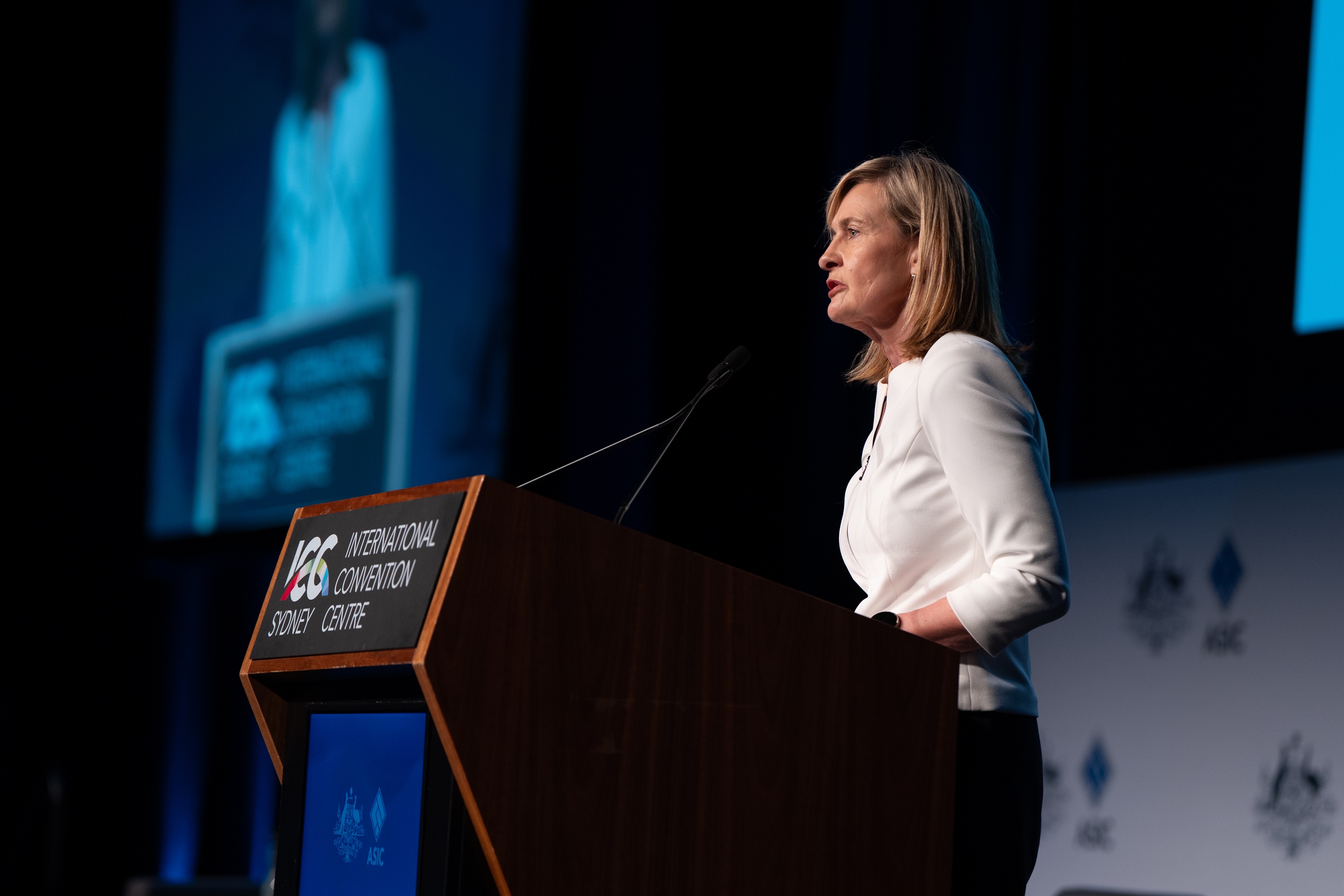
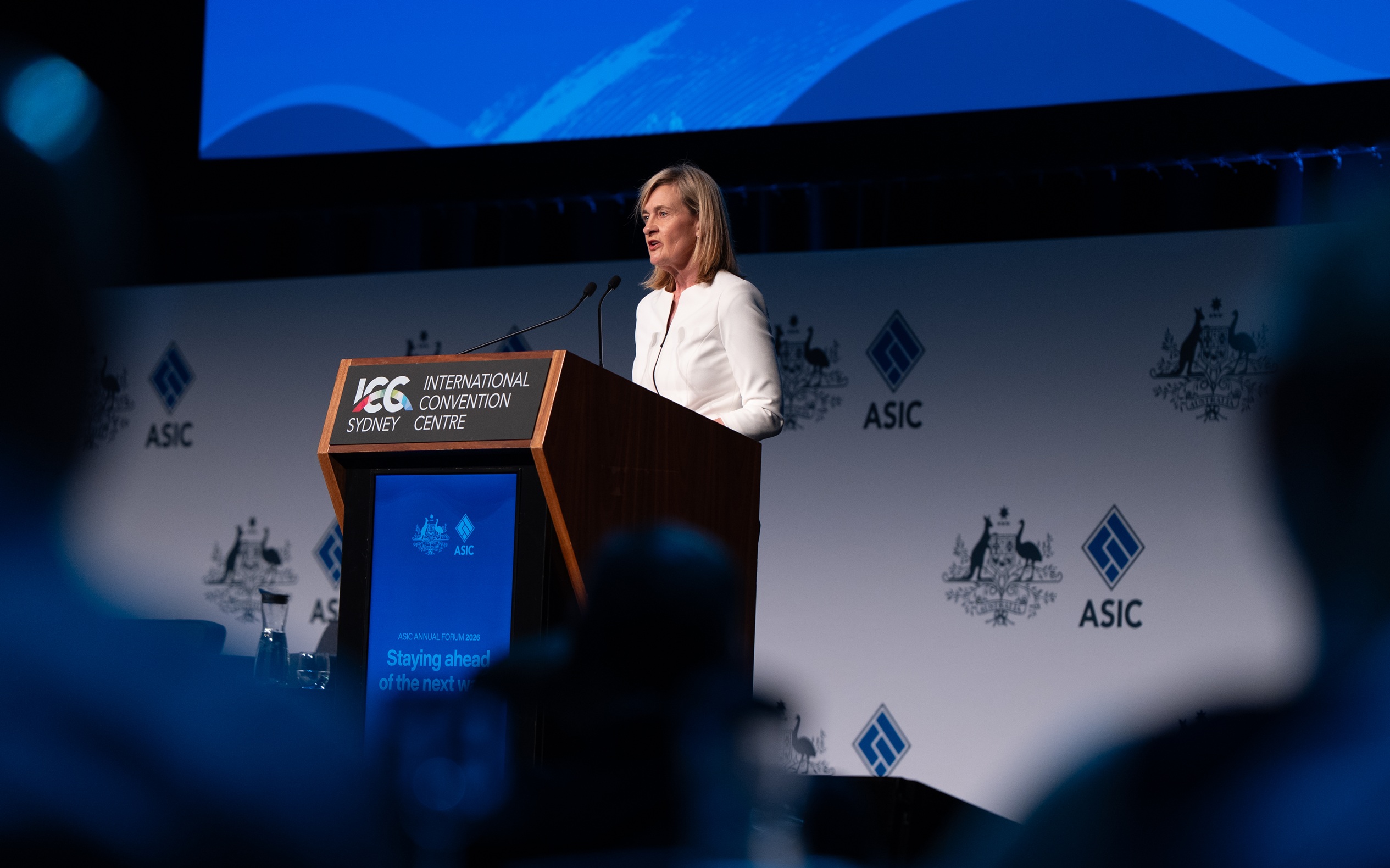
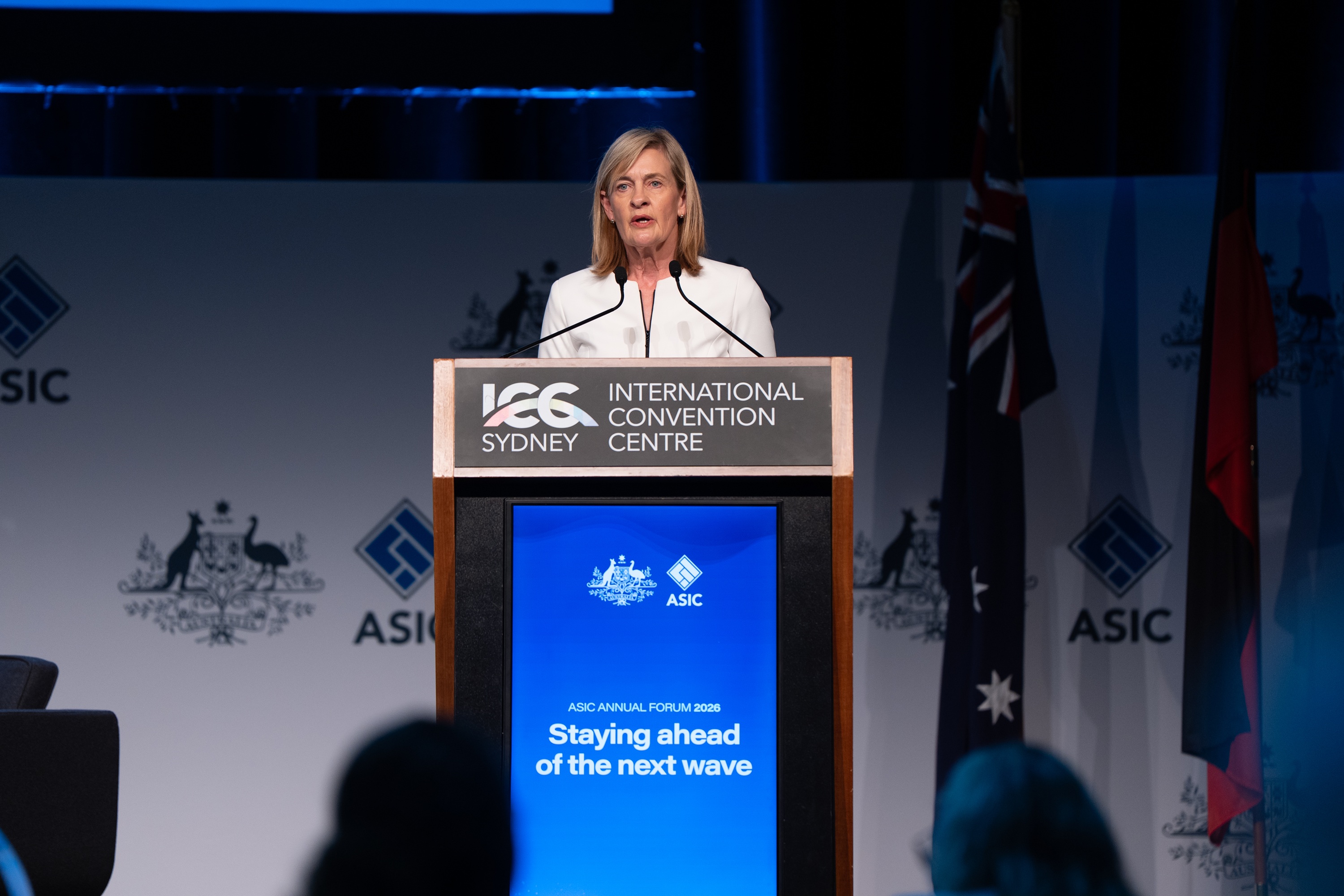
Plenary session 6: Meet the regulators
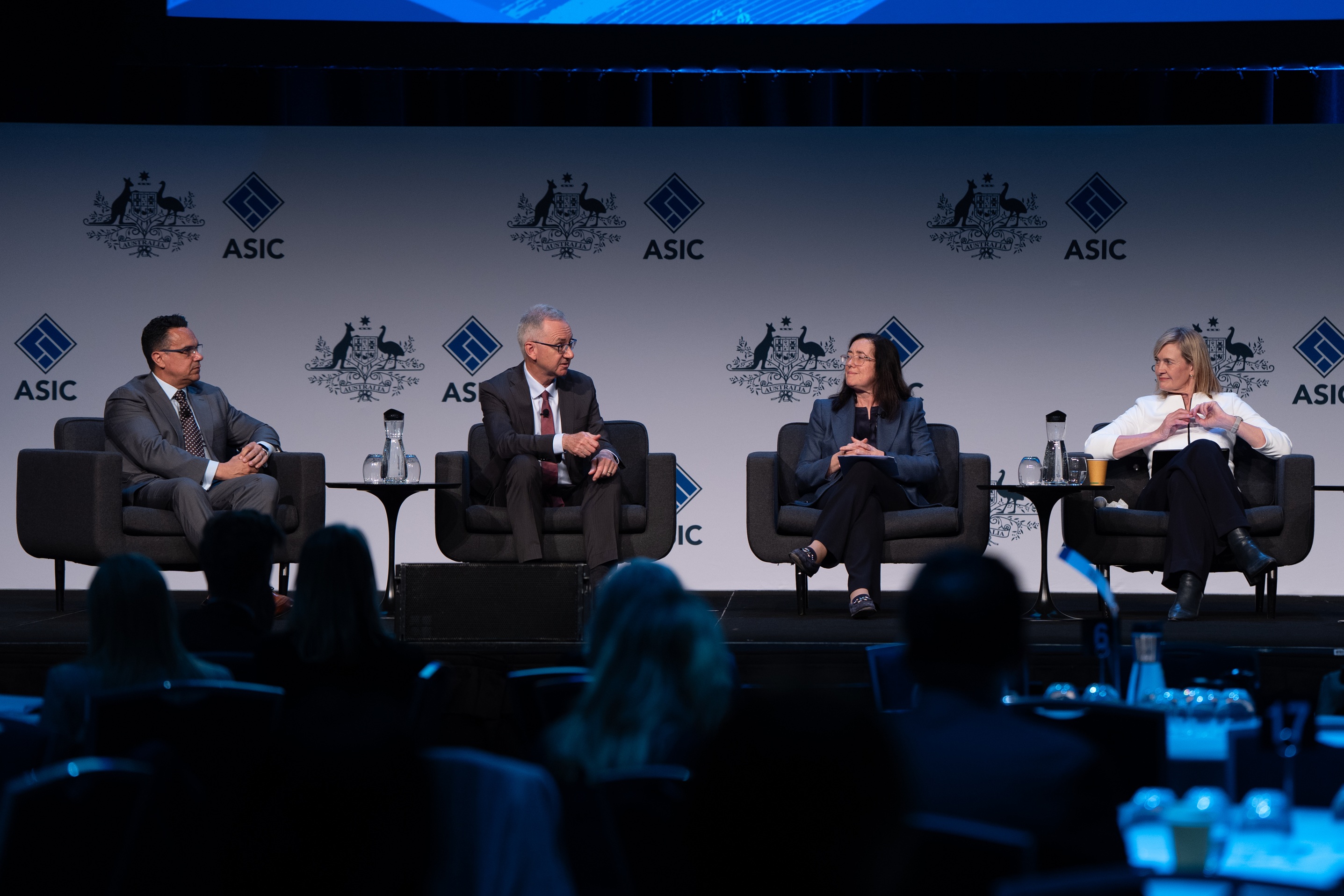
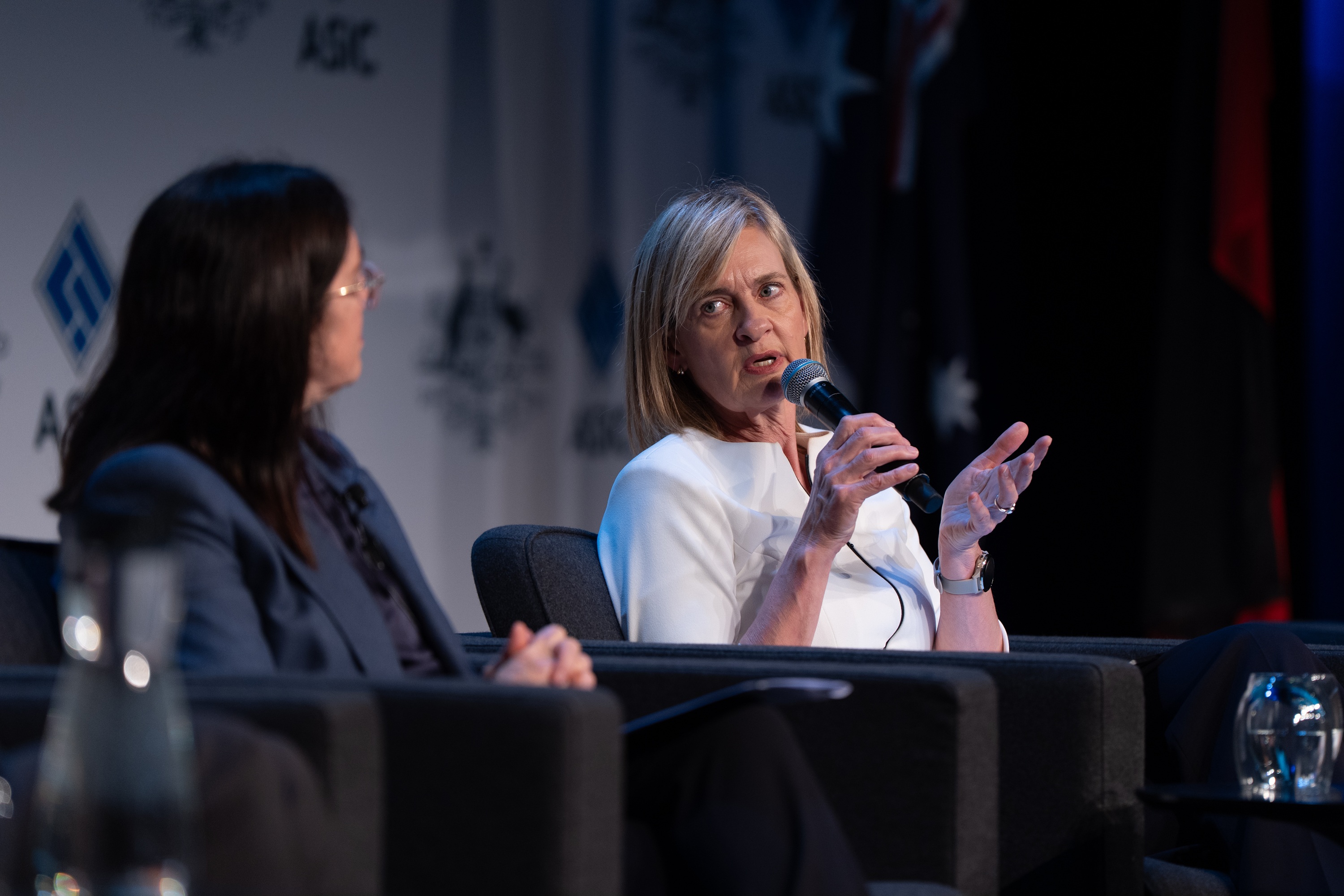
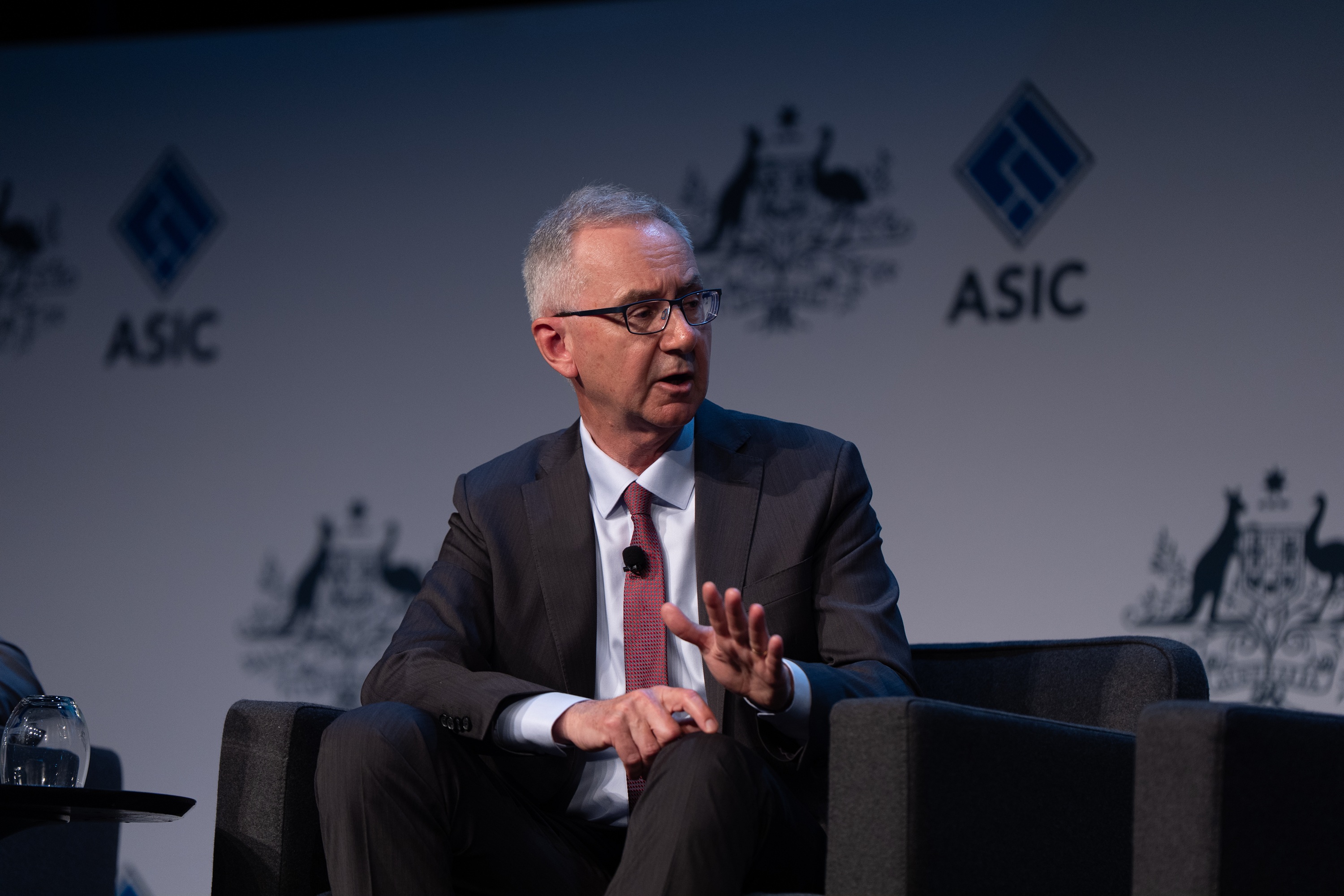
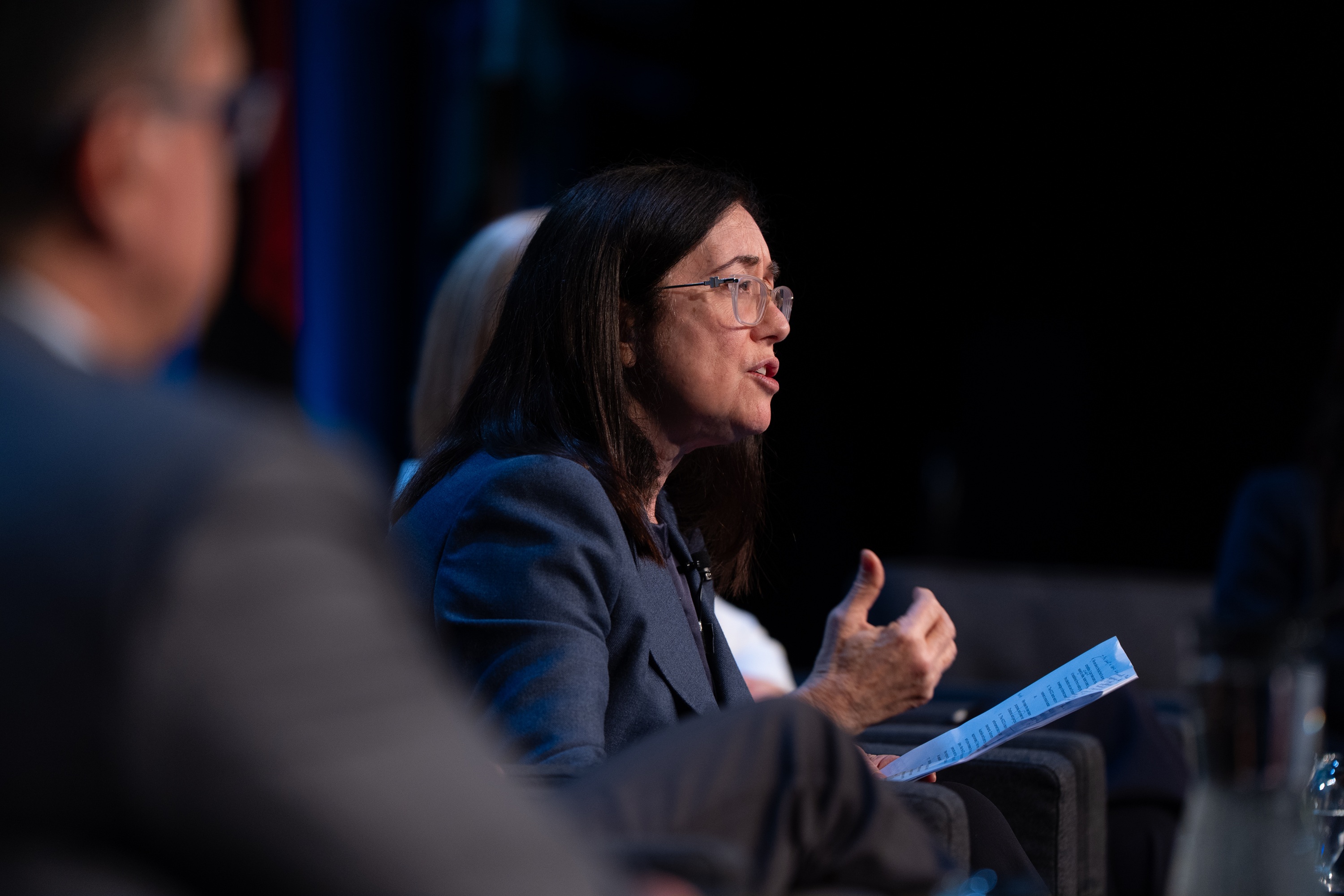
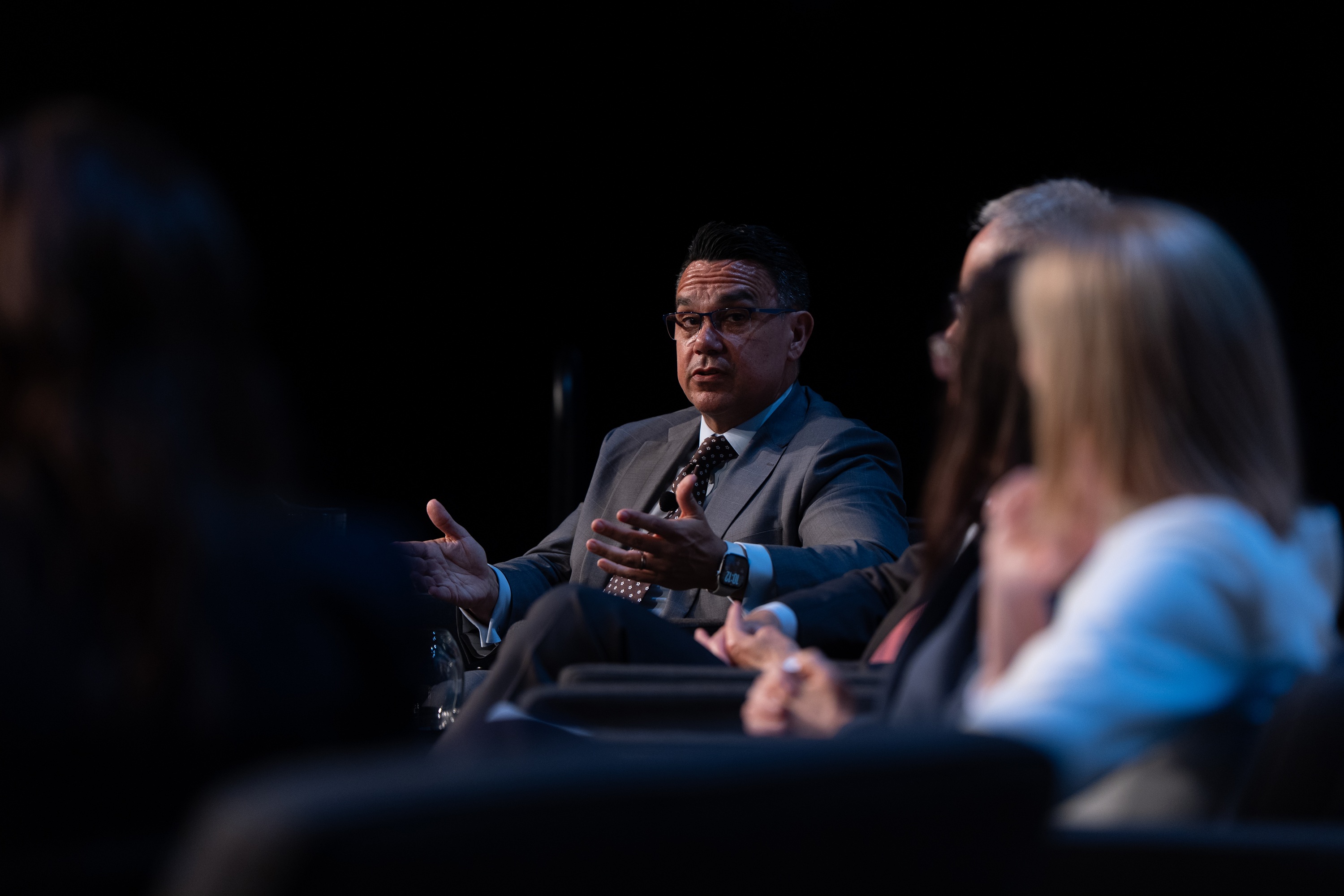
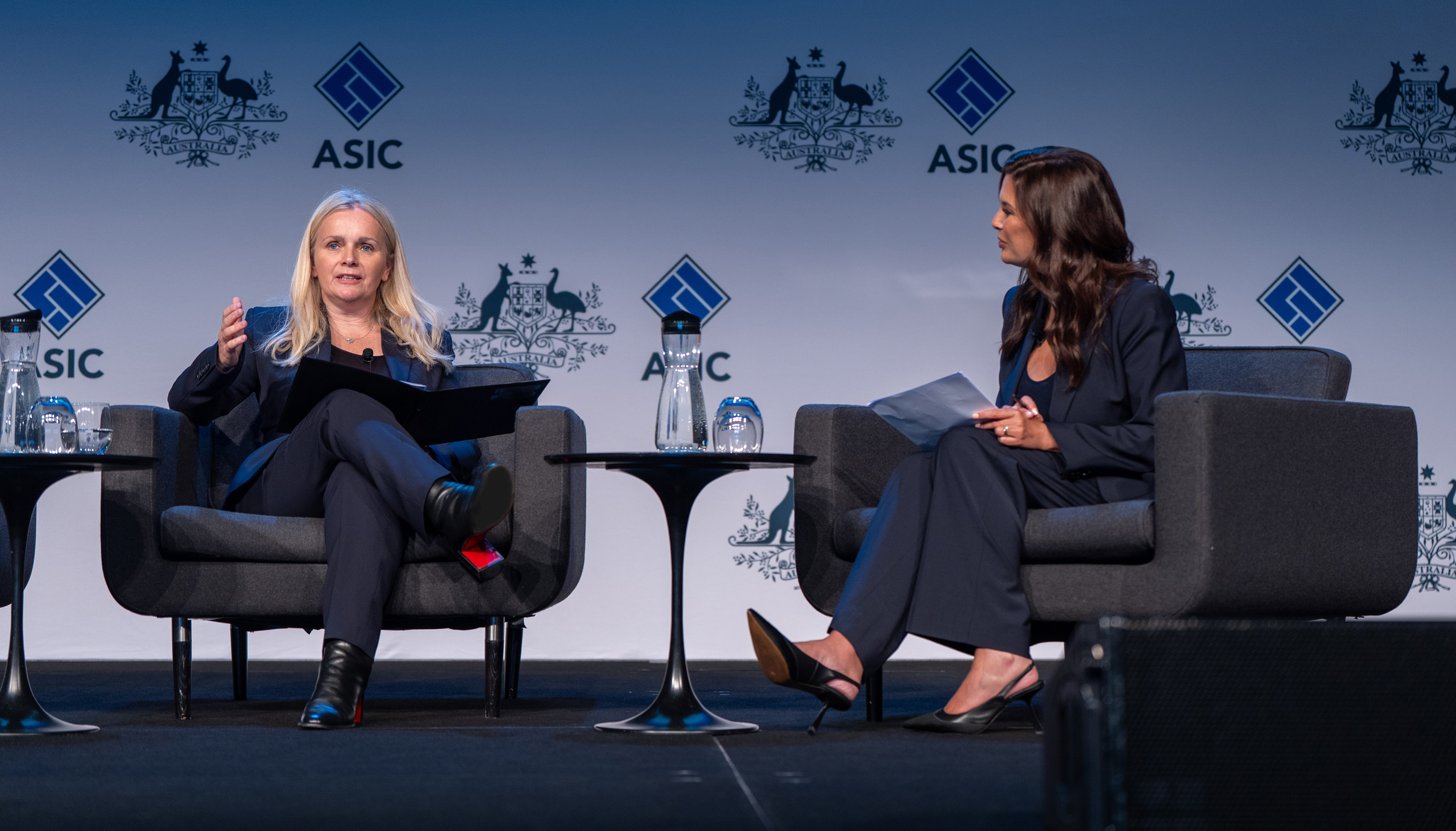
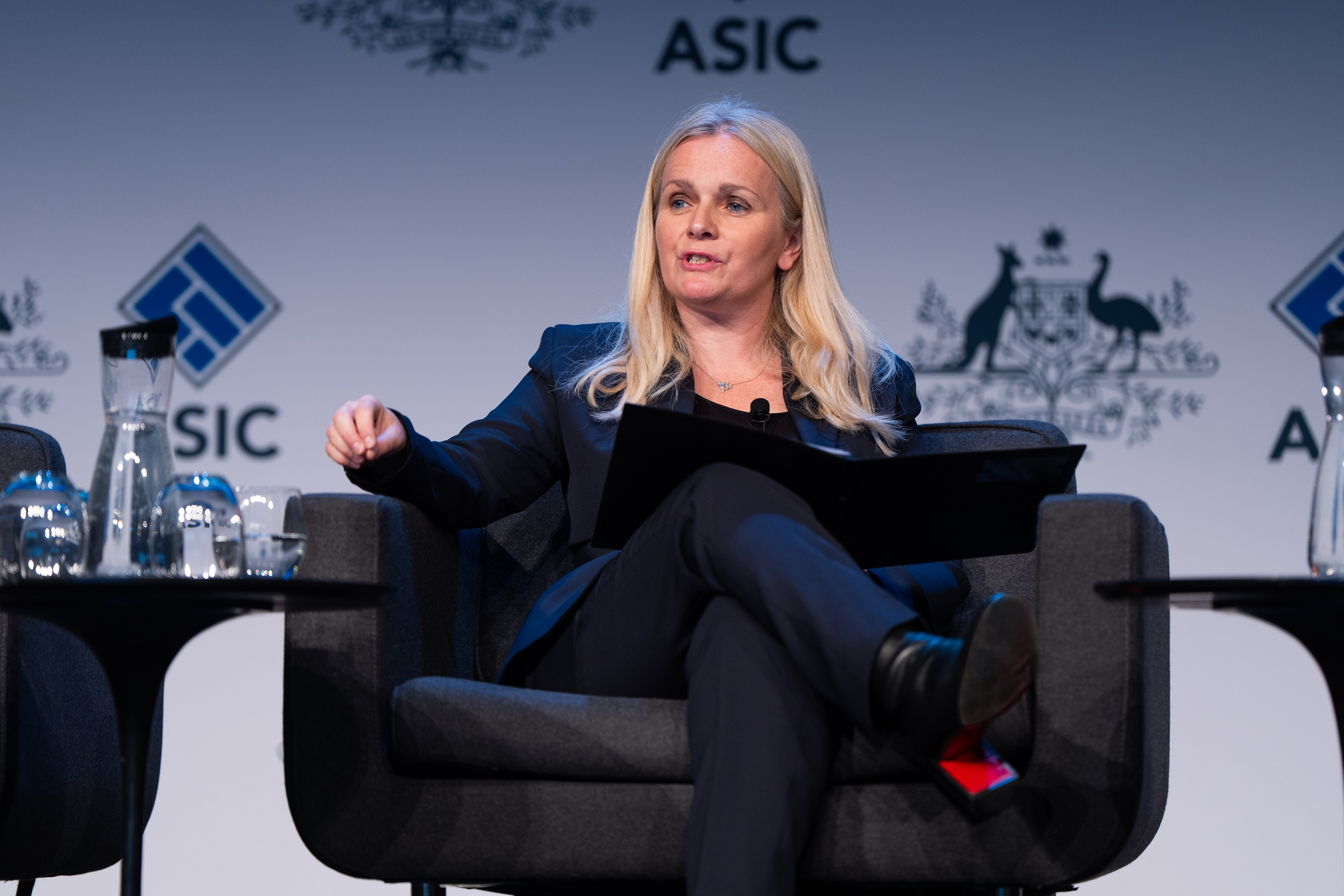
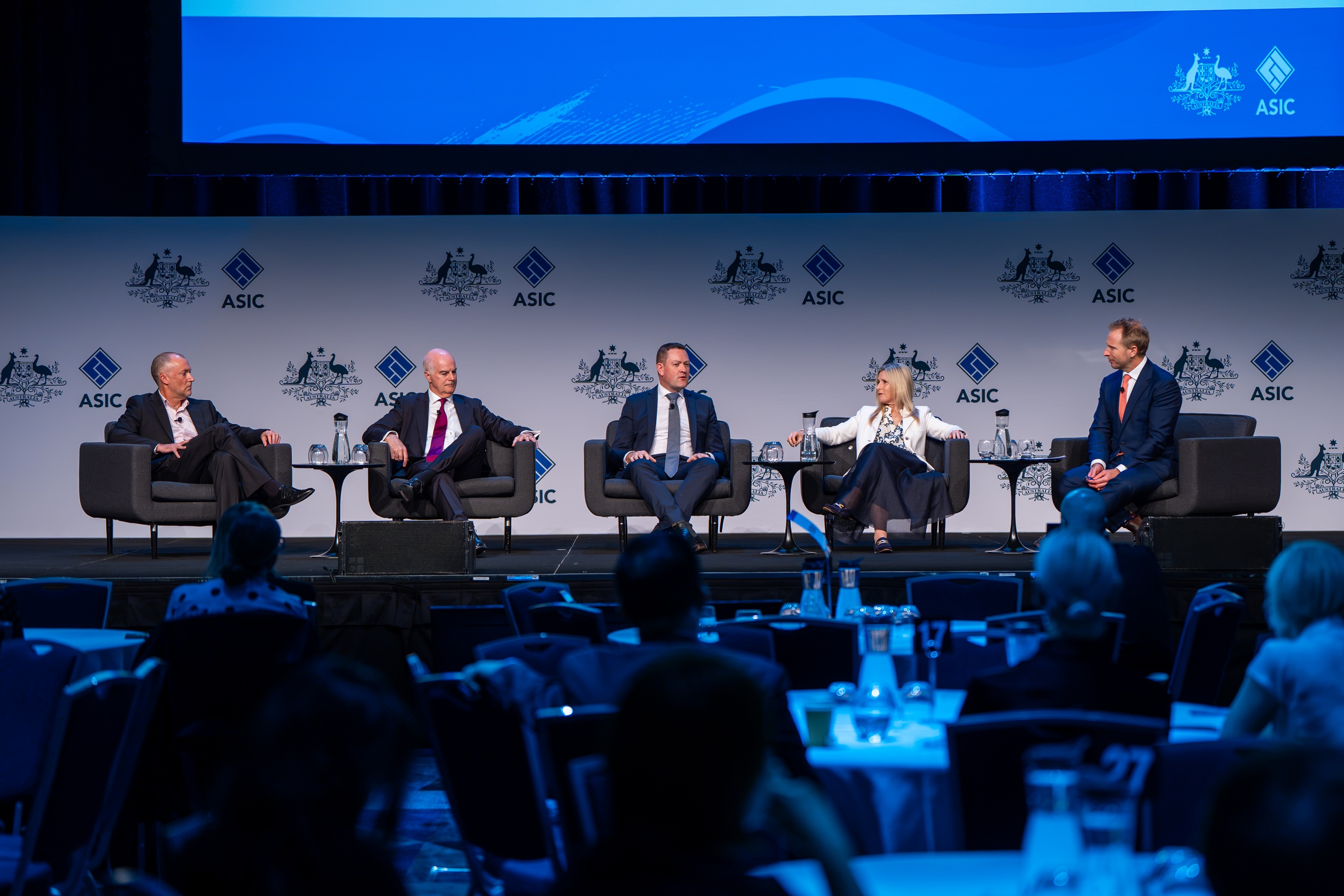
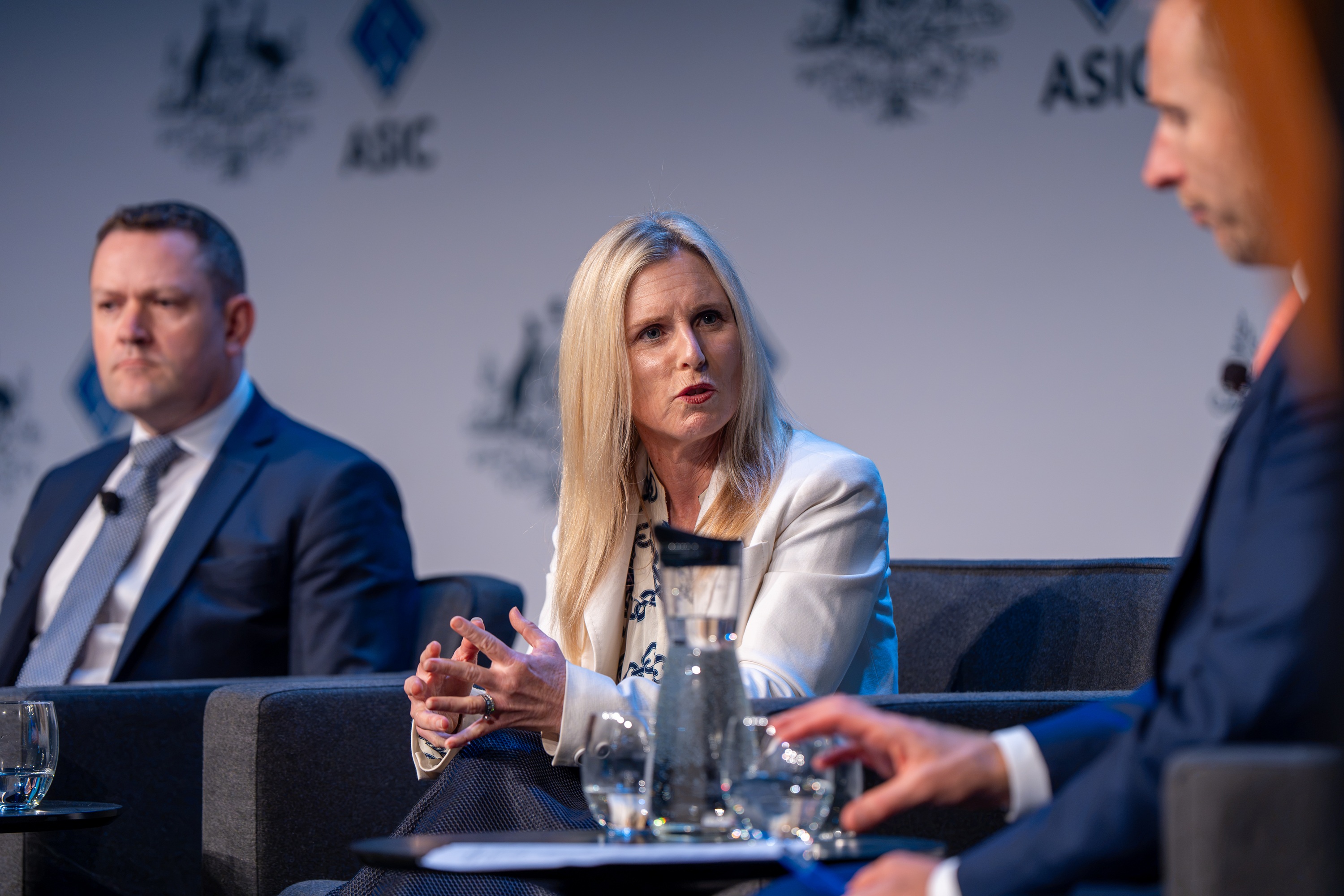

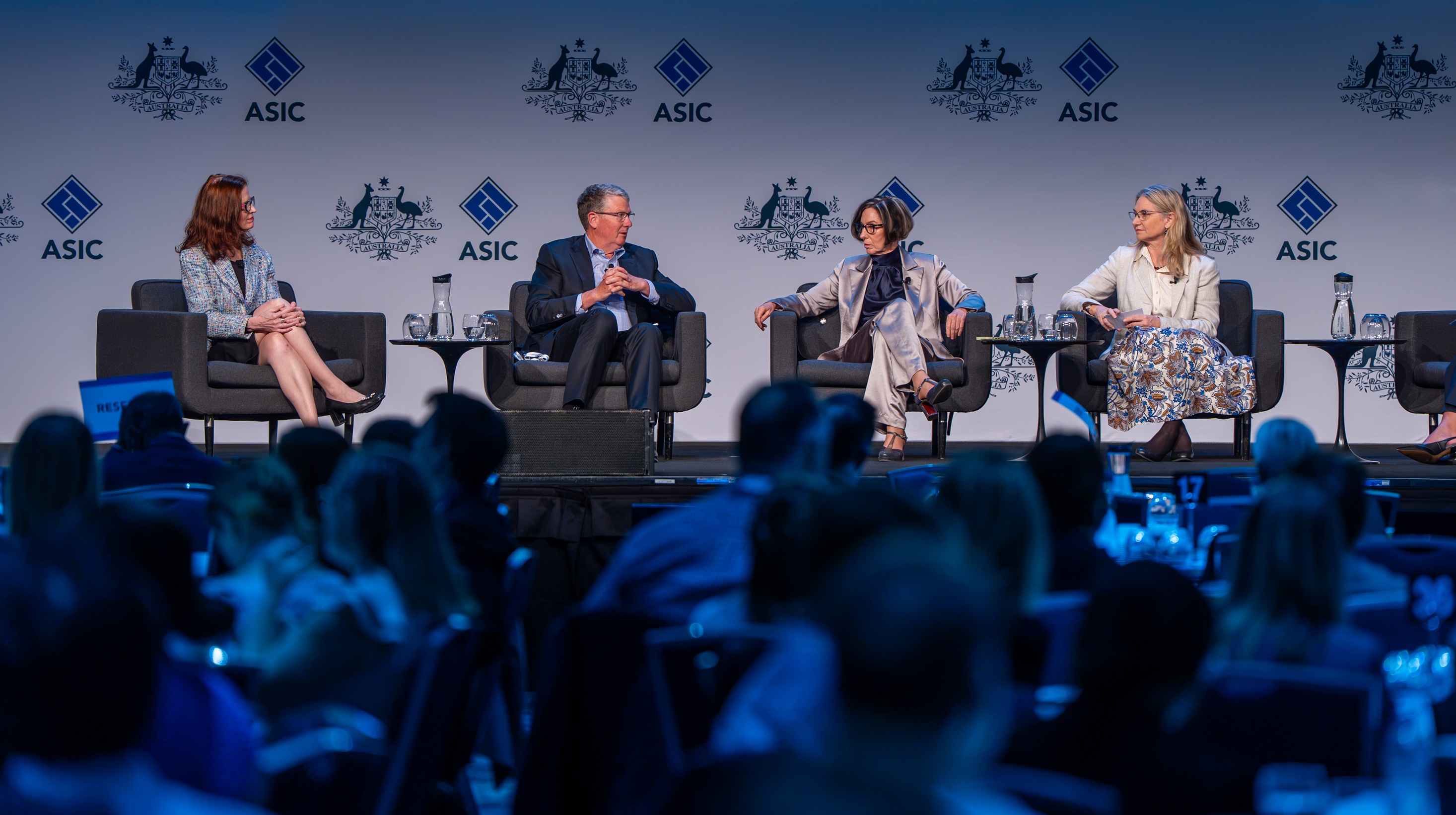
Past Annual Forum galleries
ASIC Annual Forum 2025
Download photos of ASIC Annual Forum 2025 - Australia in a dynamic world - Melbourne
Opening address and Keynote


Plenary session 1: State of the economy


Plenary session 2: Consumer trust in dynamic times


Plenary session 3: Structural transformation in Australia's financial services sector


Plenary session 4: Cyber security and operational resilience


Elective session 1A: Designing for good


Elective session 1B: Unlocking the potential of distributed ledgers in financial markets and payments


Elective session 1C: Investing: Not all fun and games


ASIC Annual Dinner


Keynote (Recorded address)

Plenary session 5: Enforcement priorities


Plenary session 6: Meet the regulators


Plenary session 7: The future of capital markets panel


Plenary session 8: Global deregulation and simplification


ASIC Annual Forum 2024
Download photos of ASIC Annual Forum 2024 - Bridging generations - regulating for all Australians - Sydney